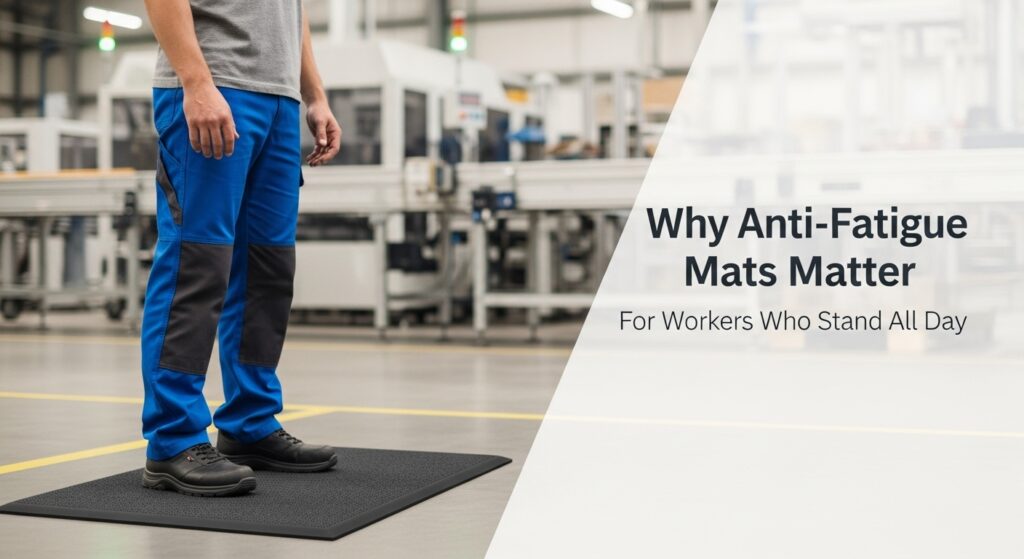
Why Anti-Fatigue Mats Matter for Workers Who Stand All Day
Many jobs require long hours of standing — from manufacturing and retail to laboratory work and food service. While it may seem harmless, prolonged standing can lead to significant discomfort and long-term health issues.
One simple ergonomic solution? Anti-fatigue mats.
🦶 The Problem with Standing on Hard Floors
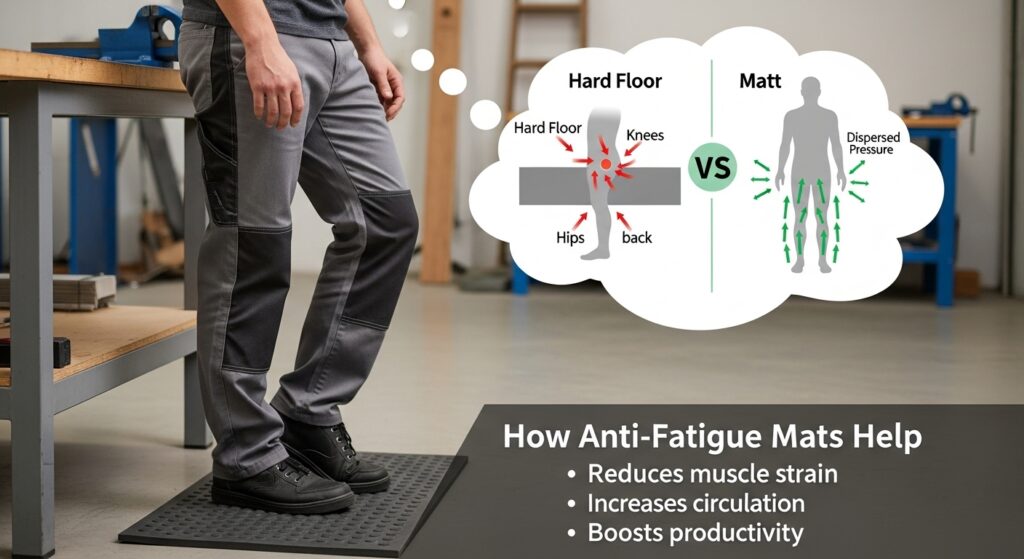
When workers stand on concrete, tiles, or steel flooring for too long, they often experience:
Foot pain and swelling
Lower back stiffness
Knee and hip discomfort
Fatigue and loss of concentration
This happens because the body must constantly work to maintain balance on hard, unyielding surfaces.
🪟 How Anti-Fatigue Mats Help
Anti-fatigue mats are designed to reduce the physical strain of standing by providing a cushioned, supportive surface. They work by encouraging subtle movements in the leg and foot muscles, improving circulation and reducing stress on joints.
Benefits include:
Less muscle fatigue
Reduced lower back and leg pain
Improved blood flow
Better comfort and productivity
Lower risk of MSDs from prolonged standing
🔧 Where They Are Most Useful
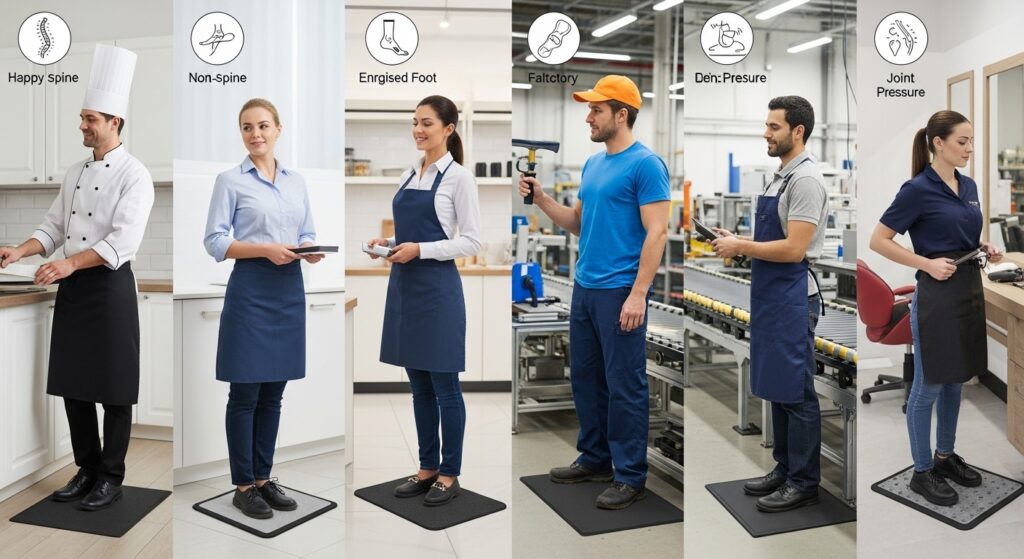
Production lines
Cashier counters
Laboratories
Packing areas
Customer service counters
Food preparation stations
Anywhere workers stand for more than 30–60 minutes at a time.
💡 Choosing the Right Anti-Fatigue Mat
Look for mats that are:
Non-slip and stable
Made from durable material (rubber, foam-rubber blend, or gel)
Easy to clean
The right size for the workstation
Resistant to chemicals, oils, or moisture (for industrial environments)
🌞Final Thoughts
Anti-fatigue mats are a small ergonomic investment that brings a big impact. By reducing physical strain and discomfort, they help workers stay comfortable, focused, and injury-free making them a must-have for any workplace with prolonged standing tasks.