🏢 ERGONOMICS IN OFFICE DESIGN & SPACE PLANNING 🏢

Modern offices are no longer just places to sit and work — they are environments that directly influence health, comfort, productivity, and well-being. Poorly designed office spaces can lead to discomfort, fatigue, musculoskeletal disorders (MSDs), and reduced performance.

Ergonomic office design and space planning focus on creating work environments that fit people — supporting movement, posture, collaboration, and focus throughout the workday.

🧠 What Are Ergonomic Office Design?

Ergonomic office design applies human-centered principles to layout, furniture, equipment, and workflows. It ensures that employees can work comfortably, safely, and efficiently — regardless of their role or work style.

Good office ergonomics considers:

      • Physical comfort and posture
      • Visual and acoustic comfort
      • Task flow and accessibility
      • Movement and flexibility
      • Individual differences among workers

💡 Why Ergonomics Matters in Office Planning

Office design directly affects how people feel and perform. Poor planning can result in:

      • 😣 Neck, shoulder, and back pain
      • 👀 Eye strain and headaches
      • 🔊 Noise-related stress and distraction
      • 🧍 Prolonged static sitting
      • 🚶 Inefficient movement and workflow

Well-planned ergonomic offices deliver measurable benefits:

      •  Improved productivity and focus
      •  Reduced MSD risks and discomfort
      •  Enhanced employee satisfaction
      •  Better collaboration and communication
      •  Lower absenteeism and turnover

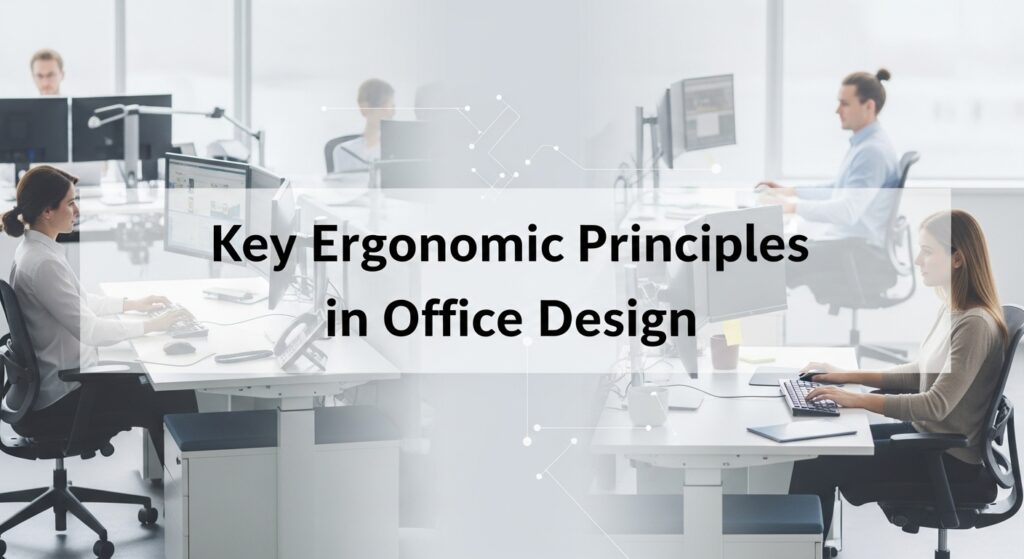
Key Ergonomic Principles in Office Design

  1. Workstation Ergonomics
      • Adjustable chairs with lumbar support
      • Height-adjustable desks or sit-stand workstations
      • Screens positioned at or slightly below eye level
      • Keyboards and mice placed for neutral wrist posture

Each workstation should adapt to the user — not the other way around.

  1. Space Planning & Layout
      • Provide adequate legroom, reach space, and circulation areas
      • Keep frequently used items within easy reach
      • Design clear walkways to reduce clutter and interruptions
      • Position shared equipment (printers, storage) to encourage movement
  1. Movement-Friendly Design
      • Encourage posture changes throughout the day
      • Include sit-stand options and breakout areas
      • Design layouts that support short walking breaks
      • Apply principles like the 20-8-2 rule (sit, stand, move)

Movement is essential for musculoskeletal and cognitive health.

  1. Visual Ergonomics & Lighting
      • Maximise natural light while controlling glare
      • Use adjustable task lighting
      • Ensure even, sufficient illumination across work areas
      • Position screens perpendicular to windows where possible

Proper lighting reduces eye strain and improves accuracy.

  1. Acoustic Comfort
      • Use sound-absorbing materials and partitions
      • Separate quiet zones from collaborative spaces
      • Reduce background noise from equipment
      • Provide phone booths or focus rooms

Good acoustics support concentration and reduce stress.

  1. Inclusive & Flexible Design
      • Design for different body sizes, abilities, and work styles
      • Use adjustable furniture and modular layouts
      • Provide options for focused, collaborative, and informal work
      • Support hybrid and activity-based working

Inclusive design ensures comfort for everyone.

🌿 Practical Tips for Ergonomic Office Planning

      • Involve employees in design and layout decisions
      • Pilot new layouts before full implementation
      • Conduct ergonomic assessments after office changes
      • Train staff on proper workstation setup
      • Review and update designs as work needs evolve

Ergonomics is most effective when built into planning — not added later.

🌞 Final Thoughts 🌞

Ergonomics in office design is about more than furniture — it’s about creating environments that support how people actually work.

A well-designed ergonomic office promotes:

✨ Comfort
✨ Health
✨ Productivity
✨ Collaboration
✨ Long-term sustainability

💚 When office spaces fit people, people thrive.💚 
Design smart. Plan thoughtfully. Work comfortably.