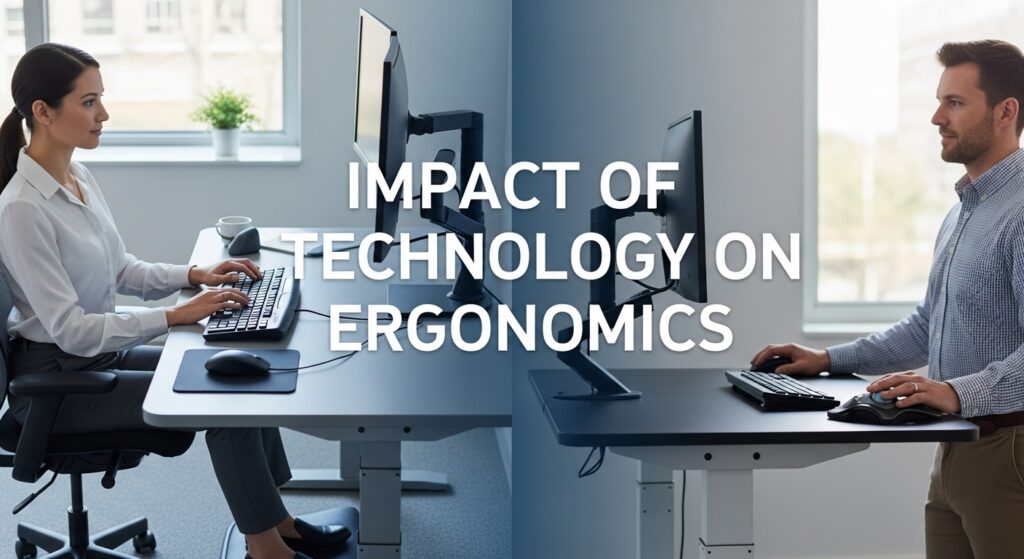
Technology has transformed the way we work — from computers and mobile devices to automation, artificial intelligence, and smart systems. While these advancements improve efficiency and connectivity, they also introduce new ergonomic challenges that affect both physical and mental well-being. Understanding the ergonomic impact of technology is essential to ensure that innovation supports people — not strains them.
🧠 How Technology Influences Ergonomics
Technology shapes how tasks are performed, how long we work, and how our bodies interact with tools and systems. Common impacts include:
Increased screen time
Prolonged sitting or static postures
Repetitive keyboard, mouse, or touchscreen use
Greater cognitive workload
Reduced natural movement
When not managed properly, these factors can lead to discomfort, fatigue, and injury.
⚠️ Ergonomic Risks Linked to Technology
Poorly managed technology use may cause:
👀 Digital eye strain and headaches
😣 Neck, shoulder, and back pain
✋ Wrist and hand discomfort
🧠 Mental fatigue and reduced focus
🦴 Musculoskeletal disorders (MSDs)
🔁 Reduced movement and circulation
Technology itself is not the problem — how we use it is.
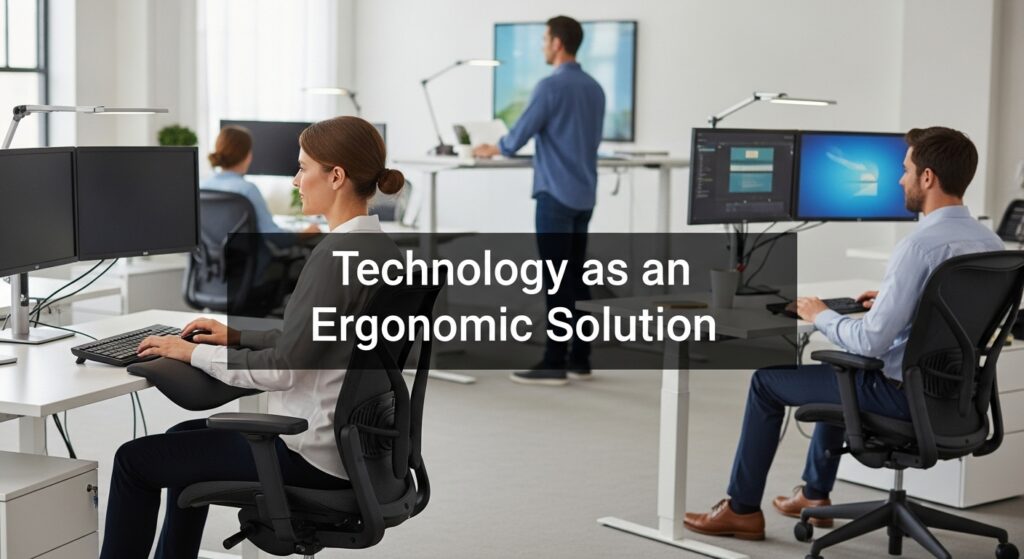
💡 Technology as an Ergonomic Solution
When designed and used correctly, technology can improve ergonomics:
✔️ AI-assisted scheduling for breaks and task variation
✔️ Improved HMI design reducing cognitive load
The key is aligning technology with human capabilities.
🌿 Practical Tips for Healthy Technology Use
Set screen reminders for posture and movement breaks
Apply the 20-20-20 rule for eye health
Adjust devices to fit posture — not vice versa
Limit prolonged mobile device use (“tech neck”)
Combine digital tools with movement-friendly workflows
🌞 Final Thoughts 🌞
Technology should support comfort, safety, and performance. With thoughtful design and proper use, it can become a powerful ally in ergonomic risk reduction.