
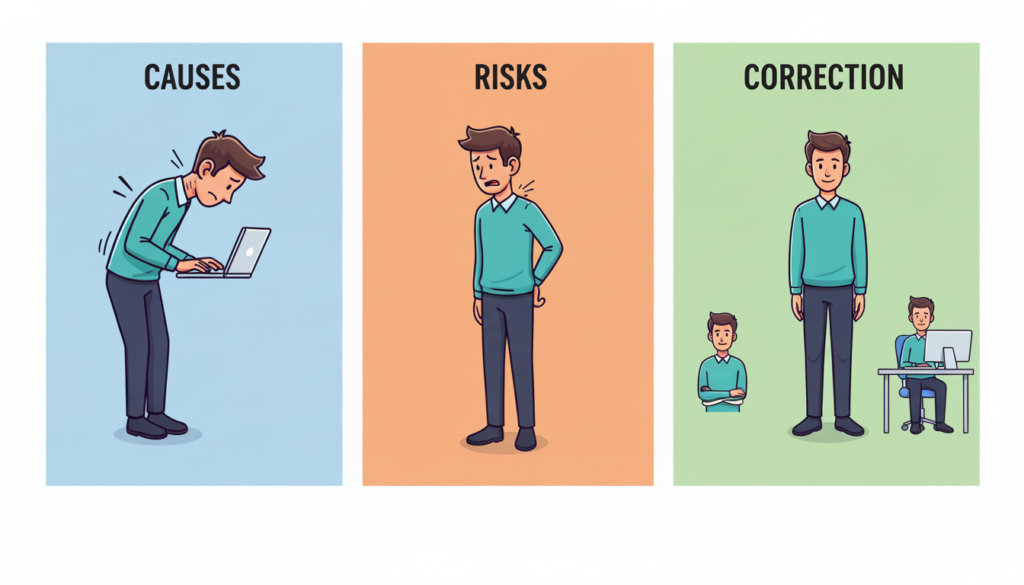
Forward Head Posture: Causes, Risks, and Correction
What Is Forward Head Posture?
Forward Head Posture (FHP) occurs when the head moves forward beyond its natural alignment with the shoulders. This position places additional stress on the neck and upper back muscles. It is commonly seen in individuals who spend long hours using computers, smartphones, or other digital devices.
Common Causes
Several everyday habits contribute to forward head posture, including prolonged screen use, poor workstation setup, and frequently looking down at mobile devices. Sitting without proper back support or using screens positioned too low can also encourage the head to drift forward over time.
Potential Risks
When the head moves forward, the load on the cervical spine increases significantly. This can lead to neck pain, shoulder tension, headaches, and fatigue in the upper back muscles. Over time, prolonged forward head posture may also contribute to musculoskeletal disorders and reduced spinal mobility.
How to Correct It
Improving forward head posture involves both posture awareness and workstation adjustments. Keeping the screen at eye level, sitting with proper back support, and positioning the keyboard and mouse within comfortable reach can help maintain better alignment. Regular movement, stretching, and posture changes throughout the day are also important in reducing strain.
Key Takeway
Forward head posture is a common issue in modern work environments, but it is often preventable. By maintaining proper workstation setup and practising regular posture changes, individuals can reduce strain on the neck and support long-term musculoskeletal health.