
Indoor Air Quality and Worker Comfort
Why Indoor Air Quality Matters
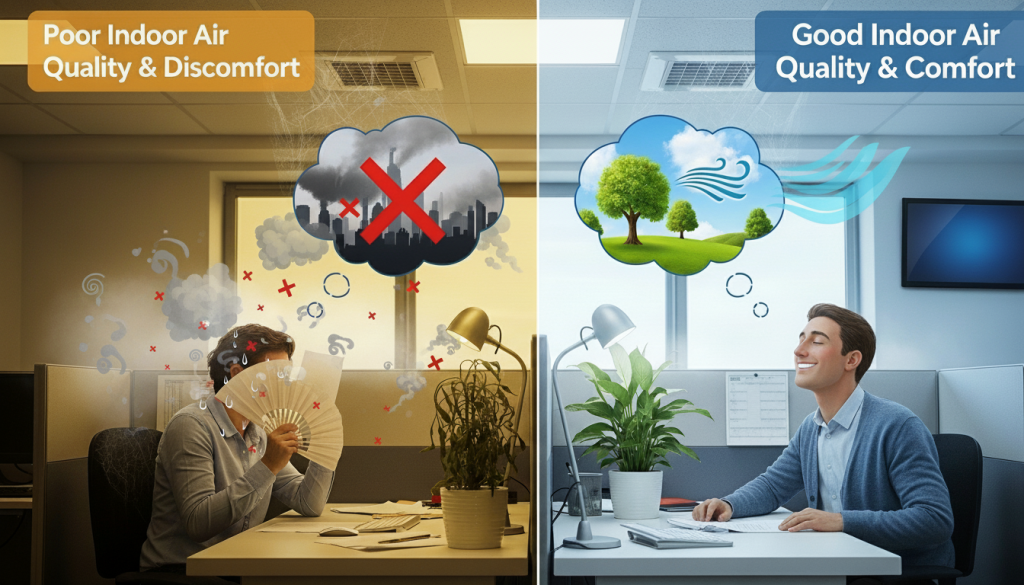
Indoor Air Quality (IAQ) plays an important role in workplace health and comfort. Since many employees spend long hours indoors, the quality of the air they breathe can directly affect their wellbeing, concentration, and overall productivity.
Factors Affecting Indoor Air Quality
Several factors influence IAQ in workplaces, including ventilation, temperature, humidity, and the presence of pollutants such as dust, chemicals, and fumes. Poor ventilation or overcrowded spaces can cause stale air to accumulate, leading to discomfort among workers.
Impact on Worker Comfort and Health
Poor indoor air quality may lead to symptoms such as headaches, eye irritation, fatigue, and difficulty concentrating. Over time, prolonged exposure to poor air conditions can reduce work performance and increase absenteeism.
Improving Indoor Air Quality
Workplaces can improve IAQ by ensuring proper ventilation, maintaining air conditioning systems, controlling indoor pollutants, and keeping work areas clean. Regular maintenance and monitoring help create a healthier and more comfortable environment for employees.
Key Takeway
Good indoor air quality supports both worker comfort and productivity. Maintaining proper ventilation and controlling indoor pollutants are essential steps toward creating a healthier workplace.