
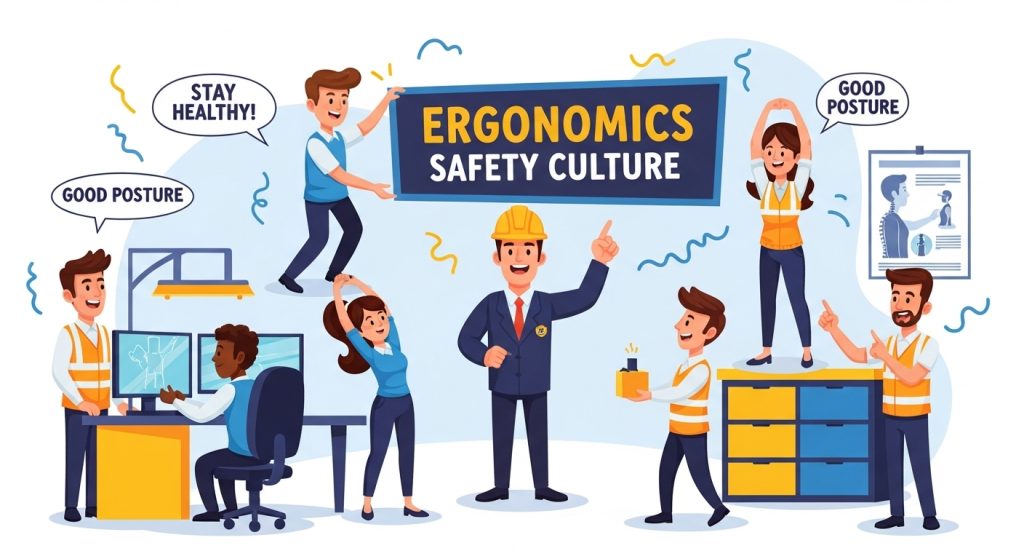
Building an Ergonomics Safety Culture
Why Ergonomics Culture Matters
A strong safety culture goes beyond policies and procedures—it shapes how employees think and act about safety in their daily work. Integrating ergonomics into this culture helps organisations prevent musculoskeletal injuries, reduce fatigue, and improve overall worker wellbeing.
Leadership and Awareness
Building an ergonomics safety culture begins with leadership commitment. When management prioritises ergonomics through training, workplace improvements, and open communication, employees are more likely to recognise and report ergonomic risks in their tasks.
Employee Participation
Employees play a key role in identifying ergonomic issues because they perform the tasks daily. Encouraging workers to share feedback on discomfort, workstation setup, and work processes helps organisations detect problems early and implement effective solutions.
Continuous Improvement
Creating an ergonomics culture is an ongoing process. Regular assessments, training sessions, and awareness programmes help reinforce safe work practices and encourage employees to maintain healthy working habits.
Key Takeway
An effective ergonomics safety culture combines leadership support, employee involvement, and continuous improvement. When ergonomics becomes part of everyday work practices, organisations can create safer, healthier, and more productive workplaces.