
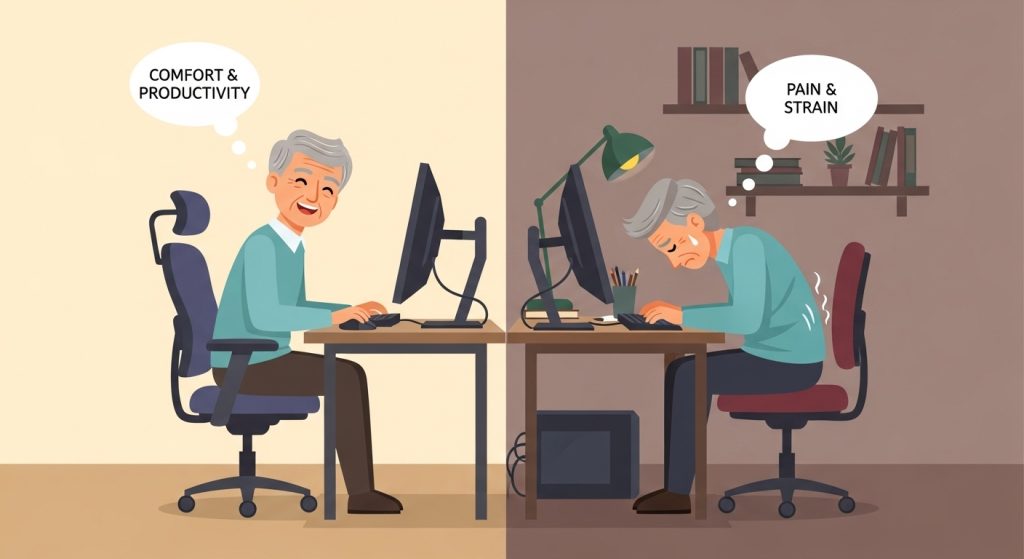
Ergonomics in an Aging Workforce (Older Workers)
Introduction
As the workforce ages, ergonomics becomes increasingly important in supporting older workers. Age-related changes in strength, flexibility, and recovery capacity can affect how tasks are performed and increase the risk of injury if not properly managed.
Why It Matters
Older workers often bring valuable experience and skills, but may be more susceptible to fatigue, joint strain, and slower recovery from physical stress. Without proper ergonomic support, this can lead to higher risk of musculoskeletal disorders (MSDs) and reduced work ability.
Age-Related Changes
With age, there may be reduced muscle strength, decreased joint flexibility, and changes in vision and reaction time. These factors can make tasks involving heavy lifting, repetitive motion, or awkward postures more challenging.
Supporting Older Workers
Effective ergonomic strategies include adjusting workstations to reduce strain, minimising manual handling, and providing tools that require less force. Job rotation, flexible work pacing, and allowing sufficient rest time can also help maintain performance and reduce fatigue.
Conclusion
An aging workforce is a reality for many organisations. By adapting work to fit the capabilities of older workers, employers can enhance safety, retain experienced employees, and promote a healthier, more productive workplace.