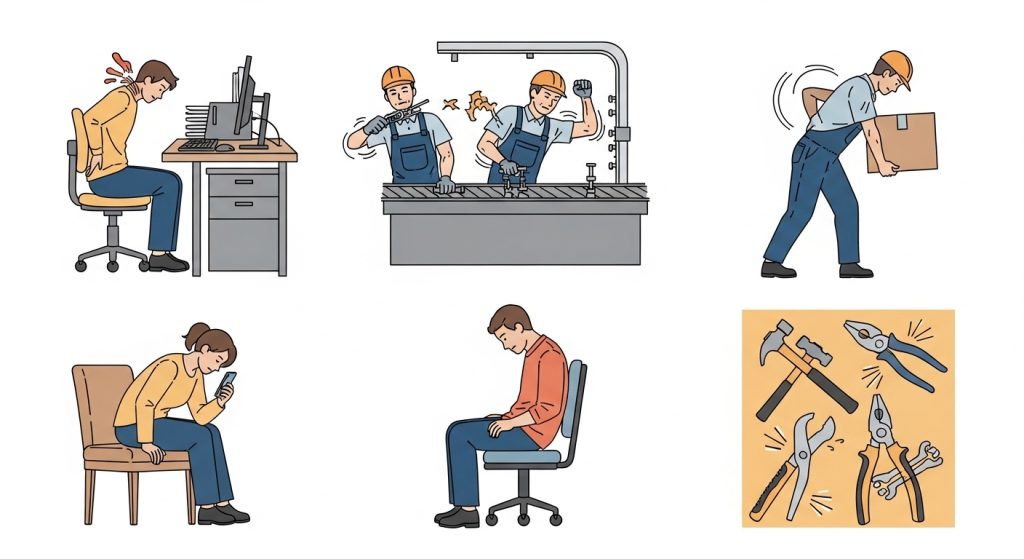
Workplace ergonomics is often overlooked, yet poor design and practices can lead to serious injuries and reduced productivity. In Malaysia, certain ergonomic hazards are more common across offices, factories, and industrial settings. Recognising these risks is the first step toward a safer workplace.
1. Poor Workstation Design
Improper desk height, non-adjustable chairs, and poorly placed monitors can force workers into awkward postures, leading to neck, shoulder, and back strain.
2. Repetitive Tasks
Tasks that involve constant typing, assembly, or tool use can strain muscles and tendons over time, increasing the risk of repetitive strain injuries.
3. Manual Handling and Lifting
Heavy lifting or frequent manual handling without proper technique can lead to back injuries, joint strain, and musculoskeletal disorders.
4. Prolonged Static Postures
Sitting or standing for long periods without movement can cause muscle fatigue, reduced circulation, and discomfort, impacting both health and productivity.
5. Poorly Designed Tools and Equipment
Tools that are too heavy, difficult to grip, or not suited to the task can increase force exertion, awkward postures, and the risk of injury.
Conclusion
By identifying and addressing these top ergonomic hazards, Malaysian workplaces can reduce injuries, improve comfort, and boost overall productivity. Simple adjustments, proper training, and regular assessments go a long way in creating a safer work environment.