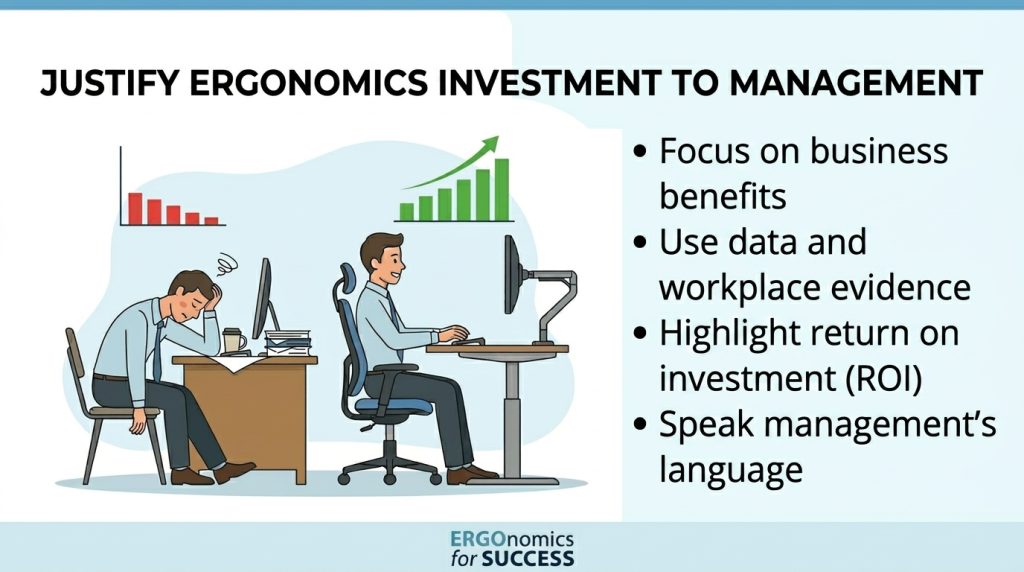
How to Justify Ergonomics Investment to Management
Introduction
Many organizations see ergonomics as an extra expense, but poor ergonomics can actually cost companies more through injuries, absenteeism, fatigue, and reduced productivity.
To gain management support, ergonomics should be presented as a business investment rather than just an employee comfort initiative.
Focus on Business Benefits
Management is more likely to approve ergonomics improvements when they understand the operational impact, such as:
Reduced injuries and medical costs
Improved productivity
Less fatigue and downtime
Better work quality
Reduced absenteeism
Use Data and Workplace Evidence
Support recommendations with:
Injury records
Employee complaints
Productivity issues
Ergonomic assessment findings
Workplace photographs
Data helps management understand the real impact of poor ergonomics.
Highlight Return on Investment (ROI)
Even small ergonomic improvements can create long-term savings.
Examples include:
Adjustable workstations
Better tool positioning
Lifting aids
Ergonomics training
These improvements may reduce injuries while improving efficiency and employee performance.
Speak Management's Language
Avoid focusing only on technical ergonomics terms or assessment scores. Instead, explain how ergonomic risks may affect productivity, operational costs, and overall business performance.
Conclusion
Ergonomics is not just about comfort — it is an investment that supports productivity, efficiency, employee well-being, and long-term organizational performance.