
Habit Formation for Good Posture
Introduction
Good posture is not achieved through occasional correction — it is built through daily habits. Many people only focus on posture when discomfort or pain appears, but poor sitting and standing habits developed over time are often the main cause of neck, shoulder, and back strain. Developing good posture habits helps reduce fatigue, improve comfort, and support long-term musculoskeletal health.
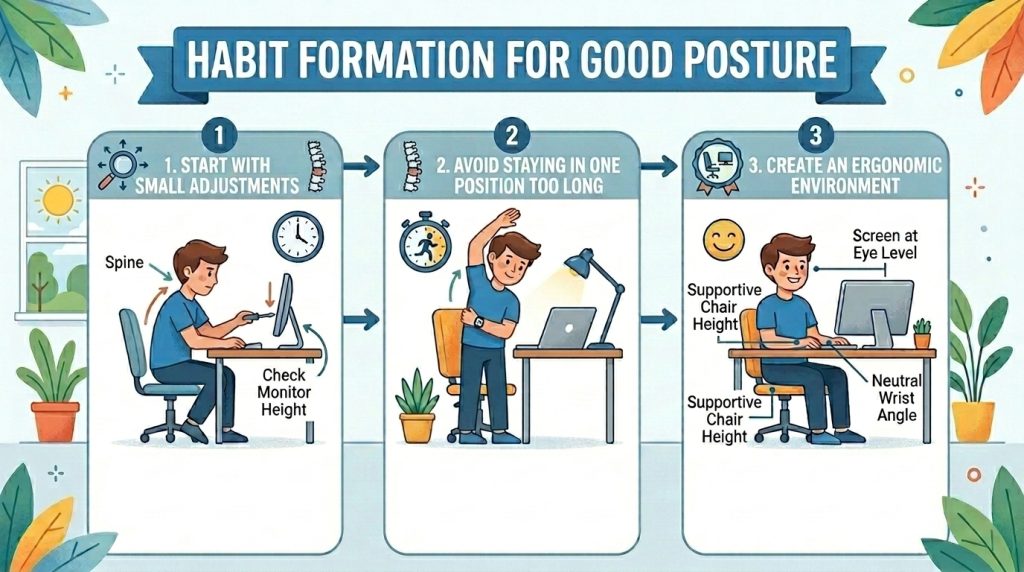
Start with Small Adjustments
Improving posture does not require major changes overnight. Small daily adjustments are often more effective and sustainable.
Simple habits include:
- Sitting with back supported
- Keeping feet flat on the floor
- Positioning screens at eye level
- Avoiding prolonged slouching
- Relaxing shoulders while working
Consistent repetition helps these movements become natural over time.
Avoid Staying in One Position Too Long
Even a good posture can become harmful if maintained for long periods without movement.
Try to:
- Stand and stretch regularly
- Change working positions
- Take short movement breaks
- Walk briefly every hour
Movement helps reduce muscle fatigue and improves circulation.
Create an Ergonomic Environment
Workstation setup plays an important role in supporting posture habits.
Helpful adjustments may include:
- Proper chair height
- Correct monitor positioning
- Easy-to-reach tools and materials
- Adequate back support
A well-designed workstation makes good posture easier to maintain naturally.
Build Awareness
Many people are unaware when they begin slouching or leaning forward. Building posture awareness is an important step in habit formation.
Simple reminders such as posture checks, stretching routines, or workstation reminders can help reinforce better posture throughout the day.
Conclusion
Good posture is developed through consistent daily habits, not temporary corrections. Small adjustments, regular movement, and proper workstation setup can gradually improve posture and reduce discomfort over time. Healthy posture habits not only support physical well-being but also improve comfort, focus, and overall work performance.