
Choosing the Right Ergonomic Trainer: Why One Training Approach Does Not Fit All
Article by Dr. Ts. Hari Krishnan
Why the Right Ergonomics Training Matters
Many organisations invest in ergonomics training with the hope of reducing workplace injuries and improving employee wellbeing. However, one important question is often overlooked:
Are we choosing the right ergonomic trainer, and is the training content suitable for the target audience?
Ergonomics training should never be a “one-size-fits-all” programme. The learning needs of a general worker are different from those of engineers, supervisors, and management teams.
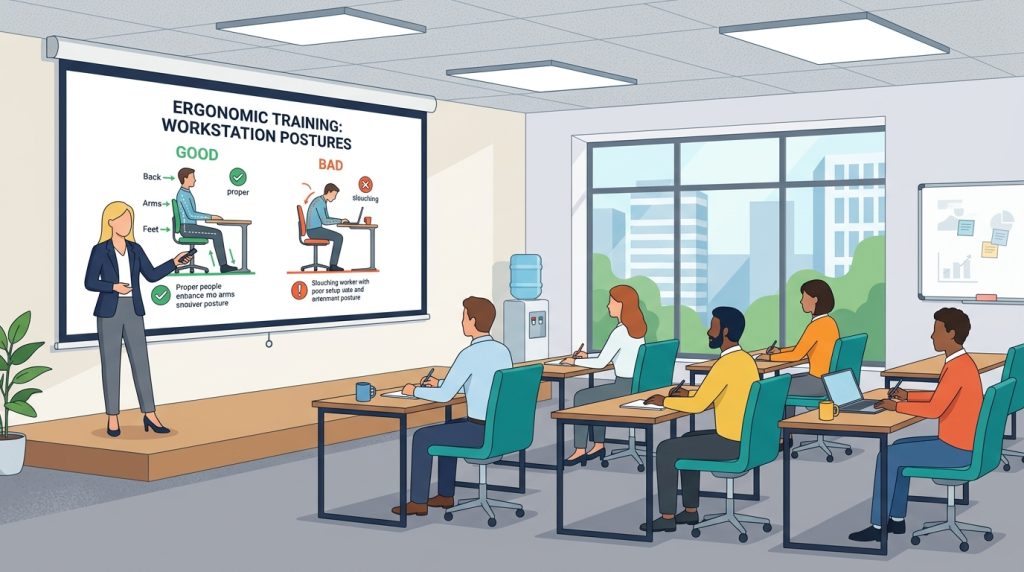
Ergonomics Training for Workers
For ground-level workers, ergonomics training should focus on building awareness and empowering them to protect themselves. The key topics should include:
✅ What is ergonomics and why it matters
✅ Common ergonomic risk factors that contribute to Musculoskeletal Disorders (MSDs)
✅ Understanding back pain, symptoms, and early warning signs
✅ Suitable treatment and recovery approaches
✅ Practical ergonomic self-management strategies
✅ How to apply safe working techniques in daily tasks
The objective is to help workers recognise risks early and develop the knowledge to take care of their own health.
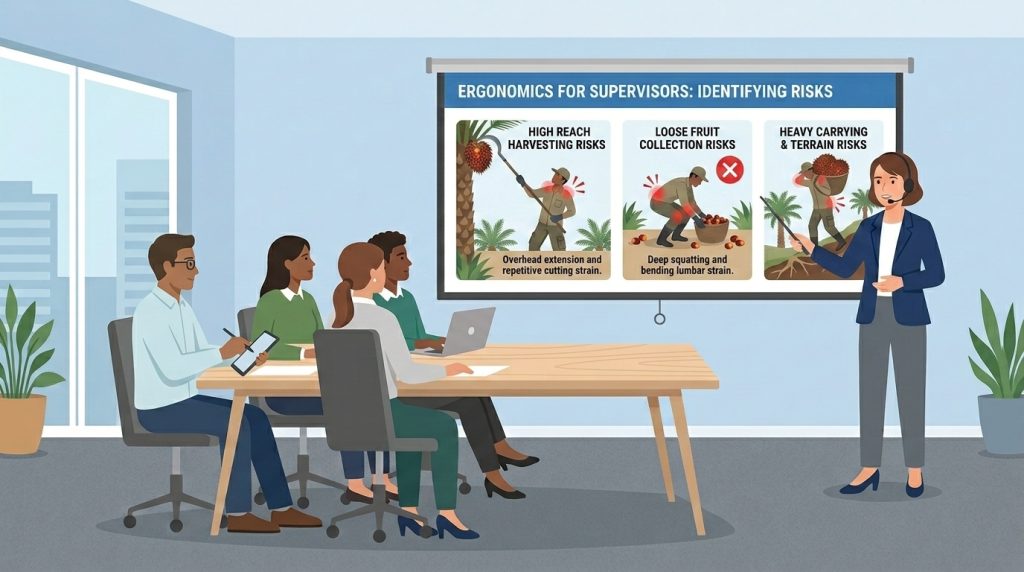
Training for Engineers, Supervisors & Decision-Makers
They need deeper knowledge on:
✅ Identifying ergonomic risks in workplace processes
✅ Conducting proper ergonomic assessments
✅ Understanding the root causes of ergonomic problems
✅ Developing effective improvement strategies
✅ Applying engineering controls, workplace redesign, equipment solutions, automation, robotics, and technology interventions
These groups are responsible for making decisions that influence the workplace design. If ergonomic issues are not addressed at the system level, the impact will continue to affect workers through discomfort, injuries, reduced productivity, and increased operational costs.
Ergonomics Is More Than Stretching
Unfortunately, there are still situations where ergonomics training is conducted by trainers without sufficient ergonomics expertise. The session often becomes a general health talk with stretching exercises, followed by a certificate at the end.
While exercises and stretching can be beneficial, ergonomics is much broader than that.
What Effective Ergonomics Training Should Achieve
True ergonomics training should create a sustainable impact:
For workers — it creates awareness and teaches them how to manage ergonomic risks.
For engineers and management — it provides the capability to identify problems and implement effective workplace improvements.
What Effective Ergonomics Training Should Achieve
Therefore, when selecting an ergonomic trainer, organisations should evaluate:
✔️ The trainer’s ergonomics qualifications and experience
✔️ Their previous workplace assessment experience
✔️ Their understanding of industry-specific ergonomic challenges
✔️ Their ability to provide practical solutions, not only theoretical knowledge
The right ergonomic trainer does not just deliver a training session.
The right ergonomic trainer develops people who can create safer, healthier, and more productive workplaces.
#Ergonomics #WorkplaceSafety #MusculoskeletalDisorders #OccupationalHealth #HumanFactors #SafetyLeadership