
THE COST OF REPETITION: PREVENTING OVERUSE INJURIES IN FOOD PROCESSING
Introduction
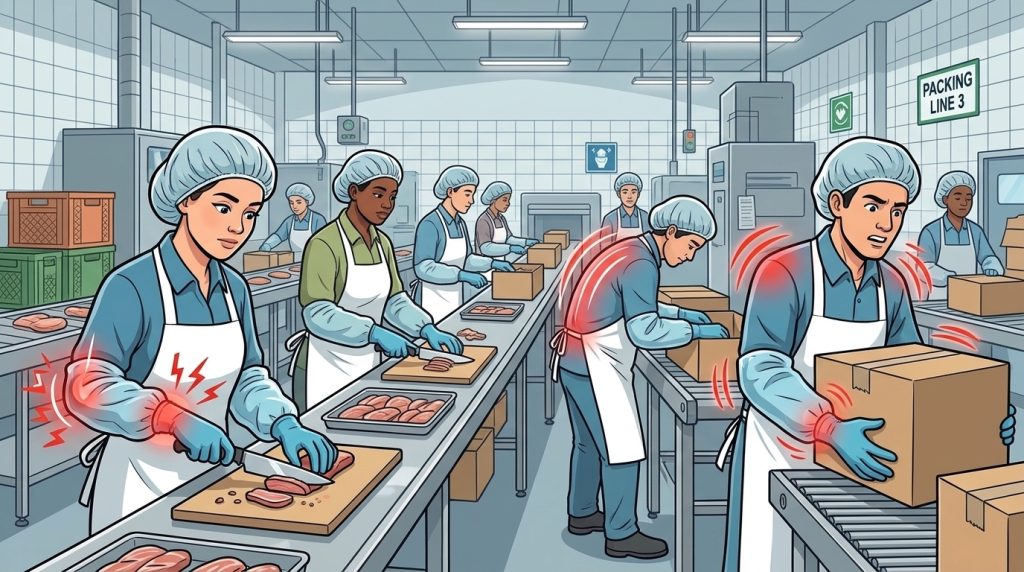
Repetitive tasks are common in food processing, where workers may perform similar movements throughout a production shift. Activities such as sorting ingredients, sealing packages, labelling products, and inspecting items often require frequent use of the same muscles and joints. When these movements are performed continuously without adequate recovery, they may contribute to overuse injuries.
Understanding how repetitive work affects the body can help organisations develop more sustainable working practices.
Why Repetitive Work Can Cause Problems
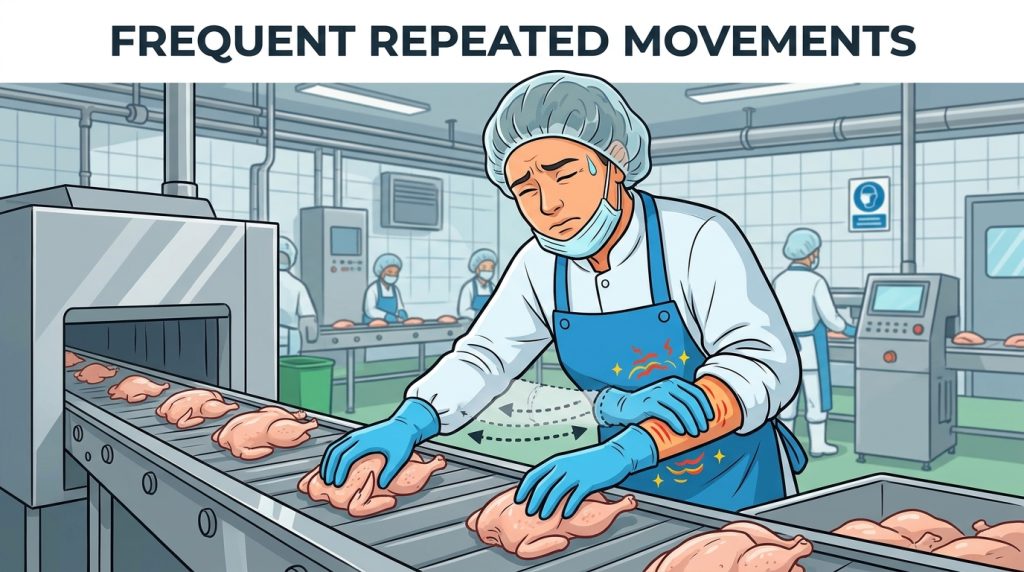
Performing the same hand, wrist, or arm movements for extended periods can increase the demands placed on particular muscles and tendons. Over time, workers may experience discomfort, tenderness, or reduced functional ability.
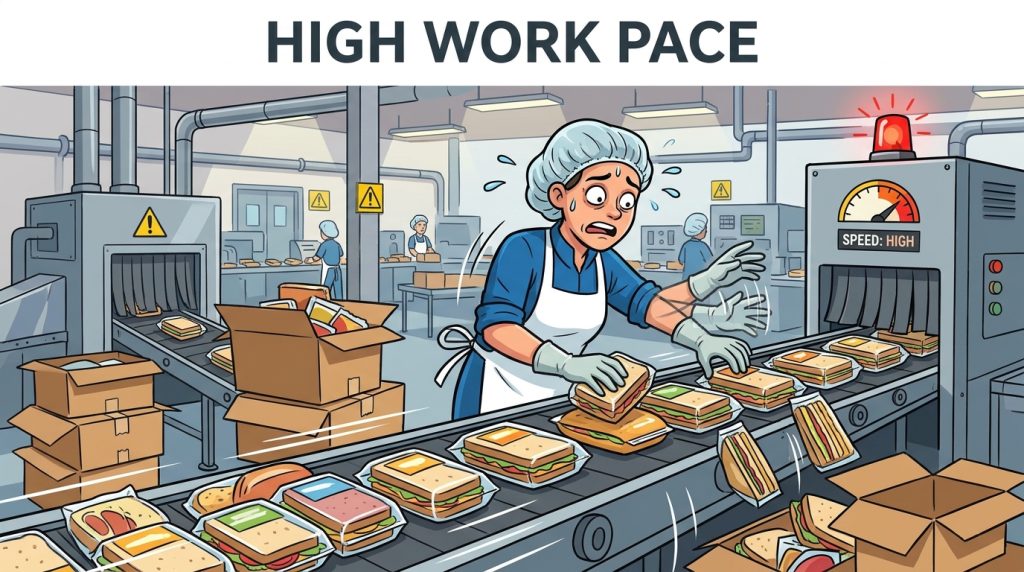
Production targets and continuously moving conveyor belts may limit opportunities for workers to change their movements or recover between tasks. A high work pace can increase physical demands, particularly when combined with forceful movements.
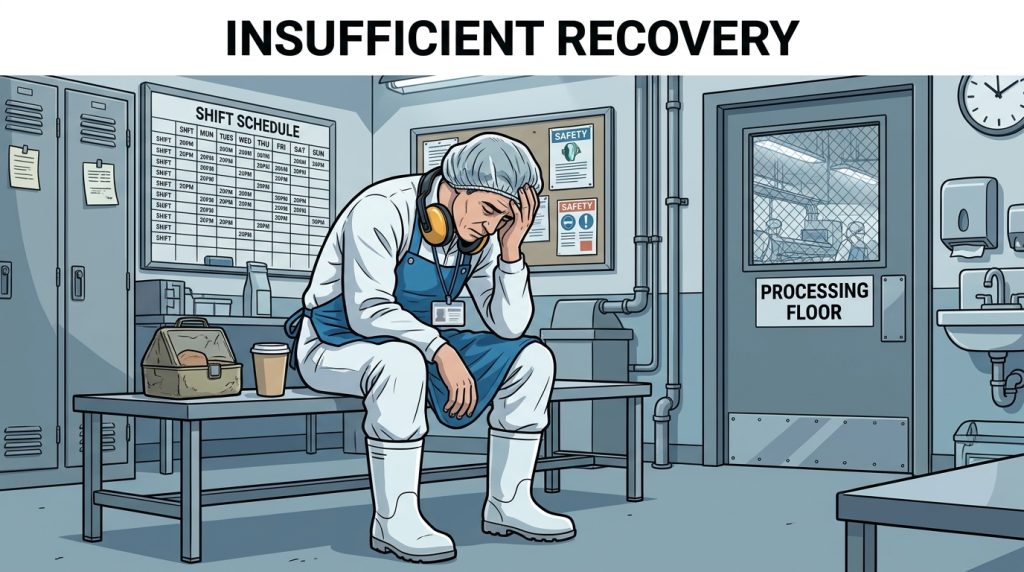
When similar muscle groups are repeatedly used without adequate recovery, fatigue may accumulate. Workers may also find it difficult to maintain comfortable and controlled movements as fatigue increases.
Preventing Overuse Injuries
An ergonomic risk assessment can help identify repetitive tasks that require closer attention. The assessment may examine movement frequency, force, task duration, recovery opportunities, and the way work is organised.
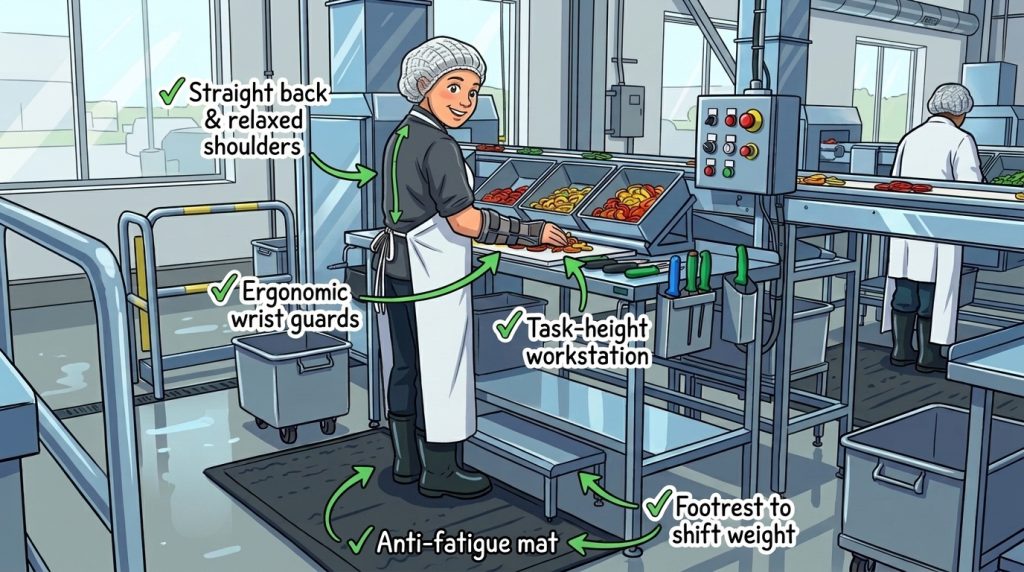
Possible improvements include automating suitable repetitive activities, redesigning tools and workstations, reducing unnecessary movements, and adjusting production methods. Task variation may also help where alternative tasks involve different physical demands. However, rotation alone may not reduce risk if workers continue performing similar repetitive activities.
Building Awareness Through Ergonomic Training
Ergonomic training helps workers and supervisors recognise early signs of overuse, understand reporting procedures, and use equipment appropriately. Workers should be encouraged to report persistent discomfort rather than continue working without support.
Training should be combined with appropriate changes to task design, work pace, and recovery arrangements. Organisations should also review whether implemented controls effectively reduce repetitive demands.
Conclusion
Repetitive work is often necessary in food processing, but excessive repetition and insufficient recovery can increase the risk of overuse injuries. By conducting an appropriate ergonomic risk assessment, providing effective ergonomic training, and improving task design, organisations can manage repetitive work demands and support workers’ long-term well-being.