
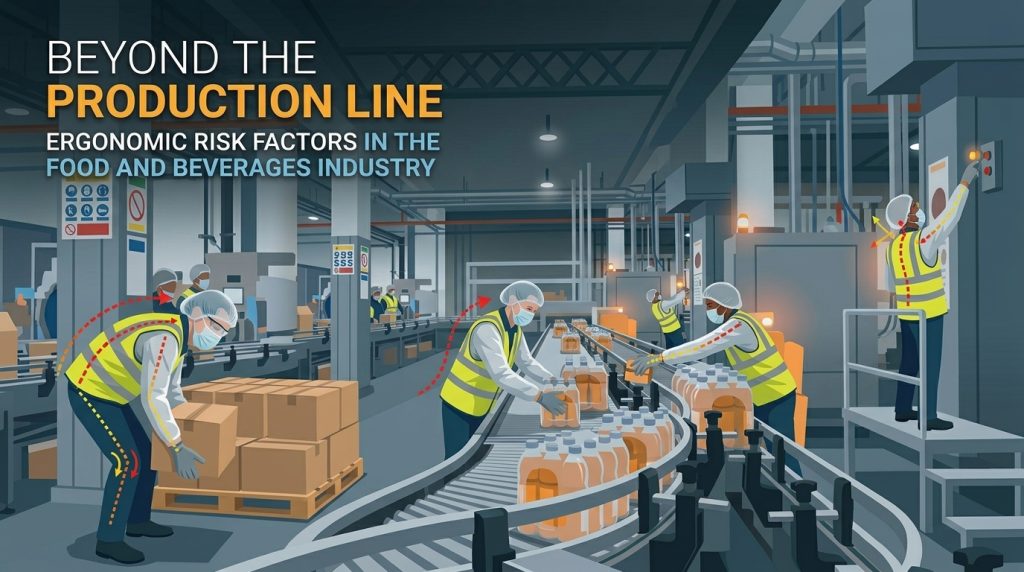
BEYOND THE PRODUCTION LINE: ERGONOMIC RISK FACTORS IN THE FOOD AND BEVERAGES INDUSTRY
Introduction
The food and beverage (F&B) industry involves various activities, including ingredient preparation, food processing, bottling, packaging, and product handling. Although these tasks are essential to daily operations, they can expose workers to ergonomic risk factors that may affect their health, comfort, and work performance. Identifying these risks is important for maintaining safer and more efficient working conditions.
Common Ergonomic Risk Factors in F&B Operations
Ergonomic risks can occur at different stages of food and beverage production, particularly during repetitive and physically demanding tasks.
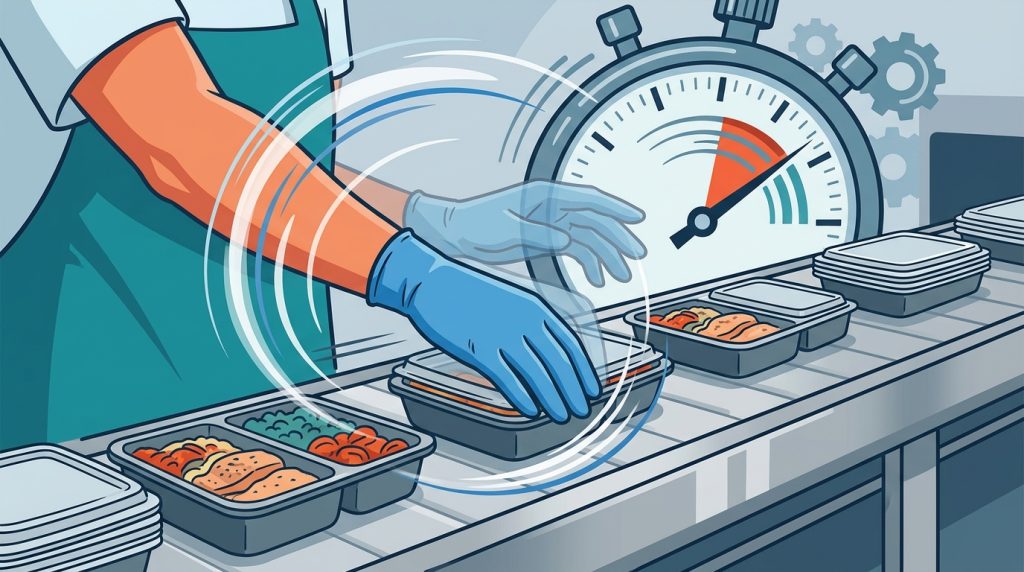
Workers involved in sorting, filling, labelling, and packaging may perform the same hand and arm movements repeatedly. Prolonged exposure can contribute to muscle fatigue and increase the risk of work-related musculoskeletal disorders (MSDs).
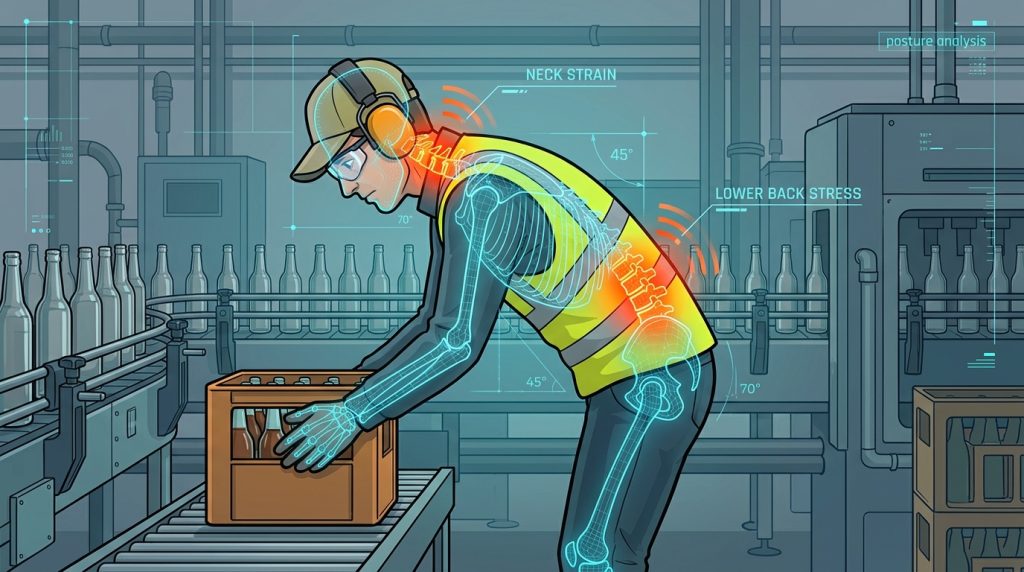
Bending, twisting, reaching across conveyor belts, and working at unsuitable heights can place additional strain on the neck, shoulders, and back. These postures may become more problematic when maintained for extended periods.
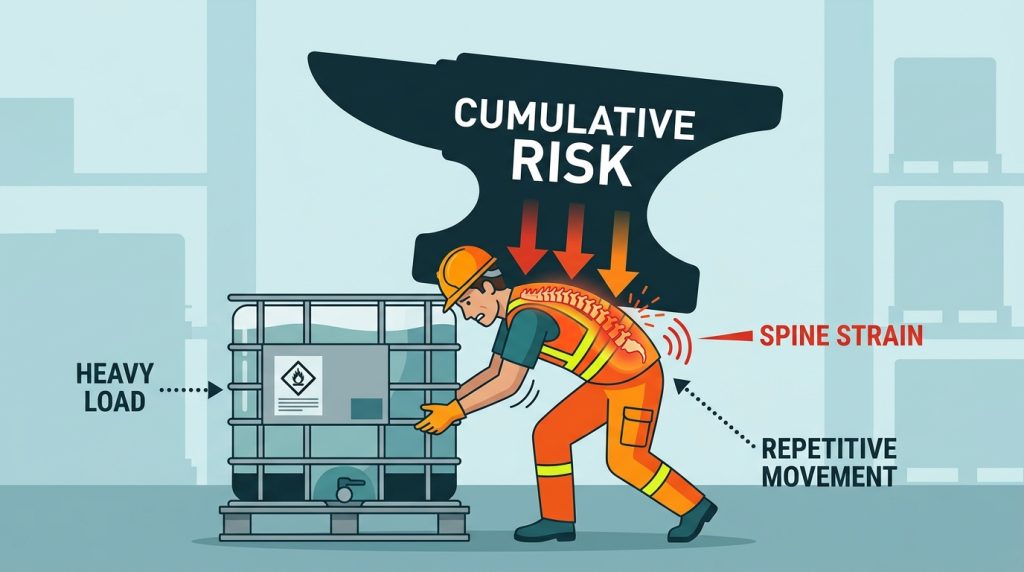
Lifting ingredient sacks, carrying containers, and stacking product cartons can increase physical demands, particularly when handling heavy loads or working in restricted spaces. Poor handling techniques and unsuitable material-handling arrangements may further increase the risk of injury.
Workers who remain standing in one position or maintain the same posture for extended periods may experience discomfort and physical fatigue. These conditions are common in production lines, inspection stations, and packaging operations.
The Importance of Ergonomic Risk Assessment in Malaysia
An ergonomic risk assessment helps organisations identify and evaluate ergonomic hazards in the workplace. In the F&B industry, assessments can examine working posture, repetition, physical force, and exposure duration to determine which tasks may require improvement.
The findings can guide changes to workstation design, equipment positioning, material-handling methods, and work organisation. Conducting an appropriate ergonomic risk assessment in Malaysia can help organisations identify priorities for intervention and reduce unnecessary physical demands.
Building Awareness Through Ergonomic Training
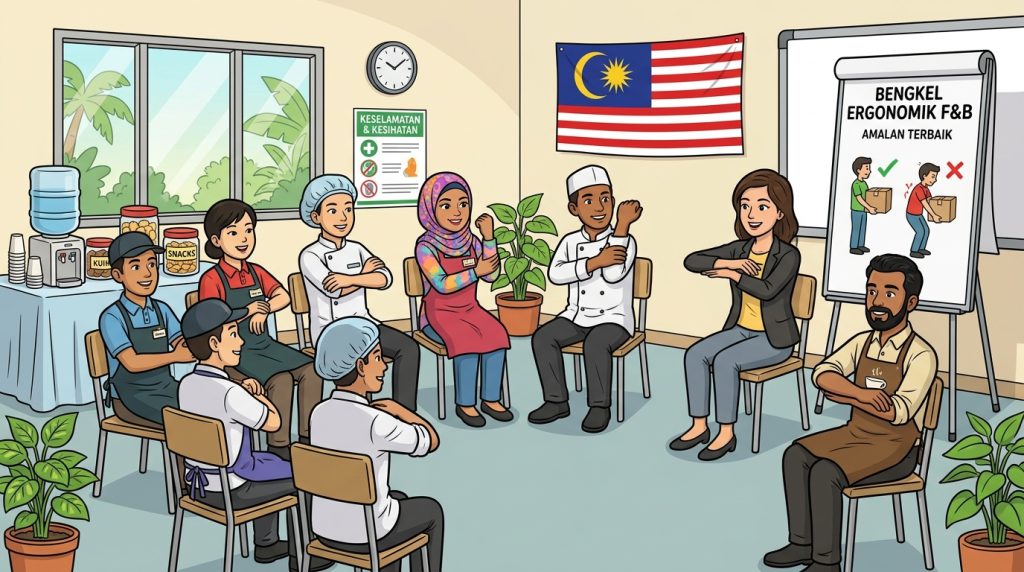
Ergonomic training helps workers and supervisors understand common ergonomic hazards, recognise early signs of discomfort, and adopt appropriate work practices. Training also encourages workers to report symptoms and provide feedback about difficulties encountered during daily tasks.
However, training alone may not adequately control ergonomic risks. It should be supported by practical improvements to workstations, equipment, and production processes. Workers should not be expected to compensate for poorly designed tasks through individual effort alone.
Conclusion
Ergonomic risks in the food and beverage industry can arise throughout production, from ingredient preparation to the handling of finished products. By combining appropriate ergonomic risk assessment, effective ergonomic training, and improvements to work design, organisations can reduce unnecessary physical demands, support worker well-being, and promote safer and more sustainable production operations.