
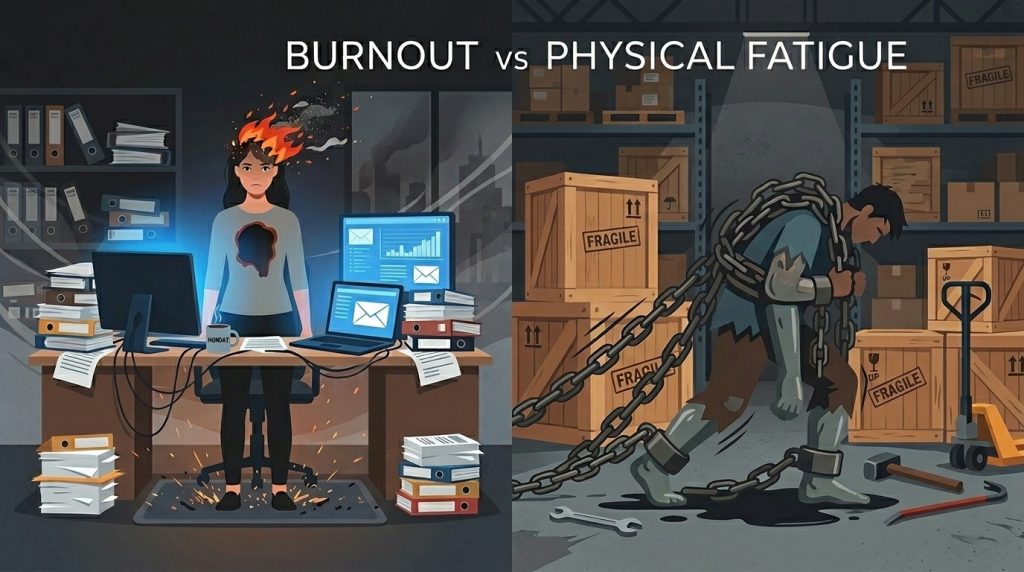
Burnout vs Physical Fatigue: Understanding the Difference
Introduction
Feeling exhausted at work is a common experience, but not all tiredness is the same. Burnout and physical fatigue are often confused, yet they have different causes, symptoms, and solutions. Understanding the difference is essential for maintaining employee well-being and performance.
What is Physical Fatigue
Physical fatigue occurs when the body becomes tired after prolonged physical activity, repetitive work, or insufficient rest. It is often characterized by muscle soreness, reduced strength, and a general feeling of physical exhaustion. In most cases, physical fatigue improves with adequate rest, recovery, and proper workload management.
What is Burnout
Burnout is a state of emotional, mental, and physical exhaustion caused by prolonged work-related stress. Employees experiencing burnout may feel overwhelmed, unmotivated, detached from their work, and less productive. Unlike physical fatigue, burnout cannot be resolved through rest alone and often requires changes in workload, support systems, or work practices.
Why the Difference Matters
Misidentifying burnout as simple fatigue can delay effective intervention. While physical fatigue may be addressed through breaks and recovery time, burnout often requires a broader approach involving workload management, employee support, and workplace culture improvements.
Managing Both Risks
Organisations can reduce physical fatigue by providing adequate rest breaks, ergonomic work design, and reasonable workloads. Preventing burnout requires clear communication, realistic expectations, employee recognition, and a supportive work environment.
Conclusion
Although burnout and physical fatigue may share similar symptoms, they are not the same. Recognising the difference allows organisations to implement the right solutions, helping employees stay healthy, engaged, and productive.