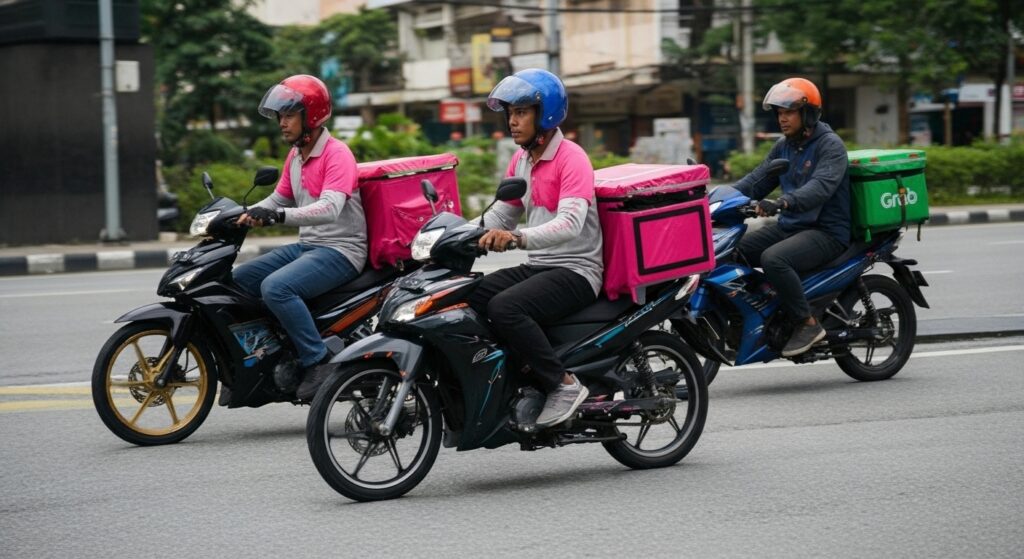
Motorcycle Ergonomics for Malaysian Riders: Ride Safer, Ride Smarter
For many Malaysians, motorcycles are more than just vehicles—they’re a daily lifeline for commuting, work, and weekend rides. However, long hours on the road, unpredictable traffic, and hot weather can take a toll on a rider’s body. Poor ergonomics can lead to back pain, wrist strain, and fatigue, all of which increase the risk of accidents. By understanding and applying motorcycle ergonomics, riders can improve comfort, reduce injuries, and enjoy a safer ride.
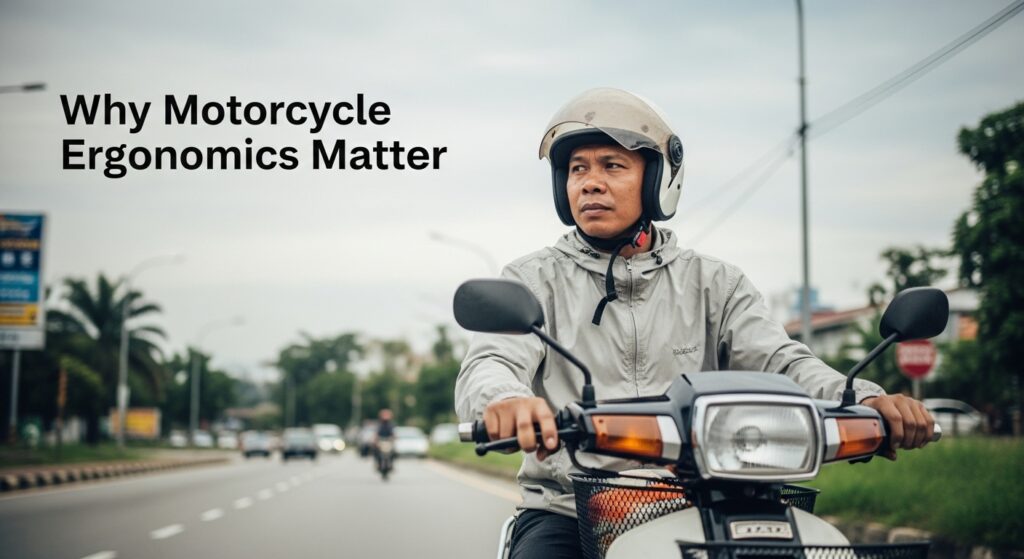
Why Motorcycle Ergonomics Matter
Motorcycle ergonomics is about how your body interacts with your bike—posture, handlebar position, seat height, and even the way you place your feet. A well-adjusted setup reduces muscle strain, improves control, and helps riders maintain focus in Malaysian traffic conditions.
Poor ergonomics can cause:
Lower back pain from prolonged slouching.
Wrist and shoulder strain from poorly positioned handlebars.
Neck stiffness from constantly craning forward.
Leg fatigue from awkward footpeg positions.
Common Ergonomic Challenges for Malaysian Riders
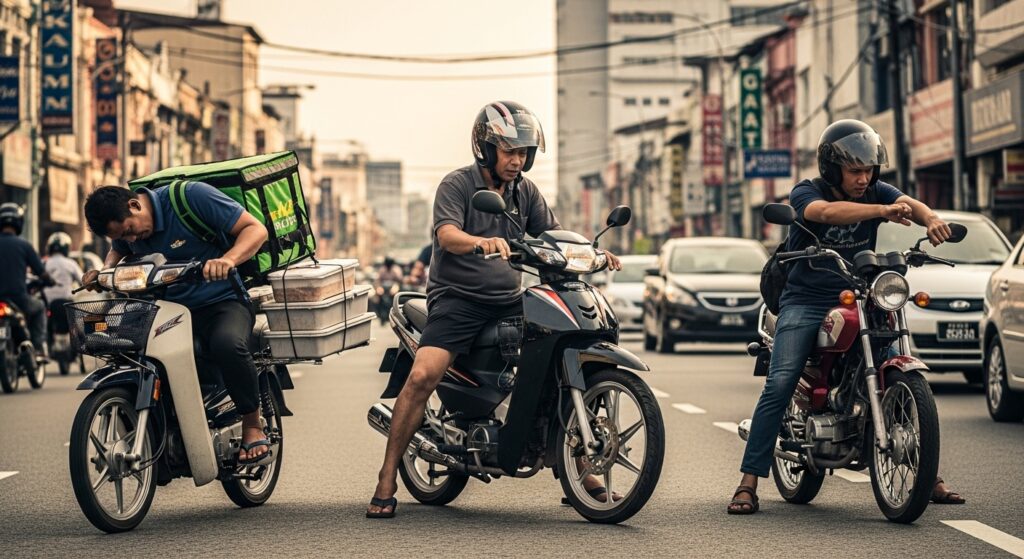
Stop-and-Go Traffic Constant braking and gear-shifting in city areas like Kuala Lumpur or Johor Bahru put strain on wrists, knees, and ankles.
Long Commutes Riders from outskirts such as Seremban or Klang Valley often travel over an hour daily, leading to fatigue and muscle stiffness.
Weather Conditions Heat and humidity worsen discomfort, while heavy rain demands extra focus and stable riding posture.
Bike Types
Kapcai/Commuter bikes: Affordable but often have smaller seats and limited back support.
Scooters: Comfortable for short rides but can strain the lower back on long trips.
Sport bikes: Aggressive posture may cause neck and wrist issues.
Touring bikes: Better ergonomics but less common due to higher cost.
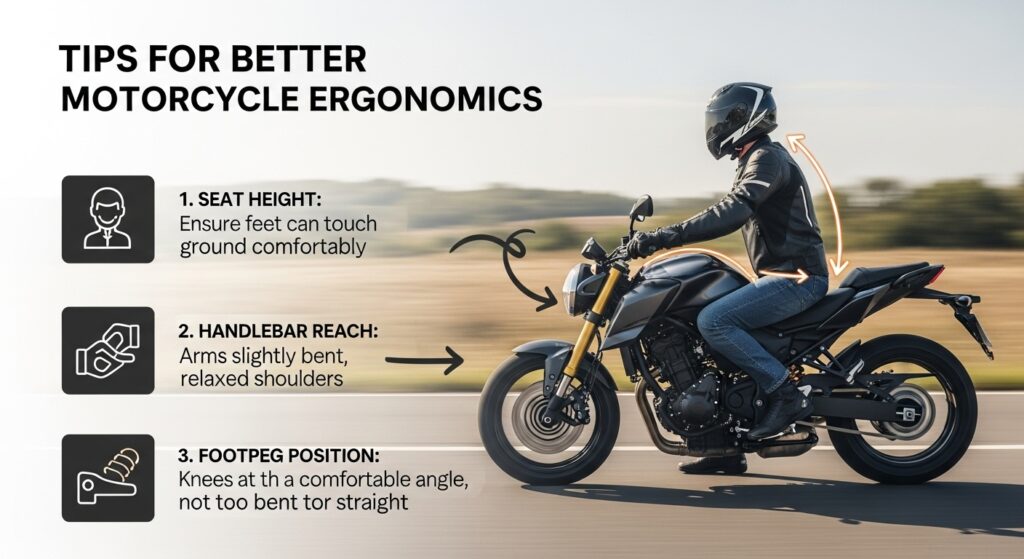
Tips for Better Motorcycle Ergonomics
Adjust Your Posture
Sit upright with your back slightly leaned forward, not hunched.
Keep elbows relaxed and bent, not locked.
Place feet firmly on footpegs with knees slightly bent.
Modify Your Bike Setup
Handlebars: Choose a height and angle that reduce wrist strain.
Seat: Invest in cushioned or gel seats for longer rides.
Footpegs: Adjust or install aftermarket options for comfort.
Mirrors: Position them so you don’t need to constantly crane your neck.
Take Breaks
Every 45–60 minutes, stop for a quick stretch. This helps blood circulation and reduces stiffness.
Invest in the Right Gear
Back support belts for long commutes.
Padded gloves to reduce vibration.
Well-ventilated helmets and jackets to stay cool in Malaysia’s heat.
Strengthen Your Body
Simple exercises like planks, stretches, and light cardio can strengthen your core and improve endurance for riding.
Quick Ergonomic Checklist for Riders
✔️ Is my seat height comfortable for both feet to touch the ground? ✔️ Do my wrists feel neutral (not bent upwards) on the handlebars? ✔️ Can I see the mirrors without straining my neck? ✔️ Am I able to ride for 30 minutes without pain or numbness?
Final Thoughts
Motorcycle ergonomics is not just about comfort—it’s about safety. Malaysian riders face unique challenges like heavy traffic, tropical weather, and long commutes, making ergonomics even more important. By making small adjustments to your bike and posture, you can reduce fatigue, prevent long-term injuries, and enjoy a safer, smoother ride.
Remember: A well-fitted motorcycle is not just about performance—it’s about protecting your health every day on the road.