Master your mobile workstation: A guide to car ergonomics
Many of us spend hours every day in our cars, treating them as mobile workstations for commuting, running errands, and road-tripping. Yet, we often ignore the most important aspect of our vehicle’s interior: its ergonomics. A poorly adjusted driving position can cause back pain, neck stiffness, and shoulder injuries, making your daily drive a stressful and fatiguing experience.
Fortunately, achieving a comfortable and supportive driving posture is easier than you think. By following a few key principles, you can turn your car’s interior into an ergonomically friendly environment that protects your body and enhances your focus on the road.
Adjust your seat for spinal health
The foundation of good car ergonomics is the driver’s seat. Your adjustments should create a stable, supportive position that maintains the natural curve of your spine.
Height and distance: Position your seat so your hips are level with or slightly higher than your knees. Ensure you can fully press the pedals with a slight bend in your knees, without overstretching or sitting too close.
Backrest angle: Lean your backrest to an angle of about 100 to 110 degrees. This distributes your weight evenly across your back and pelvis, relieving pressure on your spine.
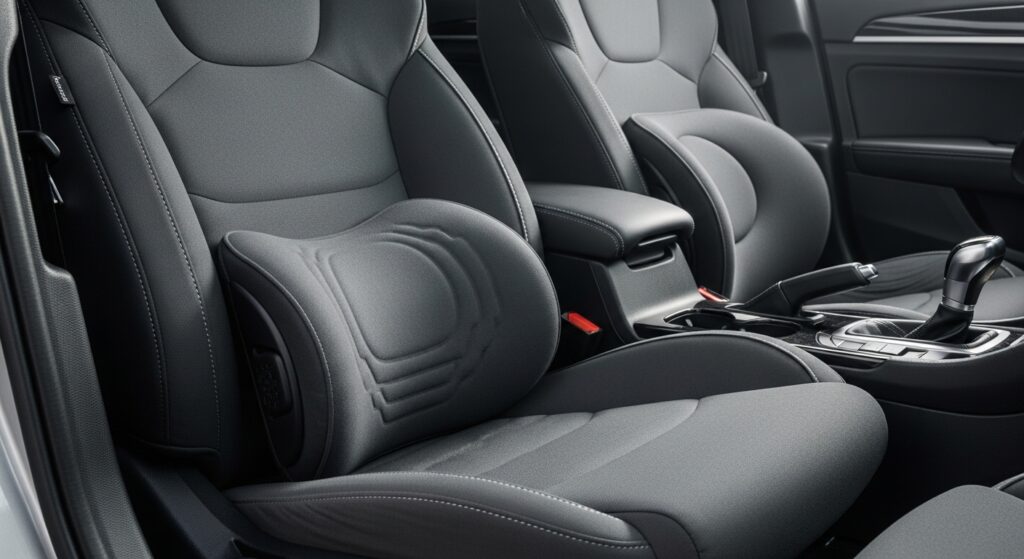
Lumbar support: Use your car’s adjustable lumbar support—or an accessory cushion—to fill the curve of your lower back. This is crucial for preventing lower back pain, especially during long drives.
Headrest position: Adjust the headrest so the top of it is level with the top of your head. It should be as close to the back of your head as possible to reduce the risk of whiplash in a collision.
Find the right grip on the steering wheel
Your steering wheel position is not just for control—it’s also key for your upper body comfort and safety.
Distance: Adjust the wheel so there is about 10 to 12 inches between your chest and the steering wheel hub. This ensures adequate space for the airbag to deploy safely.
Hand position: Grip the wheel at the “9 and 3” position, like a clock face. This keeps your arms slightly bent and relaxed, which reduces tension in your shoulders and neck.
Optimize your visibility and reach
Properly adjusting your mirrors and controls is a quick way to minimize unnecessary movement and strain while driving.
Mirror alignment: Properly set your rearview and side mirrors to eliminate as many blind spots as possible. This prevents you from having to twist and turn your neck to check traffic.
Accessible controls: Keep frequently used items and vehicle controls within easy reach. The car’s infotainment system, switches, and cup holders should not require you to strain or twist to operate.
Invest in ergonomic accessories
To further enhance your driving comfort, consider adding accessories to your car.
Lumbar cushions: An adjustable lumbar support cushion can provide personalized lower back support, which is particularly beneficial on long trips.
Seat cushions: If you have to sit in a fixed-angle car seat, a seat cushion can help elevate your hips to a healthier position.
Vibration dampeners: For older vehicles or driving on rough roads, vibration-dampening seat cushions can help minimize the whole-body vibration that contributes to back pain.
Combat fatigue on the road
Even a perfectly adjusted setup can’t eliminate the need for breaks on long journeys.
Take regular breaks: Stop every two hours to get out of the car, stretch, and walk around. This improves circulation and reduces the strain from prolonged sitting.
Small adjustments: During the drive, make minor changes to your seating position every 15 to 20 minutes to prevent muscle stiffness and fatigue.
Final Thought:
By paying attention to your car’s ergonomics, you not only make your drive more comfortable but also improve your health and safety. A few simple adjustments can prevent long-term musculoskeletal issues and make every trip more enjoyable.