Cognitive Ergonomics: Designing Workplaces That Support the Mind
When we talk about ergonomics, many people imagine chairs, desks, or lifting techniques. But ergonomics isn’t only about the body it’s also about the mind. This is where cognitive ergonomics comes into play.
Cognitive ergonomics is the study of how mental processes like memory, perception, decision-making, and attention interact with the design of work systems, tools, and tasks. In simple terms, it’s about reducing mental strain, preventing mistakes, and making work easier to think through.
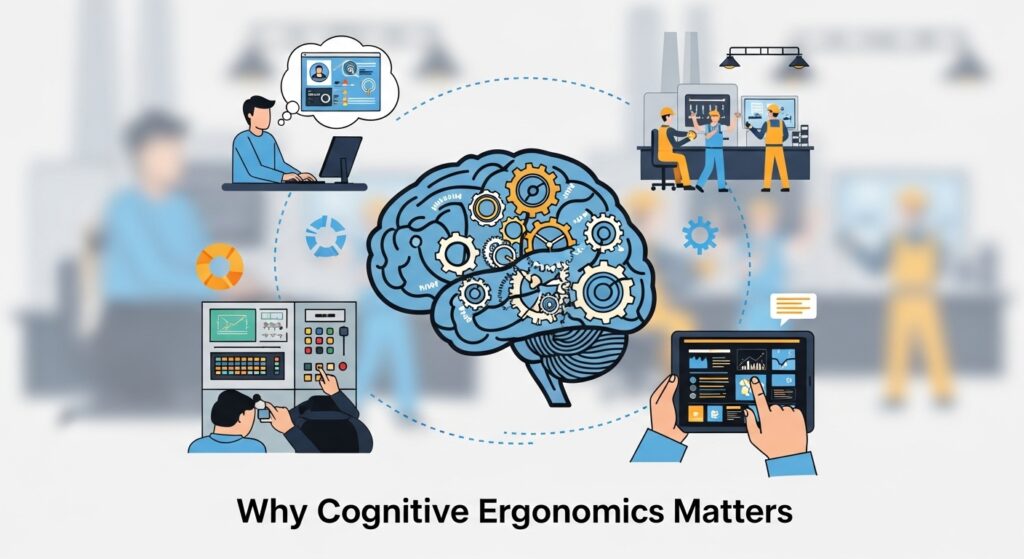
Why Cognitive Ergonomics Matters
In today’s world, many jobs rely heavily on information processing rather than physical labour. Office workers, machine operators, drivers, and even students are constantly required to make quick decisions, focus for long periods, and process large amounts of data.
Poorly designed systems can cause:
Mental fatigue
Confusion or frustration
Errors and accidents
Stress and burnout
By applying cognitive ergonomics, we can improve clarity, efficiency, and well-being in the workplace.
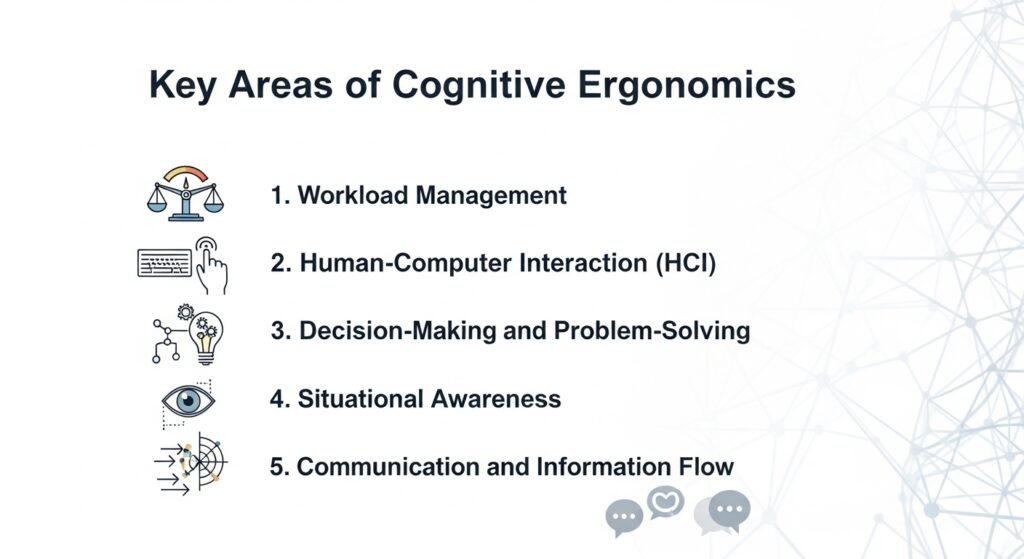
Key Areas of Cognitive Ergonomics
Workload Management
Too much information at once overwhelms the brain, while too little can lead to boredom.
Balancing workload ensures steady focus without burnout.
Human–Computer Interaction (HCI)
From mobile apps to office software, digital tools should be intuitive and user-friendly.
A confusing interface increases stress and the risk of mistakes.
Decision-Making and Problem-Solving
Clear instructions, visual aids, and structured processes help workers make better choices.
This is especially important in high-risk jobs such as healthcare, aviation, or manufacturing.
Situational Awareness
Workers need to stay aware of their environment to avoid hazards.
Poor signage, cluttered displays, or unclear alarms can reduce awareness and cause accidents.
Communication and Information Flow
Effective communication whether through signage, training, or team discussions reduces misunderstandings.
Miscommunication is one of the top causes of workplace errors.
Practical Tips for Better Cognitive Ergonomics
Simplify systems: Keep instructions, dashboards, and forms clear and easy to follow.
Use visual cues: Color coding, icons, and warning signals help reduce mental effort.
Encourage breaks: Short pauses help reset concentration and prevent mental overload.
Provide training: Workers should know how to use tools and systems confidently.
Minimize distractions: Reduce unnecessary noise, notifications, or interruptions in the workplace.
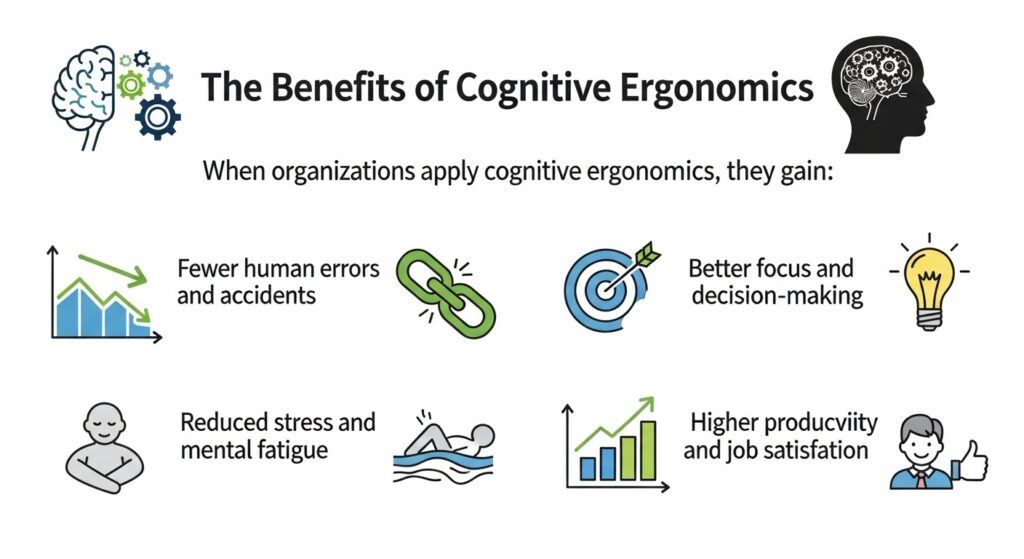
The Benefits of Cognitive Ergonomics
When organizations apply cognitive ergonomics, they gain:
Fewer human errors and accidents
Better focus and decision-making
Reduced stress and mental fatigue
Higher productivity and job satisfaction
For employees, it means less frustration and more confidence in their daily tasks.
Final Thoughts
Cognitive ergonomics reminds us that a healthy workplace isn’t just about supporting the body—it’s also about protecting the mind. By designing systems, tools, and environments that align with human thinking, we can create workplaces that are safer, smarter, and more enjoyable.
After all, when the mind works smoothly, everything else follows.