
Common Postural Myths That Increase Injury Risk
Posture is often linked directly to injury prevention, yet many commonly accepted beliefs about “good posture” are inaccurate. Misunderstanding posture can lead individuals to adopt rigid or unsustainable positions that increase muscle strain rather than reduce it. By addressing common postural myths, we can better understand how to protect the body and reduce the risk of work-related musculoskeletal disorders.
Myth 1: Sitting Perfectly Straight Is Always Best
Posture is often associated with sitting rigidly upright, but forcing the spine into a stiff position increases muscle tension, especially in the lower back and shoulders. The body is not designed to remain static, and holding a rigid posture for long periods can lead to faster fatigue and discomfort rather than protection.
Myth 2: There Is One Perfect Posture for Everyone
Another common misconception is that a single “correct” posture applies to all individuals. In reality, body size, joint mobility, and comfort levels vary from person to person. Ergonomics focuses on neutral alignment and adjustability, allowing posture to fit the individual rather than forcing the individual to fit a posture.
Myth 3: Slouching Is Always Harmful
Slouching is often labelled as dangerous, but short periods of posture variation are not inherently harmful. While prolonged slouched sitting can increase spinal stress, occasional changes in posture help reduce static muscle loading. The real risk comes from maintaining any posture — good or bad — for too long.
Myth 4: Pain Is Just Part of Long Working Hours
Many workers accept neck, shoulder, or back pain as normal, especially during long workdays. However, early discomfort is often a warning sign of sustained muscle strain or poor workstation setup. Ignoring these signals increases the likelihood of long-term musculoskeletal disorders.
Myth 5: An Ergonomic Chair Alone Fixes Posture
Purchasing an ergonomic chair is often seen as a complete solution, but posture is influenced by much more than seating. Screen height, keyboard and mouse placement, work habits, and break frequency all play a role. Ergonomics is a system of setup, behaviour, and movement — not a single product.
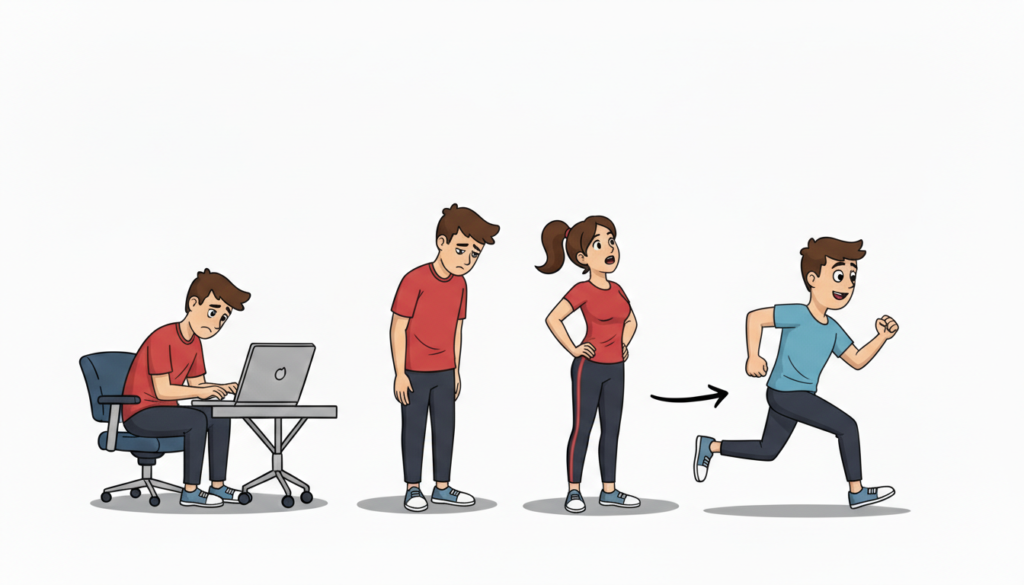
The Reality: Movement Matters Most
The safest posture is one that is neutral, supported, and frequently changed. Rather than striving for a perfect position, the focus should be on comfort, adjustability, and regular movement. Reducing injury risk depends less on posture perfection and more on avoiding prolonged static positions.