
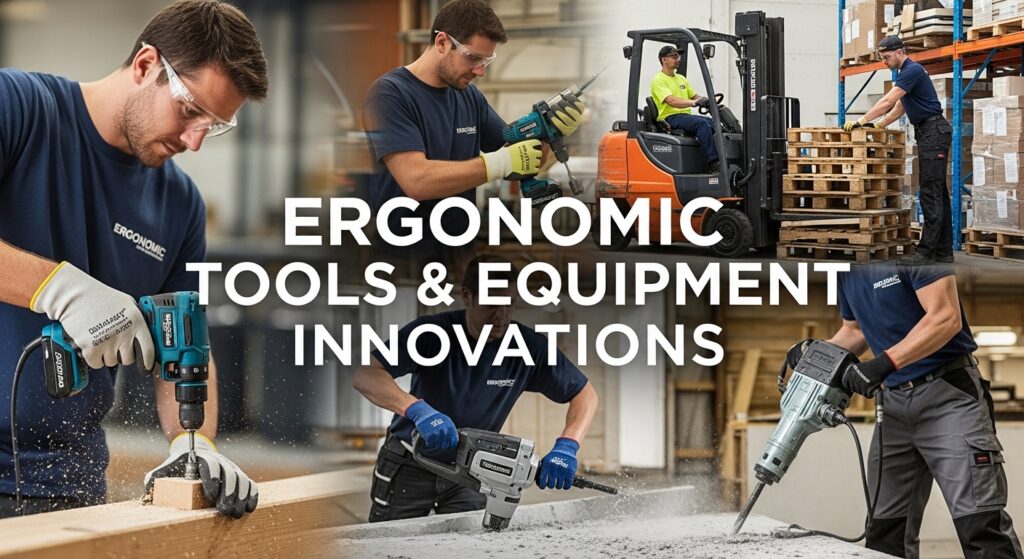
🛠️ ERGONOMIC TOOLS & EQUIPMENT INNOVATIONS 🛠️
As workplaces evolve, so do the tools and equipment we use every day. Modern ergonomic innovations are transforming how people work — making tasks safer, easier, and more efficient.
From adjustable workstations to smart lifting aids, ergonomic tools and equipment are designed to reduce physical strain, prevent injuries, and enhance productivity. These innovations don’t just improve comfort — they support long-term health and sustainable performance.
🧠 What Are Ergonomic Tools & Equipment?
Ergonomic tools and equipment are designed to fit the user and task, rather than forcing the user to adapt to poor design. They help minimise risk factors such as:
- Awkward postures
- Excessive force
- Repetitive movements
- Prolonged static positions
- Overreaching and bending
Well-designed tools support neutral posture, reduce fatigue, and improve precision.
💡 Why Ergonomic Innovations Matter
Traditional tools and equipment often prioritise function over user comfort — leading to higher injury risk and reduced efficiency.
Innovative ergonomic solutions help organisations:
- ✔️ Reduce musculoskeletal disorders (MSDs)
- ✔️ Improve task accuracy and quality
- ✔️ Increase productivity and work speed
- ✔️ Reduce fatigue and errors
- ✔️ Lower injury-related costs
- ✔️ Support inclusive design for diverse users
Investing in ergonomic innovation is investing in people.
🧩 Key Ergonomic Tool & Equipment Innovations🧩
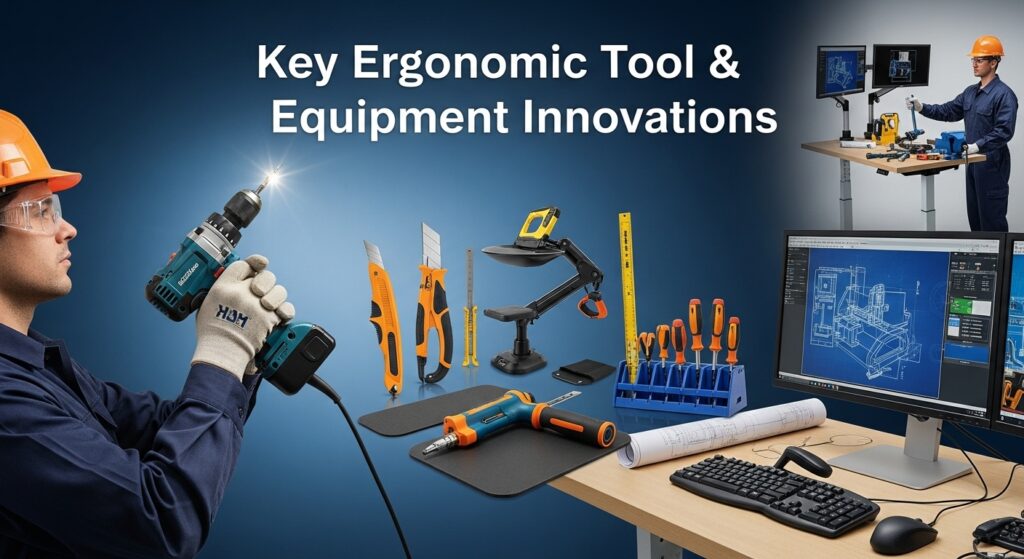
- Adjustable Workstations
- Sit-stand desks for posture variation
- Height-adjustable benches for different body sizes
- Modular work surfaces that adapt to tasks
These allow workers to change posture and reduce static load.
- Ergonomic Hand Tools
- Handles shaped to fit the hand naturally
- Reduced grip force and vibration
- Lightweight, balanced designs
- Trigger and switch placement that minimises strain
Examples include ergonomic screwdrivers, pliers, and power tools.
- Smart Lifting & Material Handling Aids
- Vacuum lifters and hoists
- Powered trolleys and conveyors
- Lift-assist devices and exoskeletons
These tools reduce manual lifting stress and lower back injuries.
- Advanced Seating Solutions
- Dynamic chairs that encourage movement
- Lumbar support with adjustability
- Saddle chairs for task-specific work
- Anti-fatigue mats for prolonged standing
Good seating supports posture and circulation.
- HMI & Control Interface Improvements
- Touchscreens with larger, clearer icons
- Voice-controlled or gesture-based interfaces
- Customisable display layouts
- Reduced cognitive load through intuitive design
These innovations improve both physical and mental ergonomics.
- Wearable & Smart Ergonomics Technology
- Posture-monitoring wearables
- Real-time feedback for lifting and movement
- Sensor-based risk detection
- Data-driven ergonomics improvements
Technology now helps prevent injuries before they occur.
🌿 Practical Tips for Implementing Ergonomic Innovations
- Match tools to the task and the user
- Pilot new equipment before full rollout
- Involve workers in selection and testing
- Provide training on correct usage
- Maintain and review tools regularly
- Combine technology with good work practices
Even the most advanced tool must be used correctly to deliver benefits.
🌞 Final Thoughts 🌞
Ergonomic tools and equipment innovations are shaping the future of work here efficiency, safety, and comfort go hand in hand.
By adopting modern ergonomic solutions, organisations can create work environments that are:
✨ Safer
✨ Smarter
✨ More efficient
✨ Designed for people
💚 Innovation works best when it supports human capability.💚
Design tools that fit people and people will perform at their best.