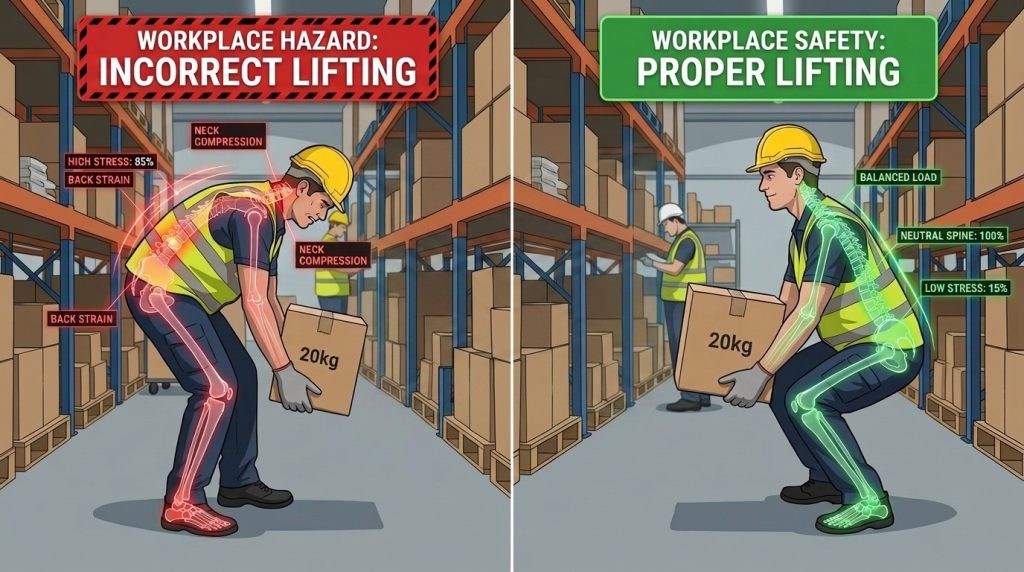
Ergonomics as a Leading Indicator for Workplace Safety
Introduction
Workplace safety is often measured by injuries and accidents that have already occurred. However, ergonomics can serve as a leading indicator by identifying and addressing risks before they result in incidents, helping organisations take a proactive approach to safety.
Why It Matters
Poor ergonomics can contribute to musculoskeletal disorders (MSDs), fatigue, reduced productivity, and human error. Identifying ergonomic hazards early allows organisations to prevent injuries, improve employee well-being, and enhance overall workplace performance.
Using Ergonomics as a Leading Indicator
Regular ergonomic risk assessments, employee feedback, discomfort reports, and workstation inspections can help detect potential issues before they become serious. Monitoring these indicators enables employers to implement timely improvements and reduce future risks.
Benefits to Organisations
Integrating ergonomics into workplace safety programmes supports early intervention, reduces absenteeism, improves productivity, and strengthens the organisation’s overall safety culture. It also demonstrates a commitment to continuous improvement and employee well-being.
Conclusion
Ergonomics should not only be viewed as a response to workplace injuries but as a tool for preventing them. By using ergonomics as a leading indicator, organisations can build a safer, healthier, and more productive work environment.