
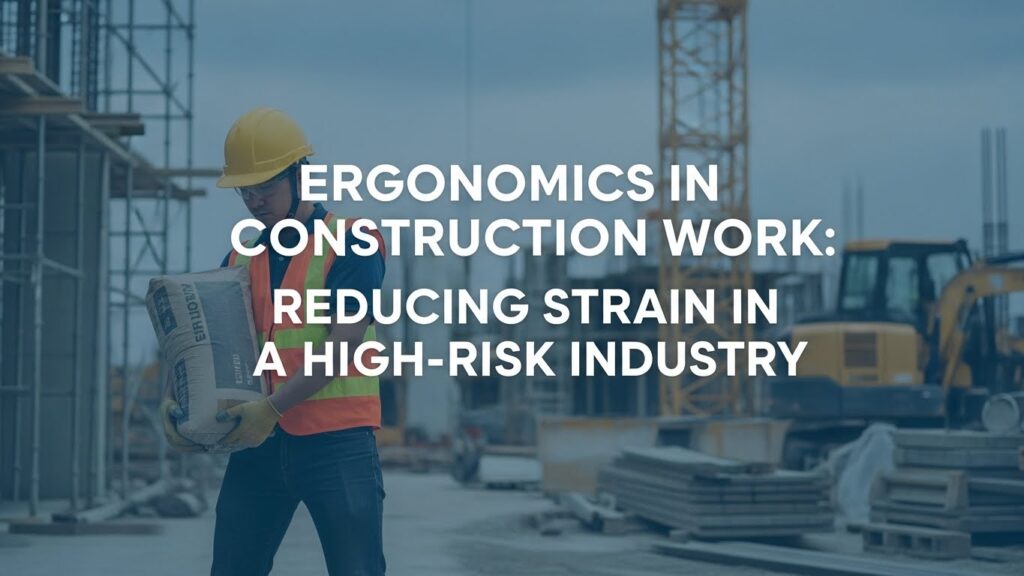
Ergonomics in Construction Work: Reducing Strain in a High-Risk Industry
Construction work is physically demanding, involving heavy lifting, repetitive tasks, awkward postures, and outdoor environmental pressures. Because of this, construction workers face a high risk of musculoskeletal disorders (MSDs), back injuries, shoulder strain, and fatigue. Applying ergonomics on construction sites helps protect workers, improve productivity, and reduce accidents.
🏗️ Common Ergonomic Risks on Construction Sites
- Heavy manual lifting of cement bags, tools, steel bars, and materials
- Repetitive motions such as hammering, drilling, cutting, and screwing
- Working at awkward postures — kneeling, bending, squatting, overhead reaching
- Long hours of standing or carrying loads
- Exposure to vibration from power tools
- Handling unstable or uneven loads on rough surfaces
💡 Practical Ergonomic Solutions
- Use Mechanical Aids Whenever Possible
- Wheelbarrows, material hoists, forklifts, and lifting devices reduce manual handling.
- Use pipe trolleys and panel carriers for transporting long or heavy items.
- Proper Tool Selection and Maintenance
- Choose lightweight, low-vibration tools with good grip design.
- Ensure tools are sharp and well-maintained to reduce force required.
- Improve Work Methods
- Break large loads into smaller, manageable ones.
- Use team lifting for awkward or heavy objects.
- Organize materials closer to the work zone to reduce unnecessary carrying.
- Ergonomic Work Postures
- Encourage bending from the knees instead of the waist.
- Use adjustable platforms or scaffolding to maintain neutral posture.
- Avoid overhead work for long durations — rotate tasks or use extension tools.
- Job Rotation & Microbreaks
- Rotating workers between tasks prevents overload on specific muscle groups.
- Short breaks (1–2 minutes) help release muscle tension and reduce fatigue.
- Personal Protective Equipment (PPE)
- Use knee pads for floor-level work.
- Wear supportive, anti-slip footwear for stability.
- Use vibration-dampening gloves when operating power tools.
- Use Mechanical Aids Whenever Possible
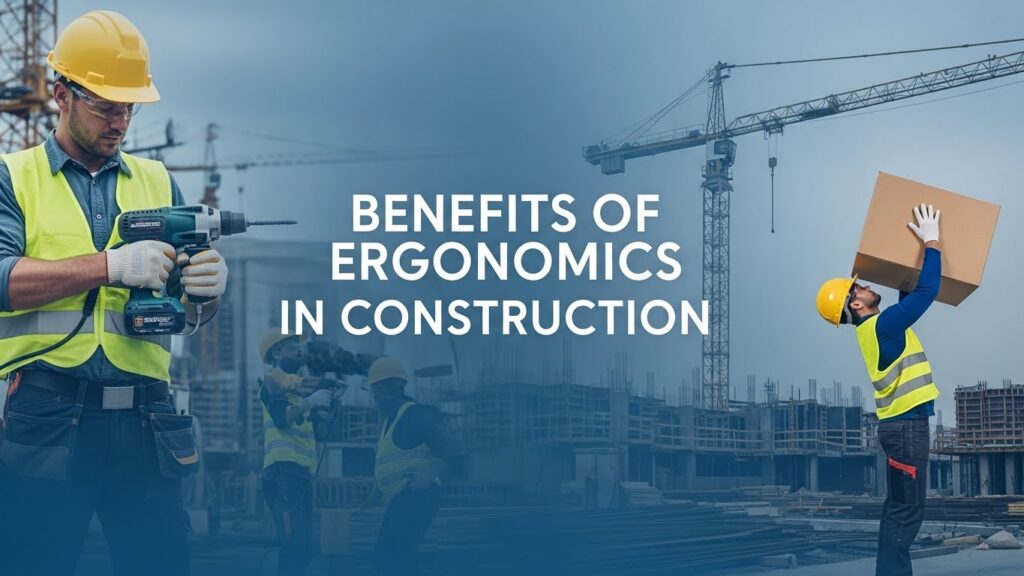
✅ Benefits of Ergonomics in Construction
- Reduced risk of back injuries and MSDs
- Higher productivity and efficiency
- Improved worker comfort and morale
- Lower medical and compensation costs
- Safer, more organized worksite operations
✅ Final Thought
Ergonomics in construction isn’t a luxury it’s essential. By integrating better tools, smarter work methods, and proper training, contractors can create a safer, healthier, and more productive workforce. Small ergonomic improvements can prevent major injuries and support long-term wellbeing in this demanding industry.