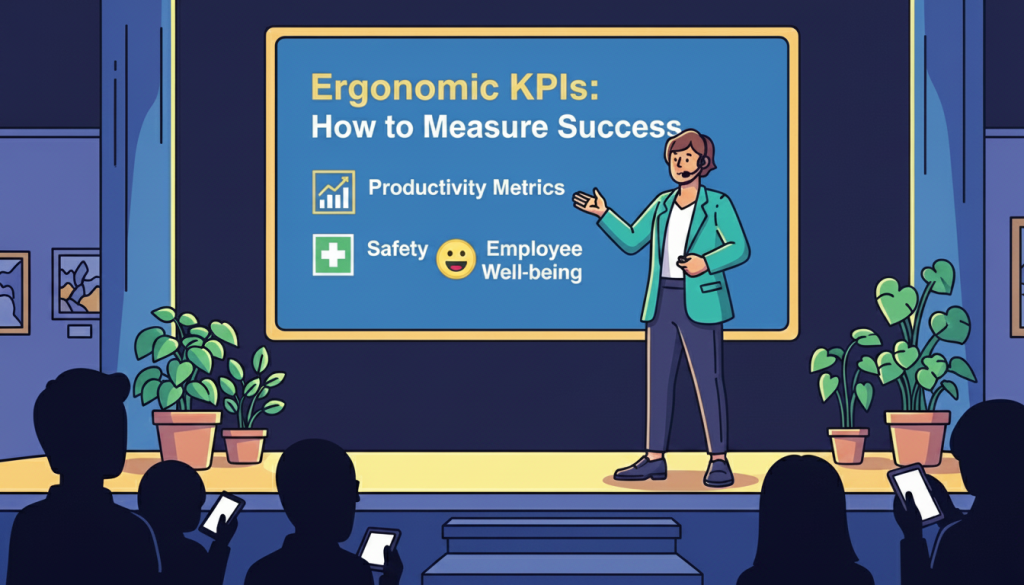
Ergonomics KPIs: How to Measure Success
Introduction
Implementing ergonomic initiatives is important, but how do you know if they’re working? Ergonomics Key Performance Indicators (KPIs) provide measurable ways to track improvements in safety, comfort, and productivity.
Why It Matters
Without clear metrics, it’s difficult to demonstrate the impact of ergonomics programs. KPIs help organisations identify problem areas, justify investments, and continuously improve workplace design and practices.
Examples of Ergonomics KPIs
- Injury and Incident Rates: Tracking musculoskeletal disorder (MSD) cases or near misses.
- Employee Discomfort Reports: Monitoring complaints or self-reported pain.
- Workstation Compliance: Checking if workstations meet ergonomic standards.
- Training Participation: Measuring the number of employees trained in ergonomics.
- Productivity Metrics: Observing improvements in task efficiency after ergonomic interventions.

Implementing KPIs Effectively
KPIs should be realistic, measurable, and relevant to the organisation’s operations. Regular monitoring and feedback allow employers to adjust interventions, address high-risk areas, and celebrate improvements.
Conclusion
Ergonomics KPIs turn workplace safety and comfort into measurable outcomes. By tracking progress, organisations can ensure their ergonomic initiatives are effective, sustainable, and beneficial for both employees and business performance.