
📈 ERGONOMICS & PRODUCTIVITY: THE BUSINESS CASE
In today’s competitive work environment, companies are constantly looking for ways to improve performance, reduce costs, and enhance employee well-being. While many organisations invest in technology and process improvements, one powerful solution is often overlooked:
Ergonomics;
Ergonomic design isn’t just about comfort — it’s a strategic business investment that directly impacts productivity, quality, and the bottom line. When employees can work safely and comfortably, they perform better, make fewer mistakes, and stay healthier in the long run.
🧠 What Is Ergonomics in the Workplace?
Ergonomics is the science of designing work to fit the worker. It optimises tools, equipment, tasks, and environments so employees can perform their jobs with ease, efficiency, and minimal strain.
Good ergonomics focuses on:
- Proper posture and workstation setup
- Reducing forceful or repetitive movements
- Minimising awkward positions
- Improving lighting, layout, and workflow
- Supporting physical and cognitive comfort
When these elements align, workers can do their best work with less fatigue and fewer interruptions.
💼 Why Ergonomics Makes Good Business Sense
Poor ergonomic conditions don’t just harm workers — they harm operations. Common issues include:
- ⏳ Slower work pace due to discomfort
- ❌ Mistakes or reduced quality
- 🦴 Musculoskeletal disorders (MSDs)
- 🤕 Injury-related downtime
- 💸 Higher worker’s compensation or medical costs
- 🔁 Increased turnover and absenteeism
Investing in ergonomics tackles these problems head-on. Companies benefit through:
✔️ Higher Productivity
Comfortable workers move more efficiently, think more clearly, and complete tasks faster. Even small improvements in posture or task flow can significantly boost output.
✔️ Better Work Quality
When workers aren’t distracted by pain or fatigue, they can focus — resulting in fewer errors, better accuracy, and more consistent performance.
✔️ Reduced Injuries & Costs
Ergonomic interventions can reduce MSD risk by up to 50% or more, saving organisations from costly claims, medical bills, and lost workdays.
✔️ Improved Employee Engagement
Employees feel valued when their comfort and safety are prioritised. This leads to higher morale, greater job satisfaction, and stronger retention.
✔️ Operational Efficiency
Ergonomics streamlines workflow, reduces unnecessary movements, and simplifies tasks — supporting lean, efficient operations.
🧩 Real Productivity Boosters Through Ergonomics
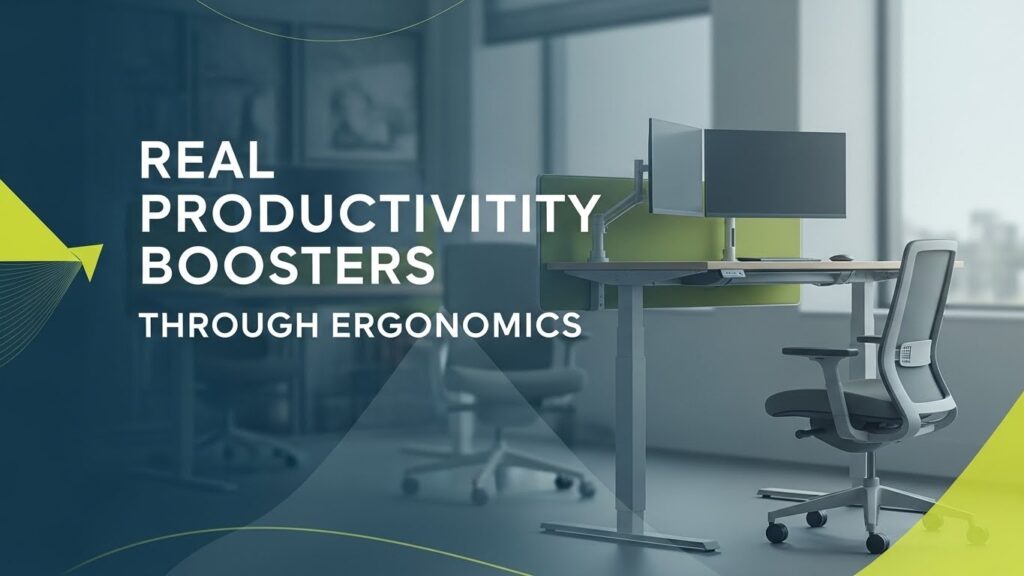
Practical ergonomic improvements can create immediate impact:
- 🪑 Optimised workstations that support neutral posture
- 🖥️ Adjustable screens and chairs to fit different body sizes
- 🛠️ Tools designed to reduce force, reach, and repetition
- 📦 Better layout and material handling design to minimise walking and bending
- 🧠 User-friendly HMIs and simplified work processes to lower cognitive load
- 💡 Improved lighting for accuracy and visual comfort
These changes often require minimal investment — but deliver measurable gains.
🌿 Practical Tips for Organisations
To build a strong ergonomics–productivity strategy:
- Conduct regular ergonomic assessments
- Train employees on good posture and safe work habits
- Involve workers in identifying risk areas
- Adjust workstations to fit tasks and individuals
- Monitor early signs of discomfort or fatigue
- Combine ergonomics with wellness, safety, and performance programs
🌞 Final Thoughts
Ergonomics is not a cost — it’s a catalyst.
A strategic business tool that transforms the way people work.
By improving comfort, reducing injuries, and enhancing efficiency, ergonomics delivers powerful benefits to both employees and organisations. Companies that invest in ergonomics see:
✨ Higher productivity
✨ Lower costs
✨ Better quality
✨ Stronger engagement
✨ A safer, more sustainable workforce
When people thrive, businesses thrive.
Make ergonomics part of your productivity strategy — and watch performance rise.