
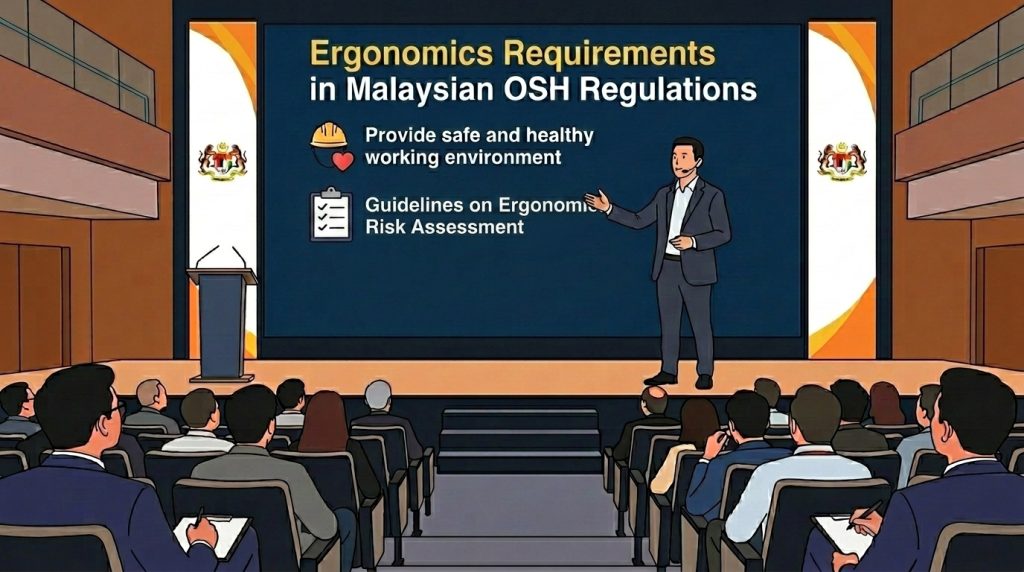
Ergonomics Requirements in Malaysian OSH Regulations
Introduction
Ergonomics plays an important role in workplace safety and health by ensuring that work is designed to fit the worker. In Malaysia, employers have a responsibility to identify and control ergonomic risks to prevent injuries and promote employee well-being.
Why It Matters
Poor ergonomics can lead to musculoskeletal disorders (MSDs), fatigue, reduced productivity, and increased absenteeism. By addressing ergonomic risks, organisations can create safer workplaces while meeting their legal obligations under occupational safety and health requirements.
Malaysian OSH Requirements
Under Malaysia’s occupational safety and health framework, employers are required to provide a safe and healthy working environment. This includes identifying workplace hazards, conducting risk assessments, and implementing appropriate control measures. Ergonomic hazards such as repetitive movements, awkward postures, forceful exertions, and manual handling activities should be assessed and managed as part of the organisation’s overall safety and health programme.
Employer Responsibilities
Employers should ensure that workstations, tools, and work processes are designed to minimise ergonomic risks. Providing ergonomics training, encouraging early reporting of discomfort, and conducting regular workplace assessments are important steps in preventing work-related injuries.
Conclusion
Compliance with Malaysian OSH requirements goes beyond preventing accidents—it also includes managing ergonomic risks. A proactive approach to ergonomics helps organisations protect employees, improve productivity, and maintain a safer and healthier workplace.