
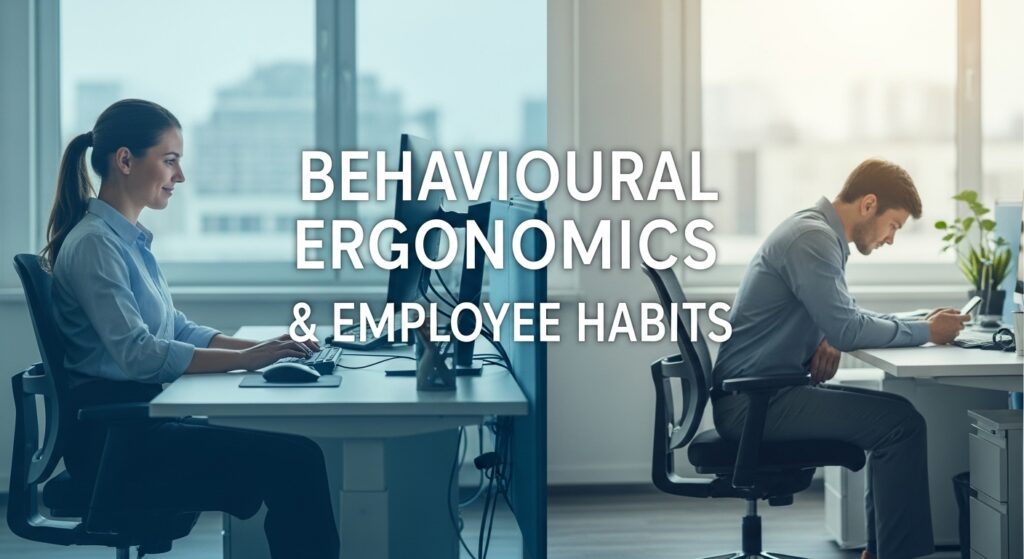
🧠 BEHAVIOURAL ERGONOMICS & EMPLOYEE HABITS 🧠
Even the best-designed workstations and tools won’t prevent injuries if they’re not used correctly. That’s where behavioural ergonomics comes in — focusing on how employee habits, choices, and behaviours influence ergonomic risk.
Ergonomics is not just about design — it’s about daily behaviour.
🧠 What Is Behavioural Ergonomics?
Behavioural ergonomics examines how people interact with their work environment and why they develop certain habits. It looks at:
- Posture habits
- Movement patterns
- Work pace and break behaviour
- Equipment usage
- Awareness and risk perception
Understanding behaviour helps organisations bridge the gap between knowledge and action.
⚠️ Common Poor Ergonomic Habits
Some everyday habits increase ergonomic risk without workers realising:
- Slouching or leaning forward
- Ignoring early discomfort
- Skipping breaks
- Overreaching instead of repositioning
- Poor lifting techniques
- Using equipment incorrectly
- Working through pain
These habits often develop due to time pressure, lack of awareness, or workplace culture.
💡 How Positive Ergonomic Behaviour Reduces Risk
Encouraging healthy habits can:
- ✔️ Reduce MSD risk
- ✔️ Improve comfort and endurance
- ✔️ Increase focus and accuracy
- ✔️ Support long-term health
- ✔️ Strengthen safety culture
Small behavioural changes, repeated daily, create lasting impact.
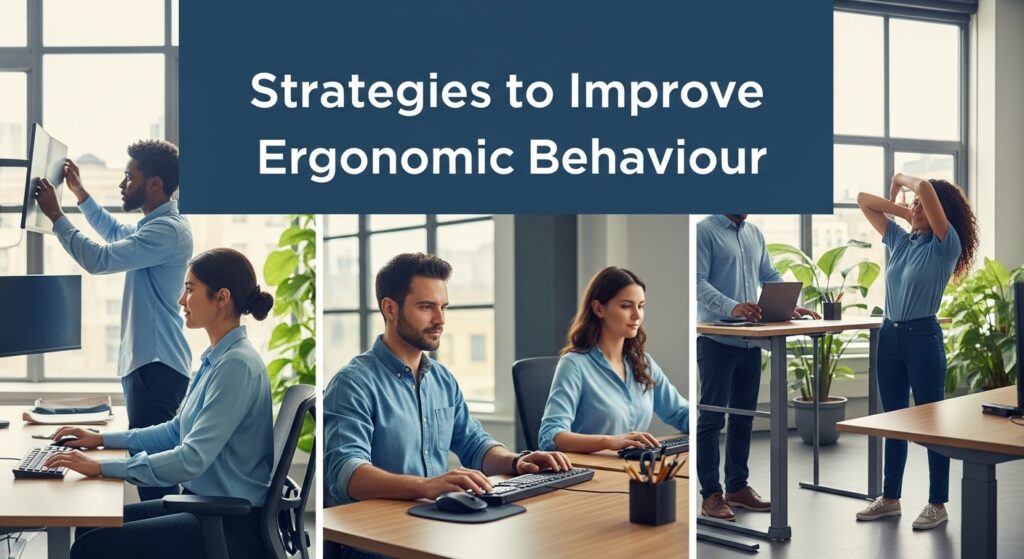
🧩 Strategies to Improve Ergonomic Behaviour
- Build Awareness
- Regular training and micro-learning
- Visual reminders (posters, screen prompts)
- Ergonomic self-checks
- Make the Right Choice the Easy Choice
- Provide adjustable, user-friendly equipment
- Design layouts that encourage movement
- Reduce barriers to safe behaviour
- Encourage Early Reporting
- Normalise reporting discomfort early
- Remove fear of blame
- Act quickly on feedback
- Lead by Example
- Supervisors and leaders model good posture and break habits
- Visible leadership commitment reinforces behaviour
- Reinforce Consistently
- Toolbox talks and check-ins
- Positive feedback and recognition
Regular campaign refreshers
🌞 Final Thoughts 🌞
Behavioural ergonomics reminds us that people are the final link in any ergonomic system. When employees understand risks and adopt healthier habits, ergonomic improvements truly succeed.
💚 Good design supports behaviour 💚
💚 Good behaviour sustains design 💚
Think smart. Move often. Work comfortably.