
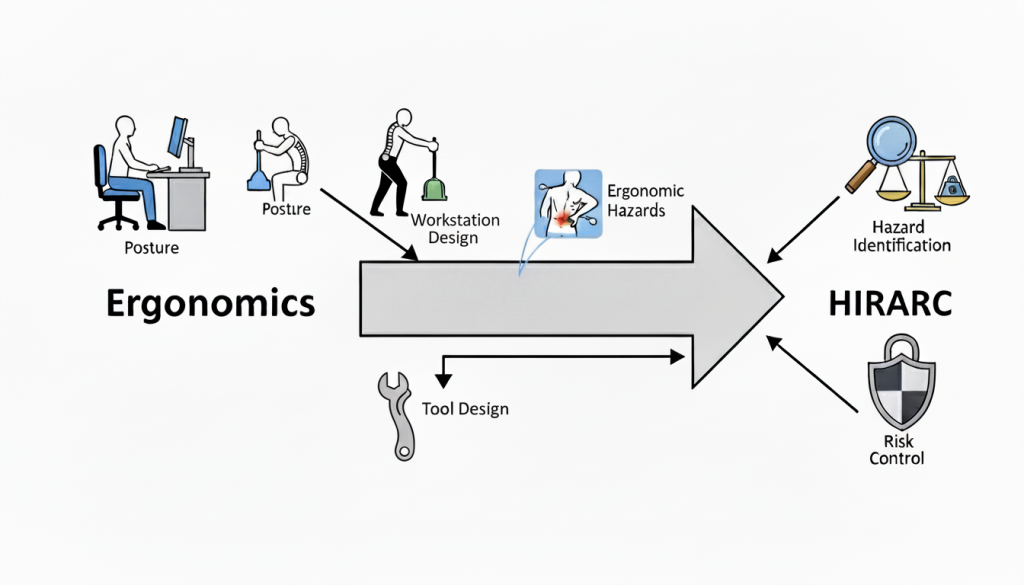
Integrating Ergonomics into HIRARC
Why Ergonomics Matters in Risk Assessment
Hazard Identification, Risk Assessment, and Risk Control (HIRARC) is a key process in managing workplace safety. While many assessments focus on physical hazards such as machinery or chemicals, ergonomic risks are sometimes overlooked. Integrating ergonomics into HIRARC helps identify risks related to posture, repetitive movements, manual handling, and prolonged static work.
Identifying Ergonomic Hazards
Ergonomic hazards can arise from poorly designed workstations, repetitive tasks, excessive force, or awkward postures. During the hazard identification stage, these factors should be evaluated to determine whether they may contribute to fatigue, discomfort, or musculoskeletal disorders among workers.
Assessing and Controlling the Risk
Once ergonomic hazards are identified, the level of risk should be assessed based on factors such as task frequency, duration, and physical demand. Control measures may include redesigning workstations, improving tools and equipment, adjusting work practices, or providing ergonomics training to employees.
Key Takeway
Integrating ergonomics into HIRARC allows organisations to address both safety and health risks more effectively. By identifying and controlling ergonomic hazards early, workplaces can reduce injury risks and promote a healthier, more productive workforce.