
Ergonomics Risk Assessment
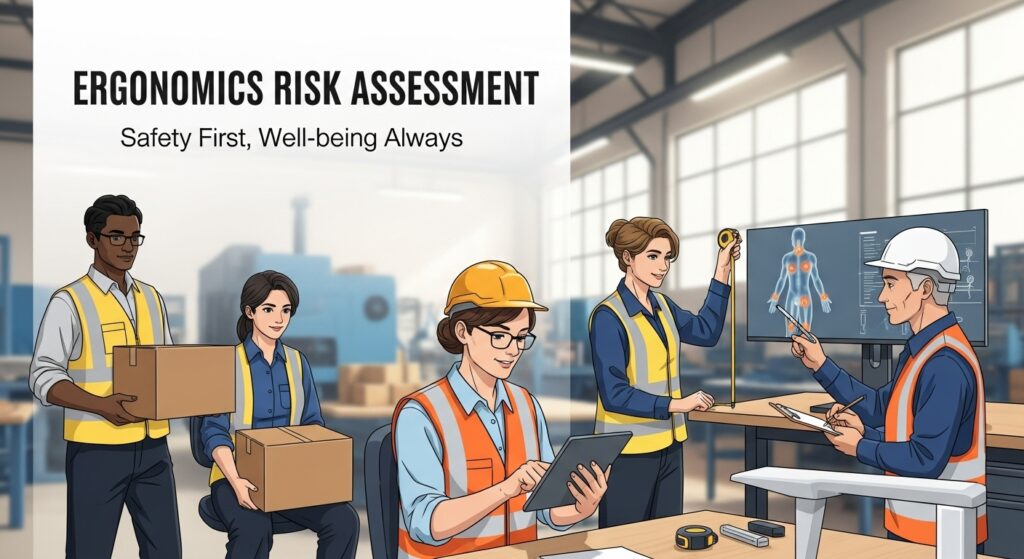
Ergonomics Risk Assessment in Malaysia: Ensuring Workplace Well-Being and Compliance
Introduction
Ergonomics Risk Assessment is a process for identifying, evaluating, and mitigating workplace ergonomics hazards that may cause musculoskeletal disorders or reduce productivity. In Malaysia, the Department of Occupational Safety and Health (DOSH) introduced the “Guidelines on Ergonomics Risk Assessment at Workplace 2017”, which was developed jointly with the Human Factors & Ergonomics Society Malaysia (HFEM), along with bodies like NIOSH, and SOCSO. Published on July 2017, this guideline is still the main official guide for Ergonomics Risk Assessment in Malaysia. Based on the Occupational Safety and Health (Amendment) Act 2022 (OSHA 2022) Section 18B: It is an obligation to conduct risk assessment in relation to the safety and health risk posed to any employee at the workplace.

Objectives & Scope of the Guideline
The 2017 guideline aims to standardize the Ergonomics Risk Assessment process across Malaysian workplaces, to:
- Reduce the prevalence of musculoskeletal disorders among workers at workplace.
- Promote consistent and reliable Ergonomics Risk Assessment practices across all industries.
- Guide safety practitioners in preparing standardized Ergonomics Risk Assessment reports, whether as part of incident investigations or compensation activities
Structure of the Ergonomics Risk Assessment Process
Planning & Assessment Phases
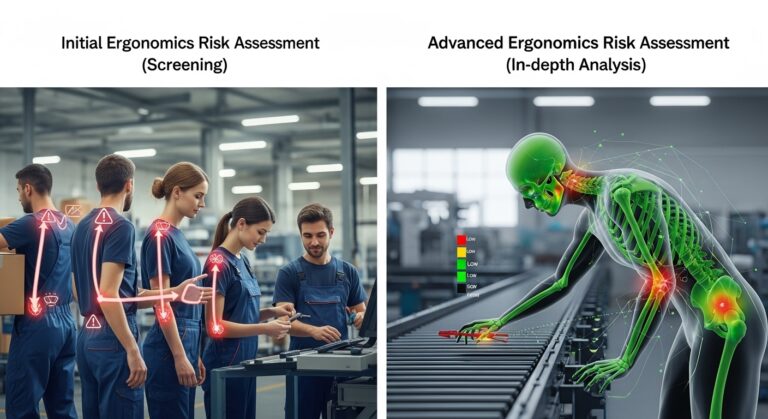
The guideline outlines two main phases of assessment:
- Initial Ergonomics Risk Assessment (Screening)
- Advanced Ergonomics Risk Assessment (In-depth Analysis)
The guideline incorporates the classic Hierarchy of Controls:
- Eliminate the hazards
- Substitution
- Engineer control
- Provide administrative controls
- Use personal protective equipment (PPE) where necessary
Roles & Responsibilities of a “Trained Person”
A requirement: Ergonomics Risk Assessment must be conducted by an Ergonomics Trained Person (ETP), formally trained and competent in ergonomics assessment. Additionally, awareness training for workers is required to foster understanding and support for Ergonomics Risk Assessment initiatives
Frequently asked questions (FAQ)
It’s a process to find and fix workplace factors that may cause injury or discomfort.
Based on the Occupational Safety and Health (Amendment) Act 2022 (OSHA 2022) Section 18B: It is an obligation to conduct risk assessment in relation to the safety and health risk posed to any employee at the workplace.
Only a trained and competent person in ergonomics assessment.
The Guidelines on Ergonomics Risk Assessment at Workplace 2017 by DOSH.
Plan → Initial Screening → Detailed Assessment → Control Measures → Review.
It keeps workers safe, improves productivity, and meets legal requirements.
An Ergonomics Risk Assessment should be carried out whenever there are major workplace changes, such as new equipment, modified work processes, or when workers report discomfort or injuries. It should also be reviewed regularly as part of continuous workplace safety and health efforts.
Final Thoughts
In line with the Guidelines on Ergonomics Risk Assessment at the Workplace 2017 published by DOSH Malaysia, conducting proper ergonomic risk assessments is essential. These assessments not only ensure compliance with national guidelines but also serve as an investment in employee health and well-being. By engaging trained professionals, following structured assessment steps, implementing effective control measures, and maintaining proper documentation, organizations can create safer and more efficient workplaces. Such efforts help foster a healthier working environment while significantly reducing the risk of musculoskeletal disorders (MSDs) among employees.