Physical Ergonomics: Building a Healthier and Safer Workplace
When people think about workplace safety, they often imagine helmets, gloves, or safety shoes. But safety goes beyond protective equipment—it also involves how our body interacts with the work we do. This is where physical ergonomics comes in.
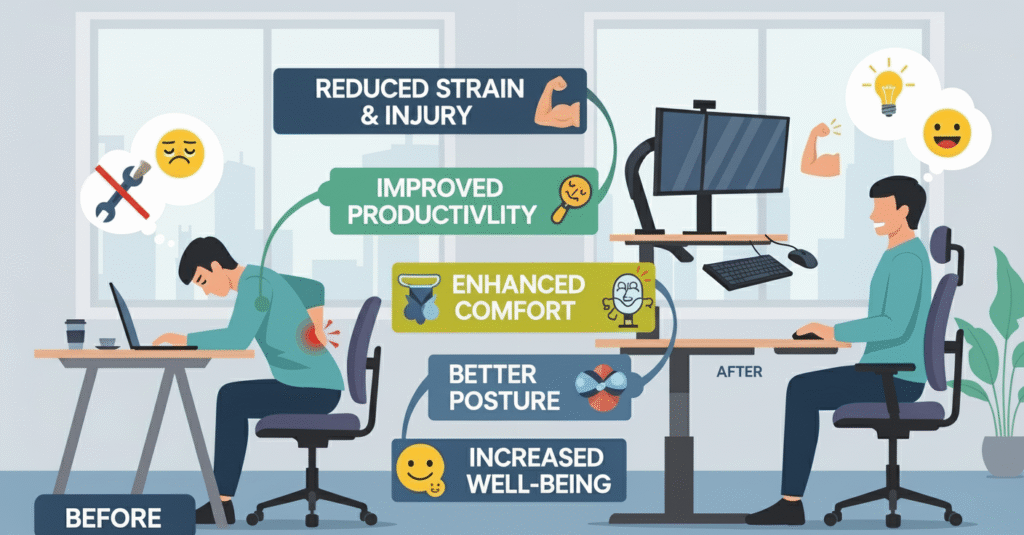
Physical ergonomics is the branch of ergonomics that focuses on the human body’s responses to physical and physiological demands. It looks at posture, movement, workstation design, and how repetitive actions affect our muscles and joints. By improving these aspects, we can reduce injuries, boost productivity, and make work more comfortable.
Why Physical Ergonomics Matters
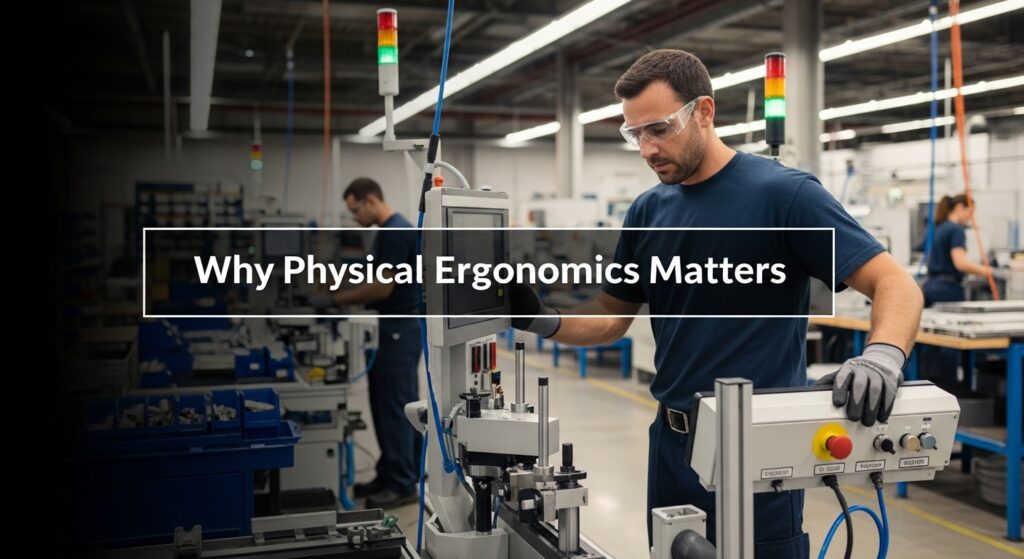
Work-related musculoskeletal disorders (MSDs) such as back pain, neck stiffness, and wrist strain are some of the most common health issues faced by employees. These problems are often caused by:
Poor posture (slouching, awkward bending, or twisting)
Repetitive movements (typing, assembly line work, or scanning items)
Heavy lifting or manual handling
Prolonged static sitting or standing
Ignoring these issues can lead to long-term health risks, higher medical costs, and reduced work performance.
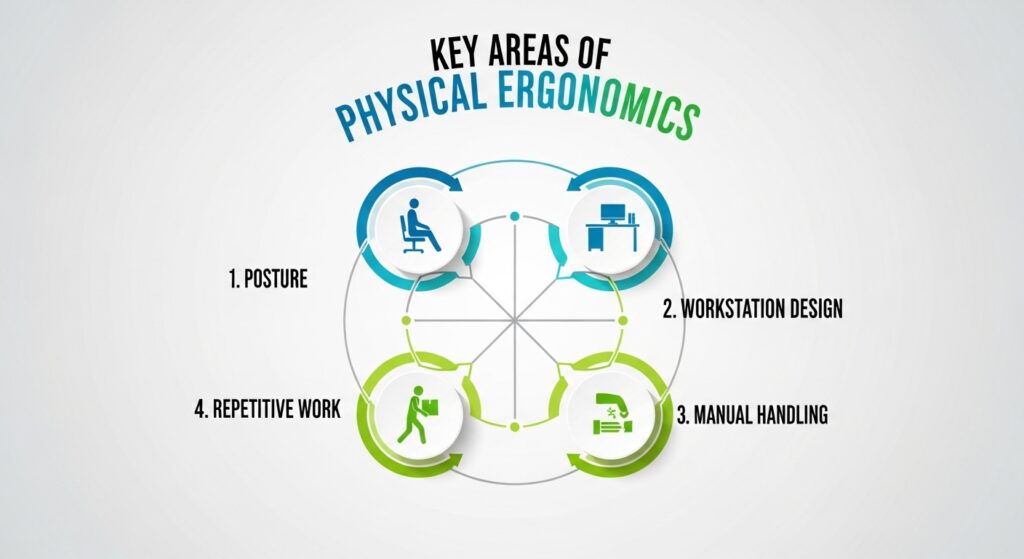
Key Areas of Physical Ergonomics
Posture:
The way we sit, stand, or move during work affects our spine and muscles.
Proper posture reduces fatigue and prevents strain injuries.
Workstation Design:
Furniture, tools, and equipment should be adjusted to fit the worker—not the other way around.
For example, a desk at the wrong height can cause shoulder and neck pain.
Manual Handling:
Lifting, carrying, pushing, or pulling loads must be done with proper technique.
Training in safe lifting reduces the risk of back injuries.
Repetitive Work:
Tasks such as typing, packing, or operating machinery can strain specific body parts.
Job rotation, breaks, and ergonomic tools can help reduce the risk.
Practical Tips to Apply Physical Ergonomics
Set up your workstation properly:
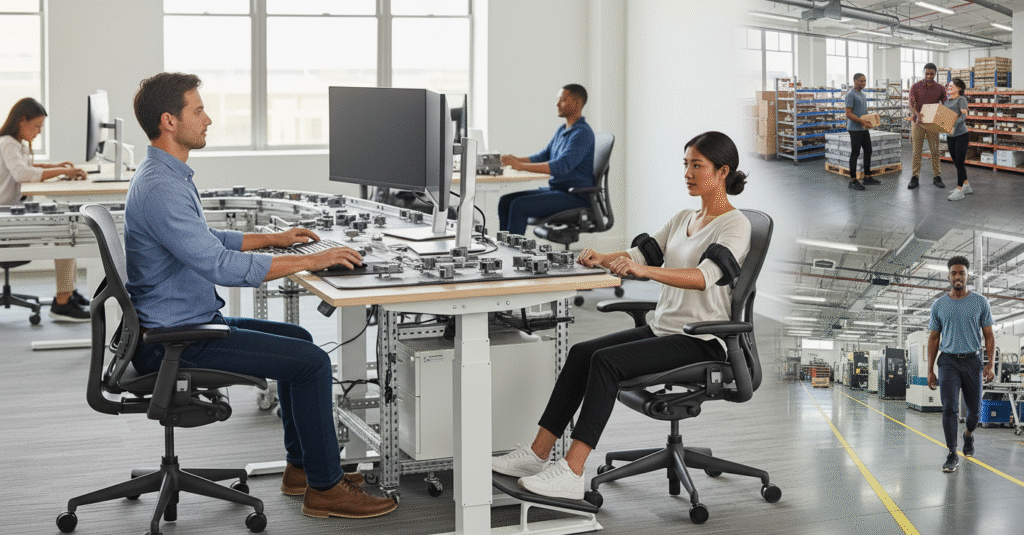
Keep the top of your monitor at eye level, elbows at 90 degrees, and feet flat on the floor.
Use ergonomic tools:
Chairs with lumbar support, adjustable desks, and cushioned mouse pads can make a big difference.
Practice safe lifting:
Bend your knees, keep the load close to your body, and avoid twisting while lifting.
Take micro-breaks:
Stretch for a few minutes every hour to relax your muscles.
Encourage movement:
Alternate between sitting and standing when possible to prevent stiffness.
The Benefits of Good Physical Ergonomics
When workplaces prioritize physical ergonomics, everyone wins. Employees feel healthier and more comfortable, while organizations enjoy:
Fewer injuries and sick leaves
Higher productivity and efficiency
Better morale and job satisfaction
Lower healthcare and compensation costs
Final Thoughts
Physical ergonomics is not just about avoiding injuries—it’s about creating a work environment where the body and job work in harmony. Whether in an office, factory, or even at home, applying ergonomic principles can improve comfort, safety, and performance.
Investing in physical ergonomics today means a healthier workforce tomorrow.