
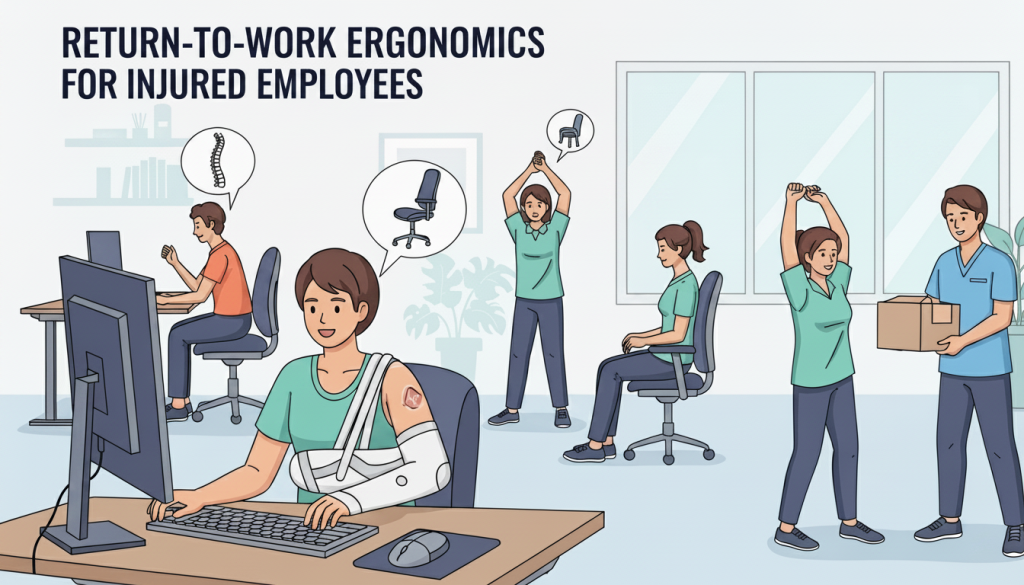
Return-to-Work Ergonomics for Injured Employees
Introduction
Returning to work after an injury can be challenging, both for employees and employers. Proper ergonomics plays a critical role in ensuring a safe, smooth, and sustainable return, reducing the risk of re-injury and supporting recovery.
Why It Matters
Without ergonomic support, injured employees may struggle with tasks they could previously perform safely. This can slow recovery, increase discomfort, and even cause new injuries, affecting overall productivity and morale.
Key Ergonomic Considerations
Return-to-work ergonomics focuses on adjusting the workplace to meet the employee’s current capabilities. This may include modifying workstations, providing assistive tools, adjusting task demands, and setting realistic workloads. Regular monitoring and feedback are essential to ensure the employee can perform tasks safely.
Supporting a Safe Return
Employers should involve occupational health specialists, safety officers, and supervisors in planning the return. Training, clear communication, and gradual reintroduction to tasks help employees regain confidence and perform safely.
Conclusion
Return-to-work ergonomics is vital for protecting employees and maintaining workplace safety. By aligning tasks with individual capabilities, organisations can support recovery, prevent re-injury, and foster a healthier, more productive workforce.