
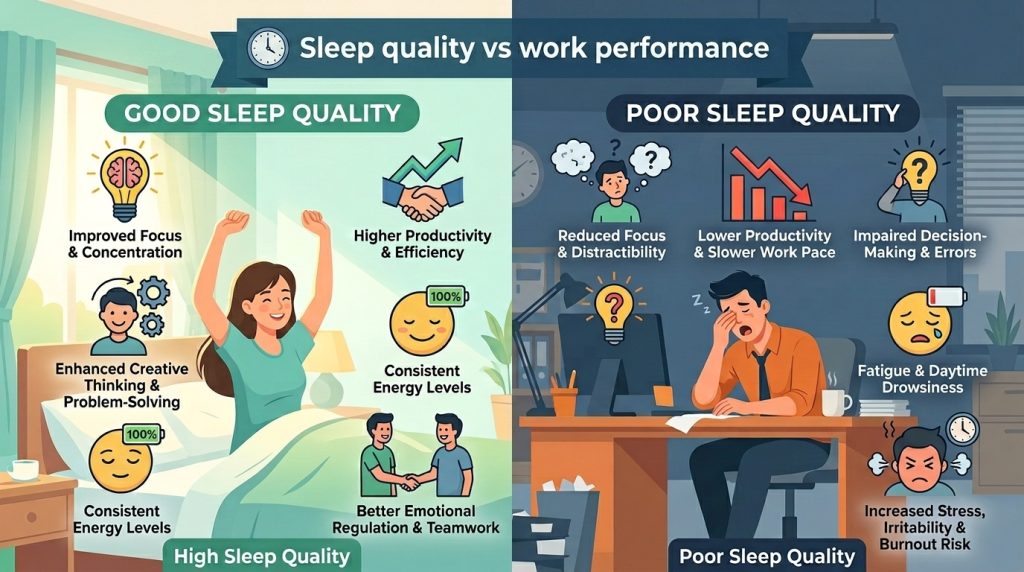
Sleep Quality vs Work Performance
Introduction
Sleep plays a major role in employee health, concentration, and overall work performance. However, many people underestimate how poor sleep can affect productivity, decision-making, and workplace safety.
Insufficient or poor-quality sleep can lead to fatigue, slower reaction times, reduced focus, and increased risk of mistakes at work.
How Poor Sleep Affects Work Performance
Lack of quality sleep may result in:
- Reduced concentration
- Lower productivity
- Increased fatigue
- Slower decision-making
- More workplace errors
- Reduced motivation
In physically demanding jobs, fatigue may also increase the risk of injuries and accidents.
The Importance of Recovery
Sleep allows the body and mind to recover from daily physical and mental stress. Without proper rest, employees may struggle to maintain performance throughout the day.
Good sleep also supports:
- Memory and learning
- Mood and emotional control
- Energy levels
- Physical recovery
Improving Sleep Quality
Simple habits can help improve sleep quality, including:
- Maintaining a consistent sleep schedule
- Reducing screen time before bed
- Limiting caffeine intake at night
- Creating a comfortable sleeping environment
- Getting enough physical activity during the day
Small lifestyle changes can significantly improve daily energy and focus.
Conclusion
Sleep quality has a direct impact on work performance, productivity, and overall well-being. Employees who get sufficient rest are generally more focused, efficient, and better prepared to handle workplace demands.
Prioritizing good sleep is not just important for health — it is also essential for maintaining safe and effective work performance.