The Cost Of Poor Ergonomics: Absenteeism and Productivity Loss
Introduction
Poor ergonomics isn’t just a comfort issue—it has a real impact on business performance. Discomfort, strain, and musculoskeletal disorders can lead to absenteeism, reduced productivity, and increased operational costs.
Why It Matters
When employees experience pain or fatigue due to poor workstation design or repetitive tasks, it affects focus, efficiency, and work quality. Over time, this can result in higher sick leave rates, slower task completion, and greater risk of errors or accidents.
How Poor Ergonomics Affects Business
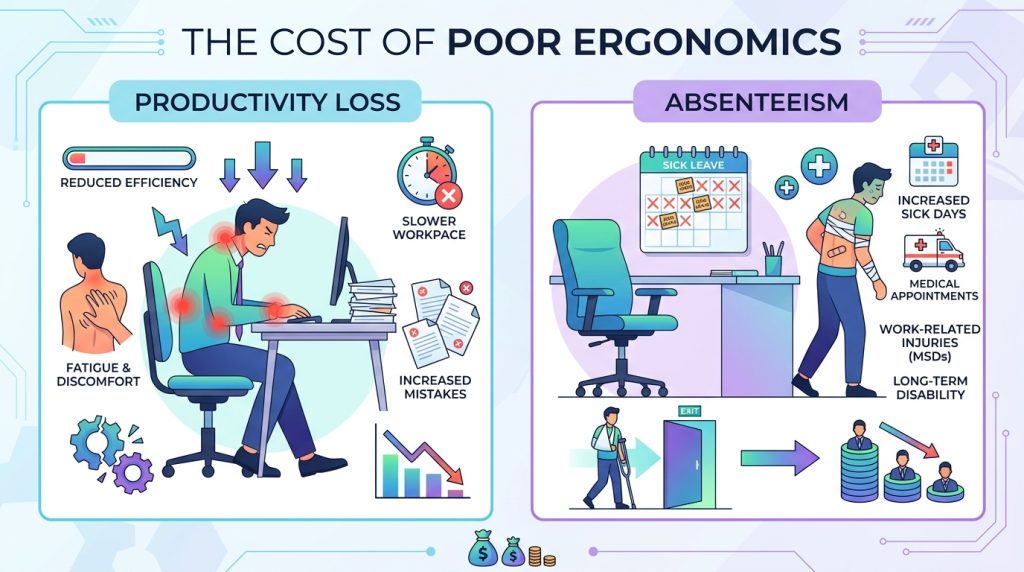
Absenteeism: Employees may take more sick leave due to work-related musculoskeletal issues.
Reduced Productivity: Discomfort and fatigue slow down work, reduce accuracy, and increase task completion time.
Higher Costs: Medical treatment, compensation claims, and employee turnover can add up.
Investing in Ergonomics
Implementing ergonomic improvements—like adjustable workstations, proper tools, and training—can reduce injuries, lower absenteeism, and improve productivity. These investments often pay for themselves by saving time, money, and maintaining a healthier workforce.
Conclusion
Poor ergonomics has tangible costs for organisations. By proactively addressing ergonomic risks, businesses can protect employee health, reduce absenteeism, and boost overall performance.