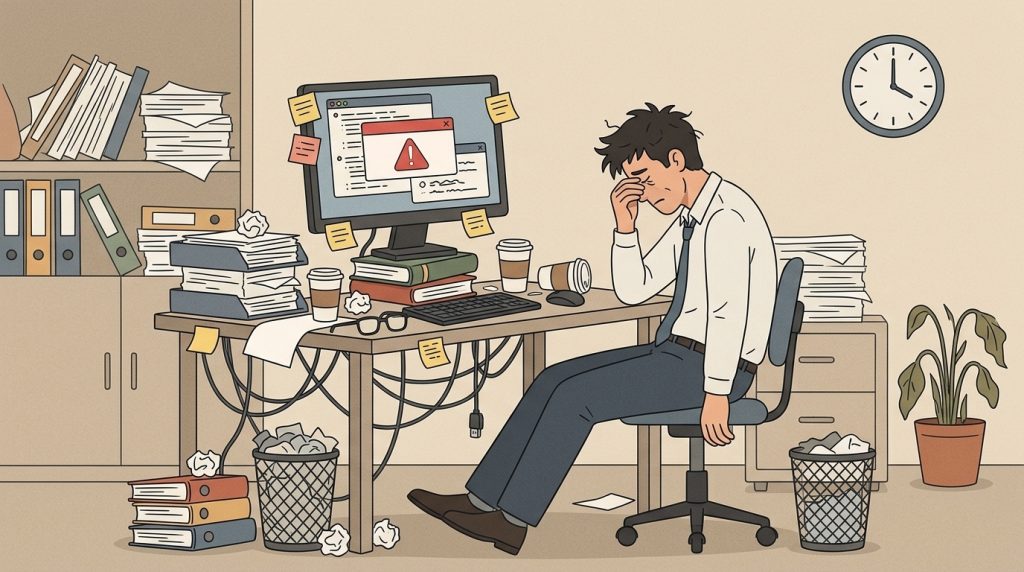
THE RELATIONSHIP BETWEEN ERGONOMICS AND HUMAN ERROR
Introduction
Human error is often associated with lack of attention or poor decision-making, but the work environment itself can also influence how people perform. Poor ergonomics can increase fatigue, discomfort, and mental workload, making mistakes more likely.
How Ergonomics Influences Human Error
Awkward postures, repetitive movements, excessive force, poor workstation design, and prolonged static work can cause physical fatigue anddiscomfort. As fatigue increases, workers may find it harder to concentrate, react quickly, ormaintain accuracy during tasks.
The Role of Workplace Design
A well-designed workplace helps workers perform tasks comfortably and efficiently. Appropriate workstation heights, accessible tools, good lighting, suitable equipment, and well-planned workflows can reduce unnecessary physical and mental demands, helping workers stay focused
Identifying the Risks
An ergonomics risk assessment Malaysia approach can help organisations identify ergonomic factors that may contribute to fatigue and human error. By examining posture, repetition, force, task duration, workload, and workplace conditions, employers can identify opportunities for improvement before errors lead to incidents.
The Importance of Training
Ergonomics training Malaysiaprogrammes can help employees and supervisors recognise ergonomic hazards and understand how workplace design can affect performance. Training also encourages workers to report discomfort, fatigue, and other early warning signs.
Conclusion
Human error is not always an individual problem.It can also be influenced by how work is designed. By integrating ergonomics into workplace safety programmes, organisations can reduce fatigue, improve concentration, and create conditions that help employees perform safely and effectively.
Incident investigations should not focus solely on worker error. Factors such as workplace design, workload, equipment, fatigue, and environmental conditions should also be assessed, as these factors may contribute to errors.
No. Good ergonomics cannot eliminate human error. However, a well-designed work system can reduce conditions that increase the likelihood of errors and help workers perform their tasks more safely and consistently.
Employees who regularly perform a task have valuable experience with its difficulties and work-related constraints. Their feedback can help organisations identify problems that may not be detected through routine workplace observations.