
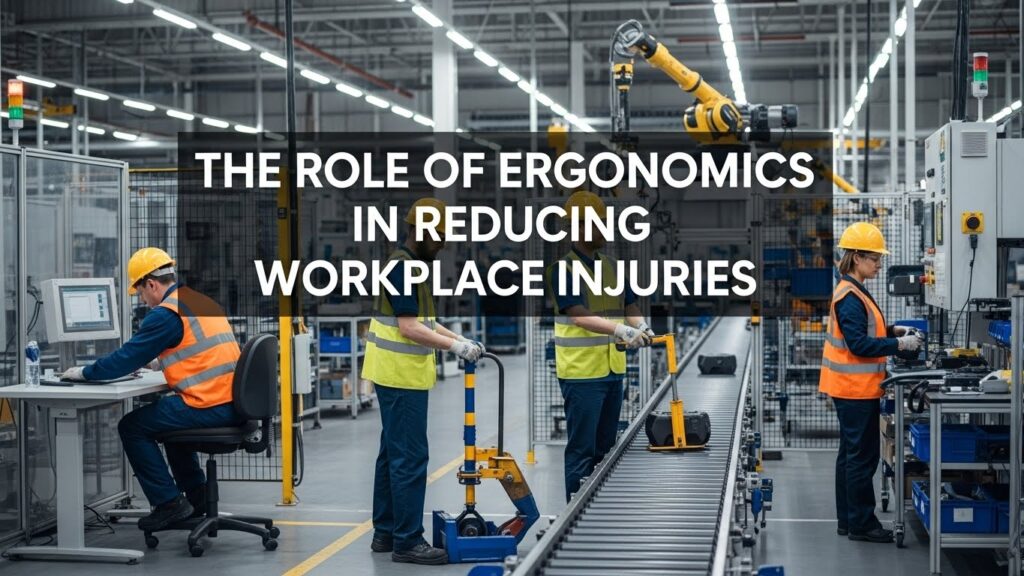
The Role of Ergonomics in Reducing Workplace Injuries
Workplace injuries don’t always come from accidents or sudden events. Many injuries develop slowly over time due to poor posture, repetitive tasks, awkward movements, or poorly designed workstations. Ergonomics plays a crucial role in preventing these injuries by designing jobs, tools, and environments to fit the worker — not the other way around.
🩹 What Causes Workplace Injuries?
Many common injuries are linked to everyday work habits, including:
- Repetitive motions (typing, packing, assembly tasks)
- Awkward postures (bending, twisting, reaching overhead)
- Prolonged sitting or standing
- Heavy lifting or forceful exertion
- Poor workstation or tool design
These factors often lead to musculoskeletal disorders (MSDs) conditions affecting the muscles, joints, and nerves which are among the most common workplace injuries worldwide.
🛠️ How Ergonomics Helps Prevent Injuries
- Reduces Physical Strain
Ergonomic adjustments minimize stress on muscles and joints, lowering the risk of injuries like back pain, tendonitis, and carpal tunnel syndrome. - Improves Posture and Body Mechanics
Proper chair height, screen position, lifting techniques, and tool design help workers maintain healthy posture throughout their tasks. - Optimizes Workflows
Organizing tools and materials within easy reach reduces unnecessary bending, reaching, and stretching. - Supports Safe Work Practices
Training workers on ergonomic principles helps them adopt safer habits and recognize early signs of discomfort before it becomes an injury. - Encourages Movement
Incorporating microbreaks, job rotation, and stretch routines prevents fatigue and improves long-term comfort.
- Reduces Physical Strain
💡 Examples of Ergonomics in Action
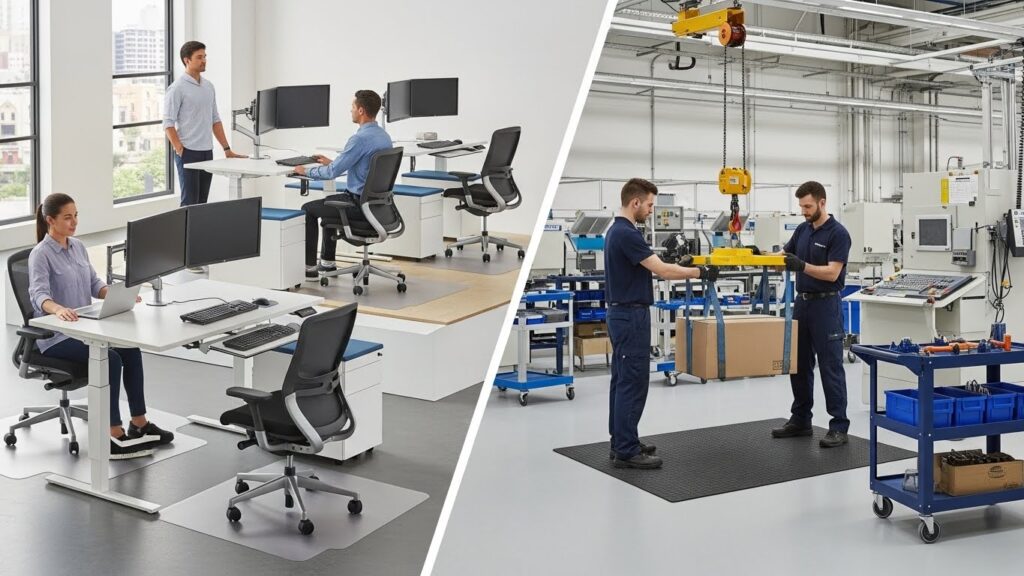
- Adjustable chairs and sit-stand desks
- Anti-fatigue mats for workers who stand
- Mechanical aids like hoists and trolleys
- Keyboard trays and monitor risers
- Proper layout of tools in manufacturing or warehouse areas
- Training on safe lifting and handling
✅ Benefits for Employers and Workers
- Fewer injuries and compensation claims
- Higher productivity and efficiency
- Reduced absenteeism
- Improved morale and job satisfaction
- Longer, healthier working careers
✅ Final Thought
Ergonomics is one of the most effective ways to reduce workplace injuries — not through expensive equipment, but through thoughtful design and smarter work practices. Investing in ergonomics protects workers, improves performance, and supports a healthier, safer workplace for everyone.