
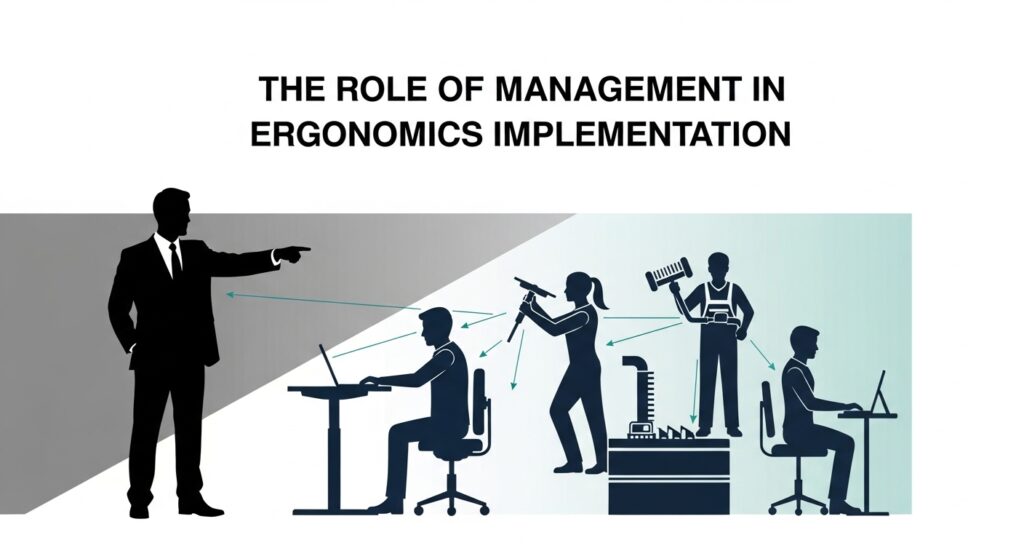
👔 THE ROLE OF MANAGEMENT IN ERGONOMICS IMPLEMENTATION 👔
A successful ergonomics program does not happen by chance it starts at the top. While employees play a key role in identifying discomfort and following safe work practices, management commitment is the driving force behind effective and sustainable ergonomics implementation.
When leaders prioritise ergonomics, it becomes part of the organisational culture not just another safety initiative.
Why Management Matters in Ergonomics
Management decisions influence how work is designed, resourced, and prioritised. Without leadership support, ergonomic risks often remain unaddressed due to time, budget, or operational pressures.
Strong management involvement helps to:
- ✔️ Embed ergonomics into daily operations
- ✔️ Allocate resources effectively
- ✔️ Reduce injury rates and associated costs
- ✔️ Improve productivity and work quality
- ✔️ Strengthen employee trust and engagement
- ✔️ Support long-term organisational sustainability
🧩 Key Management Responsibilities in Ergonomics
- Leadership Commitment & Policy Support
- Establish clear ergonomics policies and objectives
- Demonstrate visible commitment to worker health and safety
- Align ergonomics with business goals and performance indicators
- Resource Allocation
- Provide budget for ergonomic assessments, tools, and improvements
- Allocate time for training, assessments, and employee participation
- Support investment in ergonomic equipment and redesigns
- Integration into Work Processes
- Embed ergonomics into job design, procurement, and change management
- Ensure new equipment, layouts, and processes consider ergonomic risks
- Integrate ergonomics into safety and operational reviews
- Employee Engagement & Empowerment
- Encourage open reporting of discomfort and ergonomic risks
- Support worker involvement in problem-solving and solution testing
- Foster a “no blame” culture for early reporting
- Accountability & Performance Monitoring
- Assign clear roles and responsibilities
- Monitor ergonomic risk indicators and injury trends
- Hold supervisors accountable for ergonomics performance in their areas
🌞 Final Thoughts 🌞
Management sets the tone for ergonomics success. When leaders actively support ergonomic initiatives, employees feel valued, risks are addressed early, and improvements are sustained.
💚 Strong leadership turns ergonomics from a program into a culture.
Healthy workers build strong organisations. 💚