
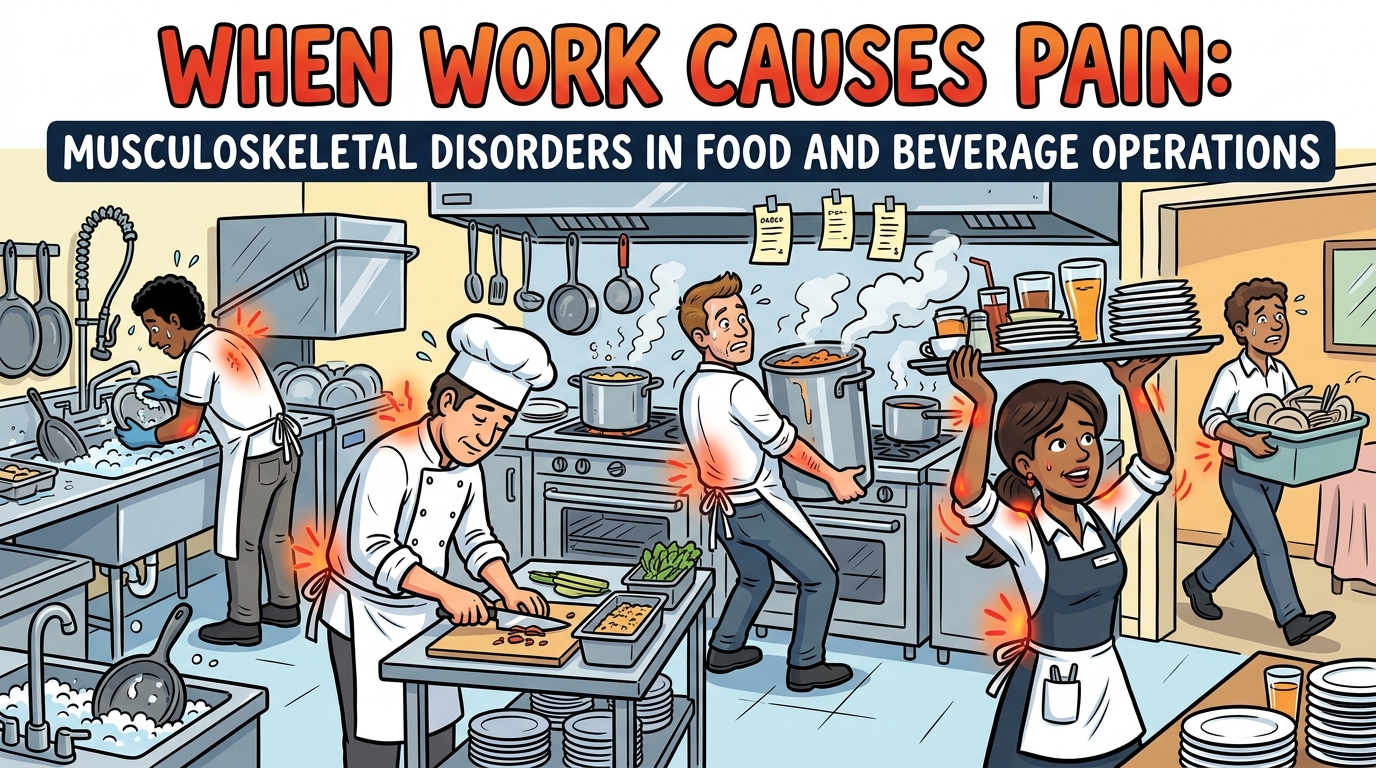
WHEN WORK CAUSES PAIN: MUSCULOSKELETAL DISORDERS IN FOOD AND BEVERAGE OPERATIONS
Introduction
Musculoskeletal disorders (MSDs) are a common occupational health concern in physically demanding industries, including food and beverage (F&B) manufacturing. These conditions affect the muscles, joints, tendons, and other structures that support body movement. In food production, workers may develop discomfort when workplace demands exceed the body’s ability to recover from repeated or prolonged physical activities.
Recognising the early signs of MSDs is important to prevent minor discomfort from developing into persistent problems that may affect workers’ health and ability to perform their duties.
Recognising the Signs of Musculoskeletal Disorders
MSDs can affect different parts of the body depending on the nature of the task and the physical demands involved.
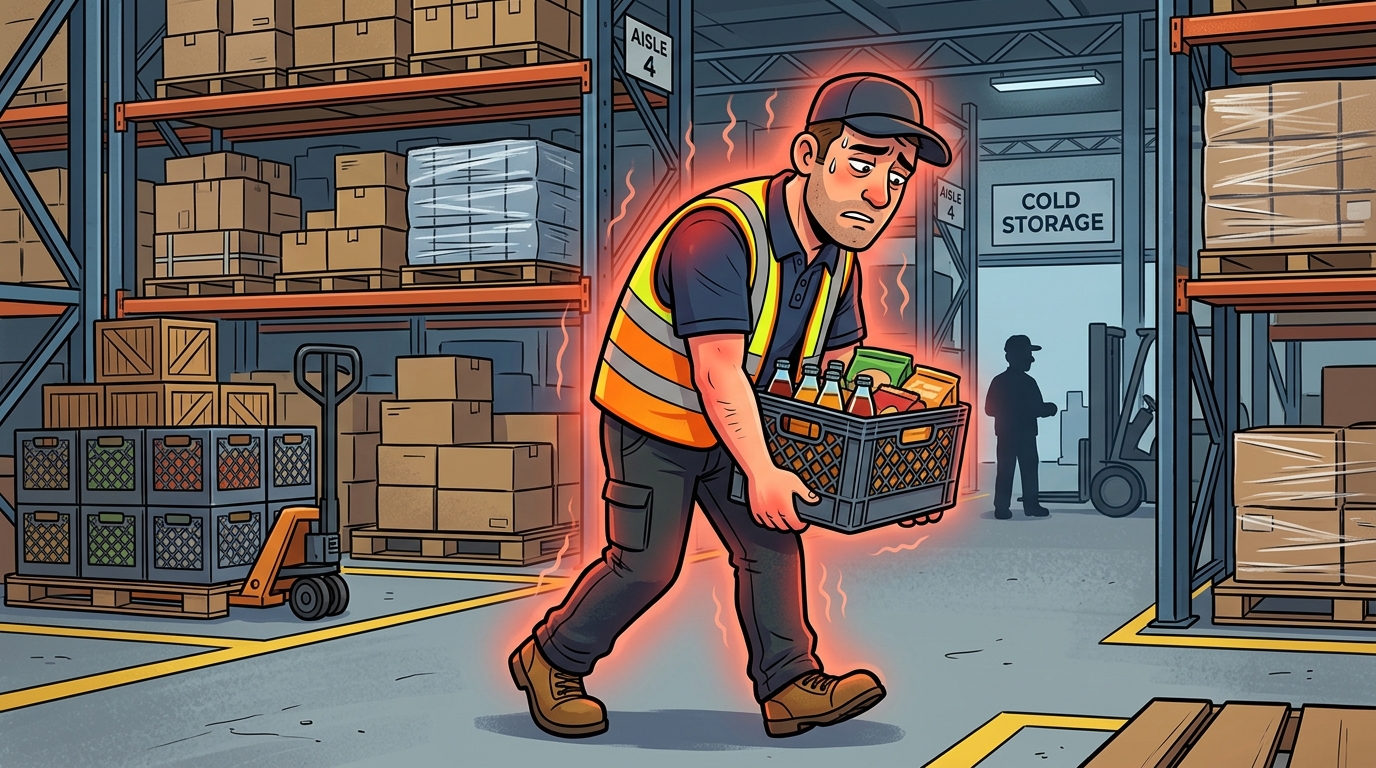
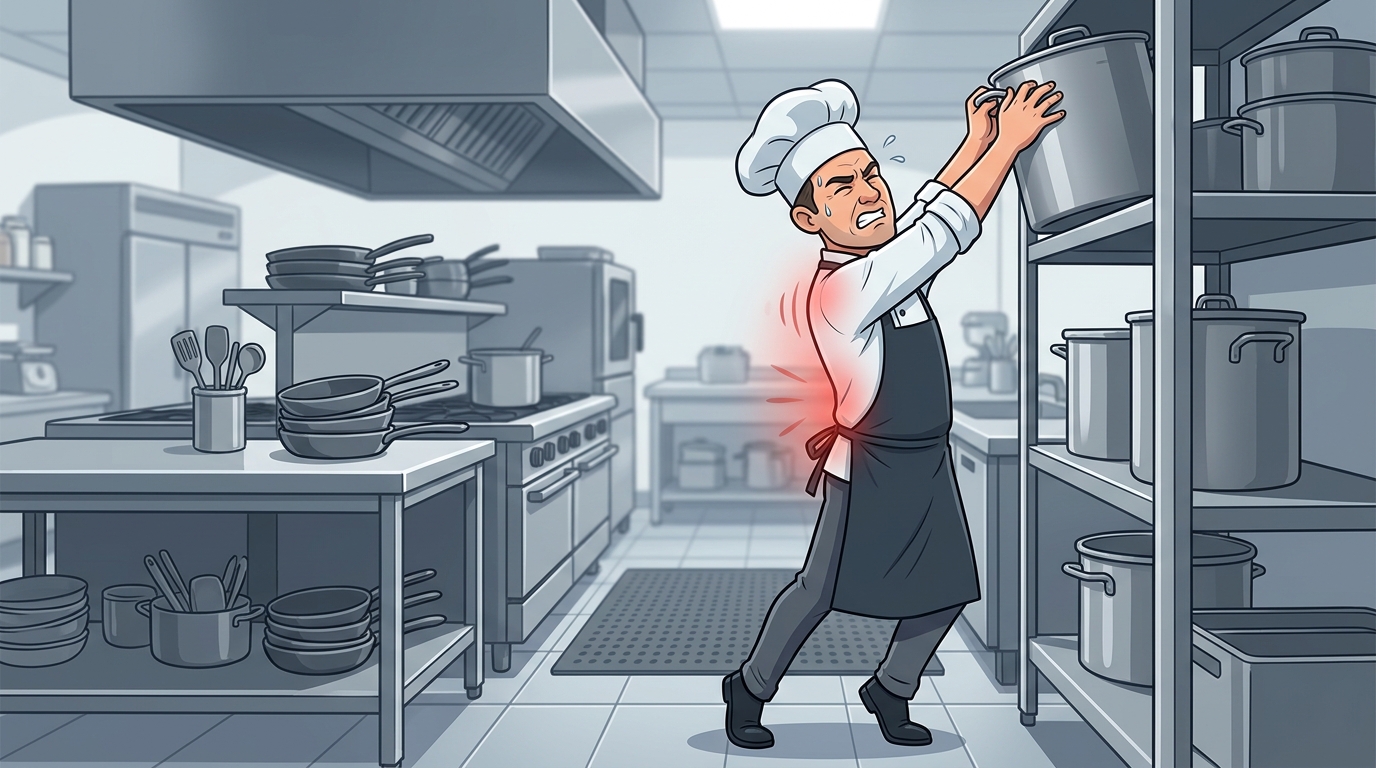
Workers may experience discomfort when handling materials, reaching for products, or performing tasks that place repeated demands on the back and shoulders. Persistent pain may make lifting, reaching, and other routine activities more difficult.
Frequent gripping, handling small items, and operating production tools may contribute to pain, stiffness, or tenderness in the hands and wrists. These symptoms can interfere with tasks requiring precision and control.
Repeated physical demands with insufficient recovery may contribute to muscle fatigue and reduced comfort during work. If symptoms persist, workers may experience difficulty completing their usual tasks.

How MSDs Affect Workplace Performance
The effects of MSDs extend beyond individual discomfort. Workers experiencing persistent pain may find it difficult to maintain their usual work pace, complete physically demanding tasks, or perform duties comfortably.
For organisations, these problems may contribute to absenteeism, work restrictions, reduced productivity, and additional healthcare costs. Early reporting and appropriate intervention can help organisations identify problems and address contributing workplace conditions.
Preventing MSDs Through Early Intervention
An ergonomic risk assessment can help identify work activities and conditions that may contribute to MSDs. Depending on the findings, organisations can introduce appropriate improvements, such as modifying work methods, adjusting equipment, improving task design, and providing suitable recovery opportunities.
Workers should also be encouraged to report discomfort early. This allows supervisors to investigate potential causes and arrange appropriate workplace adjustments or medical evaluation when necessary.
The Role of Ergonomic Training
Ergonomic training helps workers and supervisors recognise early symptoms, understand reporting procedures, and identify workplace practices that may contribute to physical discomfort.
However, training alone cannot eliminate MSD risks. Organisations should also address the underlying causes through suitable equipment, effective work design, and practical control measures. Employee feedback should be considered when reviewing whether these improvements are effective.
Conclusion
Musculoskeletal disorders can affect workers’ health, comfort, and performance in food and beverage operations. Recognising early symptoms, conducting an appropriate ergonomic risk assessment, and providing effective ergonomic training can support early intervention. Combined with improvements to workplace conditions, these measures can help reduce ergonomic risks and promote a healthier working environment.