
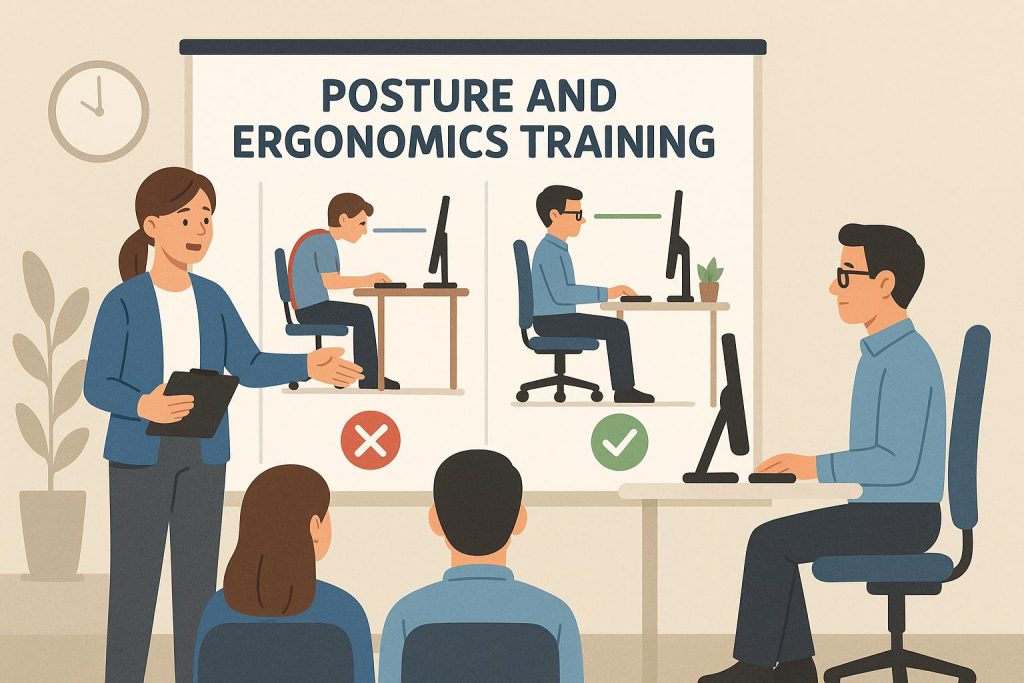
Why Ergonomics Awareness Training Matters: What to Do When Pain Starts (Part 2)
Article by Dr. Ts. Hari Krishnan
Awareness Goes Beyond Prevention
In my previous post, I shared how ergonomics awareness helps people understand what is happening inside their bodies and why poor posture can lead to musculoskeletal disorders. But ergonomics awareness training goes beyond prevention. It also equips employees with the knowledge to respond appropriately when they begin experiencing symptoms.
When Pain Starts, What Should You Do?
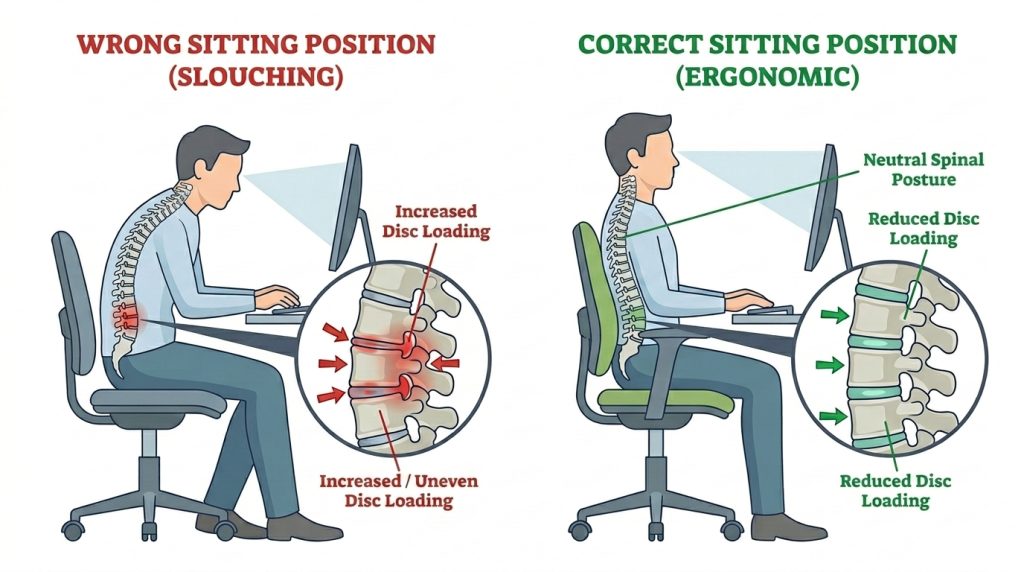
Many people develop back pain, slipped discs, or disc herniation without knowing what they should or should not do. As a result, they often rely on advice from friends, social media, or unqualified sources, which can sometimes make the condition worse.
Not Every Back Pain Needs the Same Treatment
One common misconception is that every back pain should be treated with a massage. While massage may help certain types of muscle-related discomfort, it is not appropriate for everyone. For individuals with a suspected slipped disc or disc herniation, inappropriate manipulation or deep massage may aggravate the condition. This is why obtaining an accurate assessment from a qualified healthcare professional is essential before deciding on treatment.
The Right Treatment, at the Right Time
During ergonomics awareness training, we also discuss the importance of seeking the right treatment at the right time.
For many people with musculoskeletal conditions, conservative treatments such as physiotherapy are commonly recommended as part of recovery. The treatment session itself is only one part of the journey. The real improvement comes from consistently performing the prescribed exercises at home, strengthening the supporting muscles, improving mobility, and preventing the pain from returning.
Depending on the individual’s condition and medical assessment, other evidence-based treatments may also be appropriate. The key is to receive advice from qualified healthcare professionals rather than relying on assumptions or myths.
Knowledge Leads to Better Decisions
This is why ergonomics awareness training is so valuable.
It is not only about identifying ergonomic risk factors or teaching correct posture. It is about empowering people with practical knowledge, knowing when to seek help, understanding safe treatment options, and taking an active role in their own recovery.
Knowledge prevents fear.
Knowledge prevents myths.
Knowledge leads to better decisions.
Because protecting our health begins with understanding our own body.
What we know today can determine how healthy we are tomorrow.