
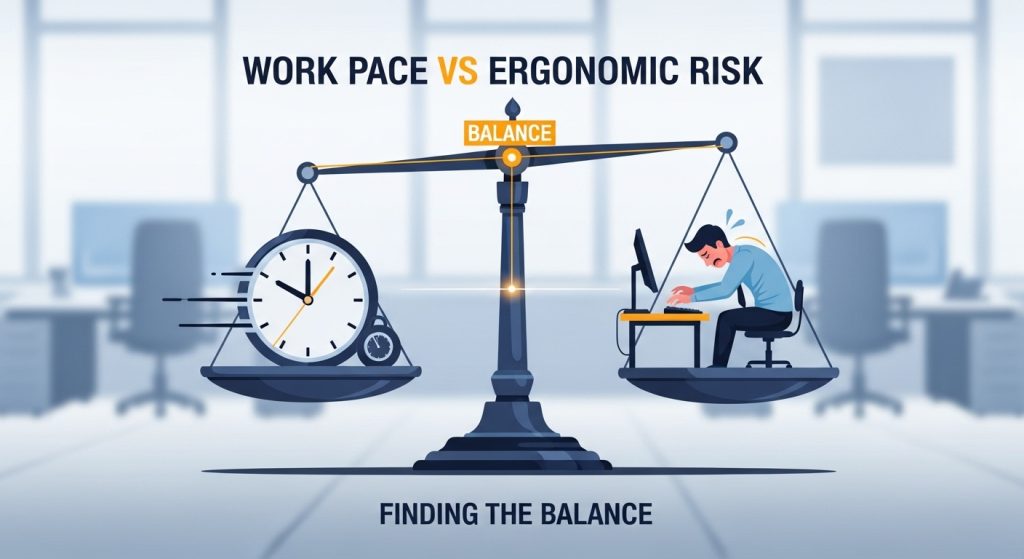
Work Pace vs Ergonomic Risk: Finding the Balance
Introduction
Work pace plays a crucial role in productivity, but when it is too fast or poorly managed, it can increase ergonomic risks. Striking the right balance between efficiency and worker safety is essential for sustainable performance.
Why It Matters
High work pace often leads to repetitive movements, reduced recovery time, and increased physical and mental strain. Over time, this can contribute to musculoskeletal disorders (MSDs), fatigue, and a higher risk of errors or accidents.
How Work Pace Affects the Body
When workers are rushed, they are more likely to adopt poor posture, apply excessive force, and skip proper techniques. Continuous repetition without adequate breaks puts stress on muscles, tendons, and joints, increasing the likelihood of injury.
Finding the Right Balance
Managing work pace involves designing tasks that allow for safe movement and sufficient recovery. This includes setting realistic targets, incorporating micro-breaks, and rotating tasks to reduce repetition. Proper staffing and workflow planning also help prevent excessive workload on individuals.
Conclusion
Work pace should support productivity—not compromise safety. By balancing efficiency with ergonomic principles, organisations can reduce injury risks while maintaining consistent and sustainable performance.