
INTEGRATING ERGONOMICS INTO RISKS MANAGEMENT SYSTEMS
Introduction
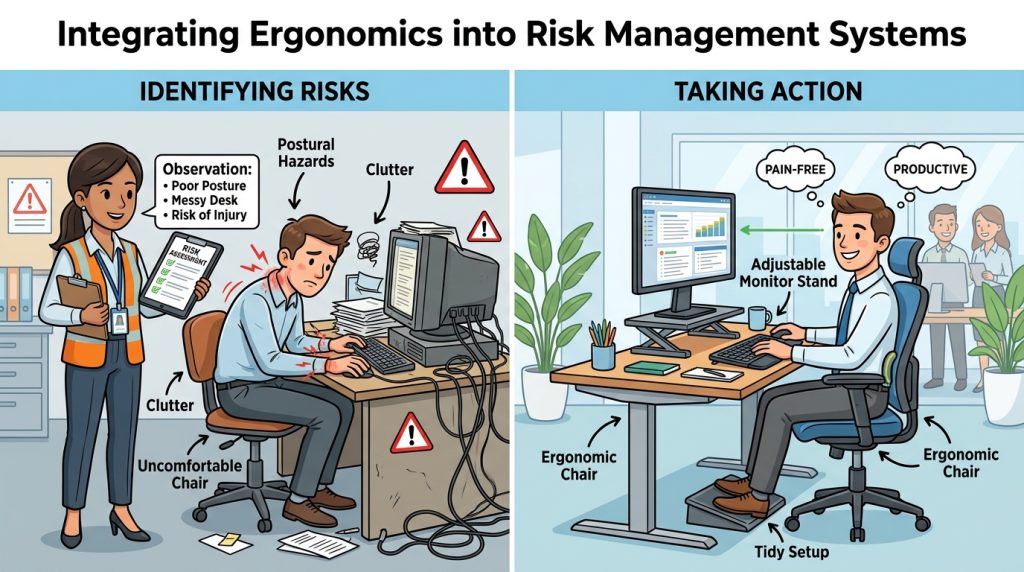
Ergonomics is an important part of an effective workplace risk management system. By identifying ergonomic hazards early, organisations can prevent injuries, improve employee well-being, and create safer and more productive workplaces.
Why It Matters
Poor posture, repetitive movements, manual handling, excessive force, and prolonged static work can increase the risk of musculoskeletal disorders (MSDs). Integrating ergonomics into existing risk management processes ensures these hazards are identified and controlled alongside other workplace risks.
Identifying Ergonomic Factors
An ergonomics risk assessment Malaysia approach helps organisations systematically identify ergonomic hazards within different work activities. Assessments can include workstation observations, task analysis, employee feedback, and evaluation of factors such as posture, force, repetition, and duration.
From Assessment to Action
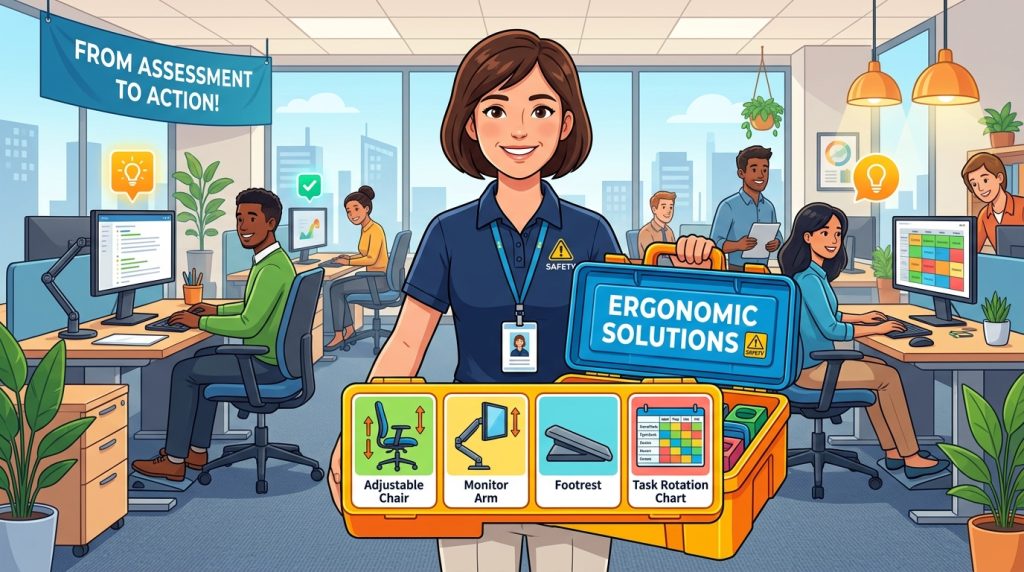
Identifying a risk is only the first step. Organisations should implement suitable controls such as workstation adjustments, improved tools, mechanical aids, task rotation, and changes to work processes. Higher-risk activities may require more detailed ergonomic assessment and intervention.
Building Competency Through Training
Employees and supervisors need to understand how to recognise and control ergonomic risks. Ergonomics training Malaysia programmes can provide practical knowledge on risk identification, safe work practices, workstation setup, and early reporting of discomfort
Continuous Improvement
Ergonomics should be reviewed regularly rather than treated as a one-time exercise. Monitoring assessment findings, employee feedback, incidents, and implemented controls allows organisations to identify new risks and continuously improve their risk management system
Conclusion
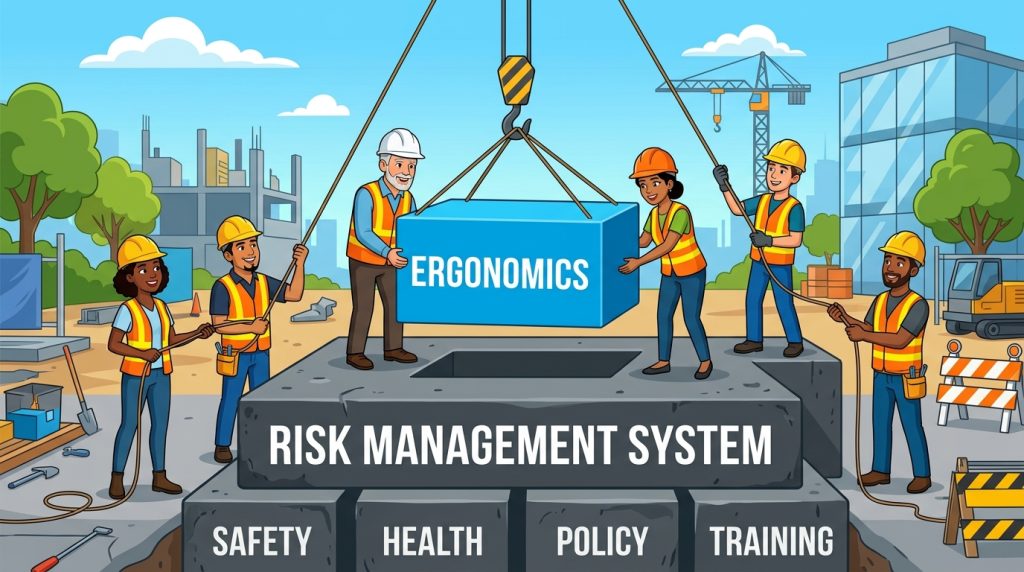
Integrating ergonomics into risk management helps organisations move from reacting to injuries towards preventing them. With effective ergonomics risk assessment Malaysia practices and ergonomics training Malaysia, businesses can better protect employees while improving safety, productivity, and overall workplace performance.
Sample Knowledge Integrating Ergonomics Into Risks Management Systems
Work activities and workplace conditions can change over time. An ongoing approach allows organisations to reassess risks, review existing controls, respond to employee feedback, and introduce improvements when necessary. This keeps ergonomic risk management aligned with changing workplace conditions.
Changes to equipment, production methods, workstation layouts, or job responsibilities can introduce new ergonomic hazards. Considering ergonomics during the planning and implementation of changes allows potential risks to be identified and controlled before the revised process becomes routine.
Competency can be maintained through appropriate training, practical guidance, supervision, refresher programmes, and regular communication about ergonomic risks. This helps ensure that employees and supervisors continue to understand their responsibilities within the risk management system.