REDUCING AWKWARD POSTURES IN FOOD AND BEVERAGE INDUSTRY
Introduction
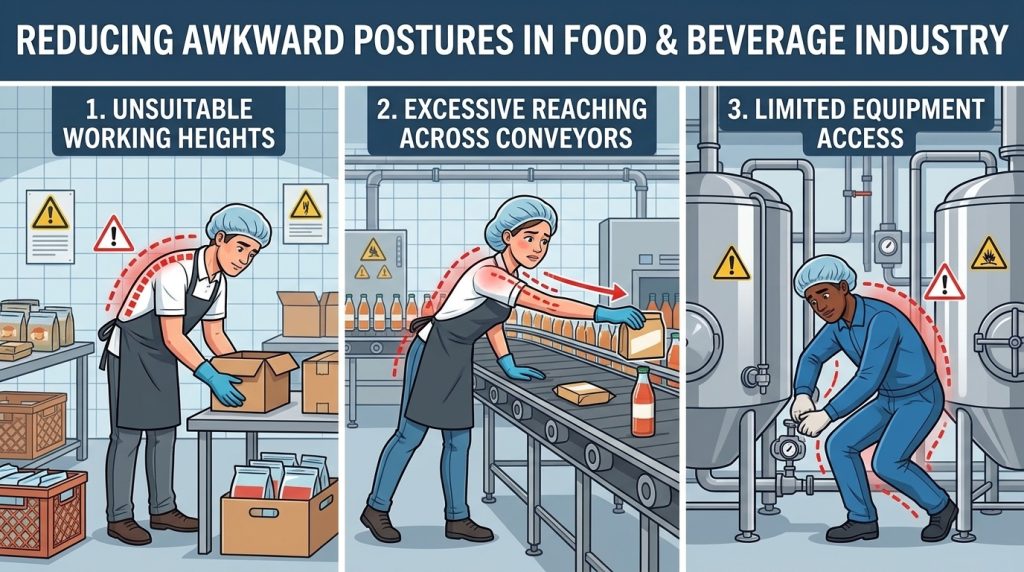
Workstation design plays an important role in how comfortably workers perform their duties. In the food and beverage (F&B) industry, employees may need to reach across production lines, bend to access materials, or maintain uncomfortable positions while inspecting and packaging products. When workstations do not accommodate the tasks and workers using them, awkward postures may become part of everyday operations.
Improving workstation design can help reduce unnecessary physical demands and support more comfortable working conditions.
Machines, storage areas, and work surfaces that are difficult to access may require workers to twist, bend, or stretch while completing routine tasks.
Designing More Suitable Workstations
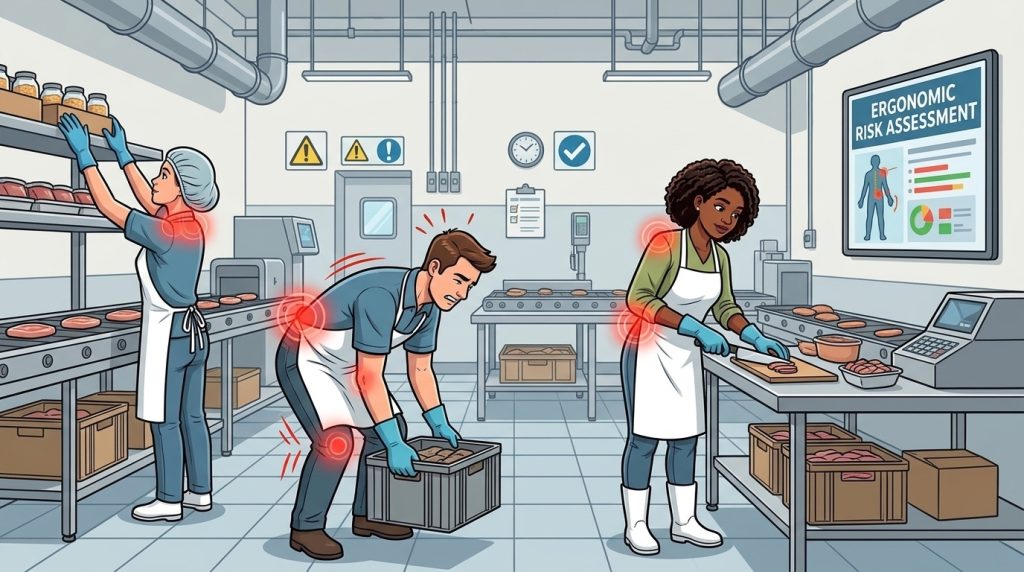
An ergonomic risk assessment can help identify workstation features that contribute to awkward postures. Assessors can examine working heights, reach distances, equipment placement, and the space available for movement.
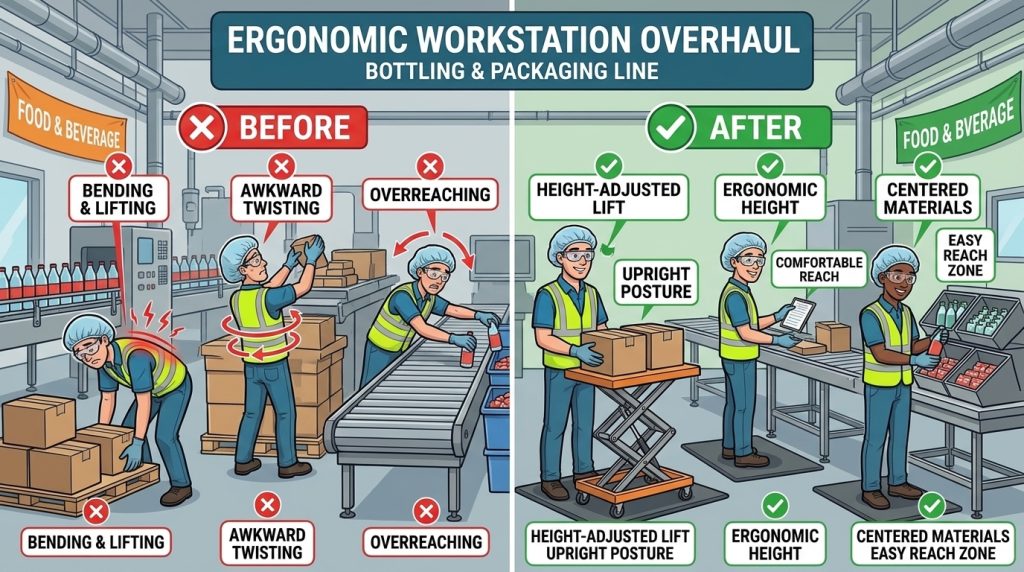
Depending on the findings, improvements may include adjusting work surface heights, positioning frequently used materials within comfortable reach, and providing suitable platforms or adjustable equipment. Tools and controls should also be positioned to minimise unnecessary bending, twisting, and stretching.
Workstation improvements should consider the task requirements, equipment design, hygiene standards, and operational constraints specific to food production.
The Importance of Ergonomic Training
Ergonomic training helps workers and supervisors understand how workstation arrangements affect posture and physical comfort. Workers can also be encouraged to report equipment placement or working-height issues that make tasks difficult.
Nevertheless, workers should not be expected to maintain comfortable postures when workstation design makes this impractical. Training should be supported by suitable equipment adjustments and effective work design.
Conclusion
Awkward postures can develop when workstations, tools, and materials are poorly positioned for the tasks being performed. Through appropriate ergonomic risk assessment, effective ergonomic training, and practical workstation improvements, organisations can reduce unnecessary postural demands and create more suitable working environments.