
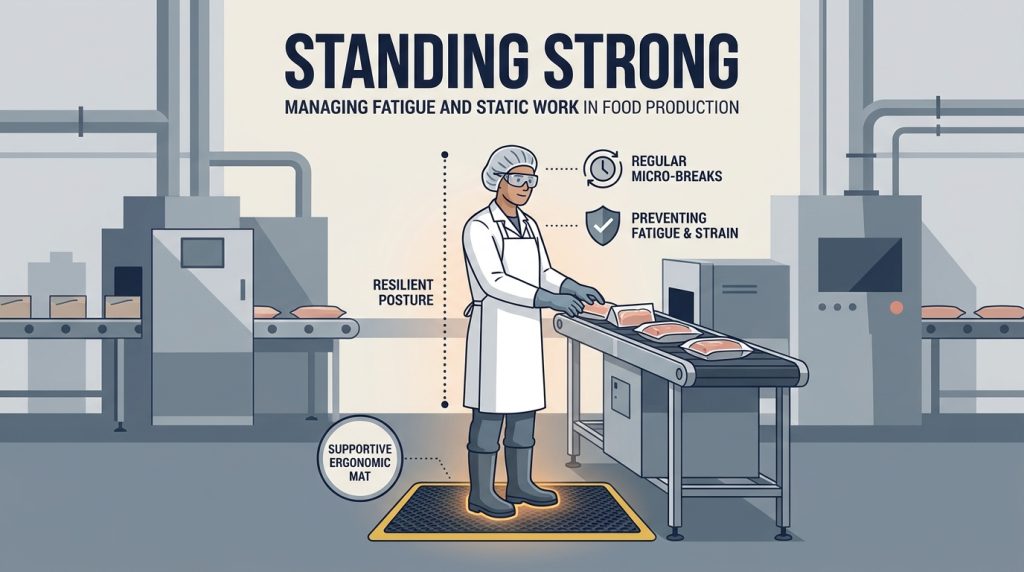
STANDING STRONG: MANAGING FATIGUE AND STATIC WORK IN FOOD PRODUCTION
Introduction
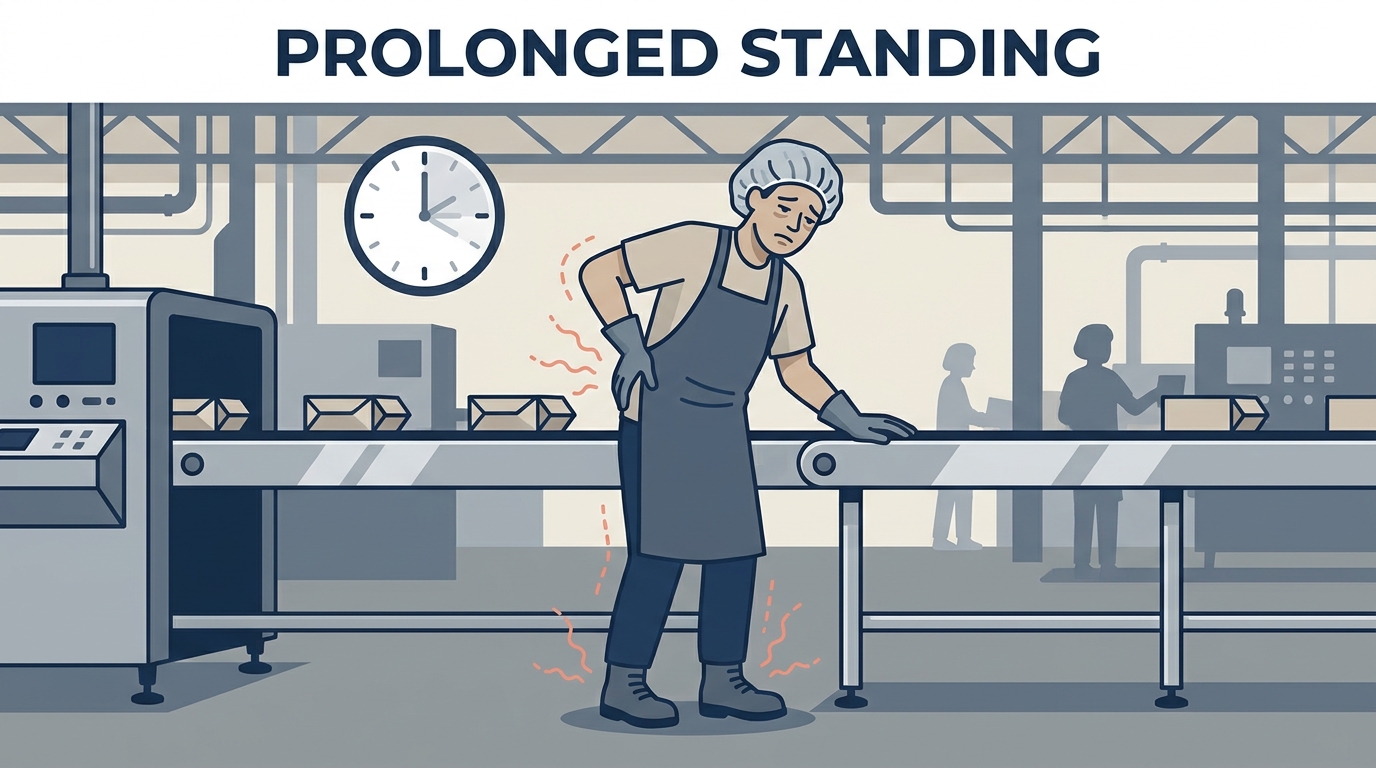
Many food production activities require workers to remain standing for extended periods. Tasks such as monitoring processing equipment, inspecting products, operating filling lines, and performing packaging activities may involve limited opportunities to change position. Prolonged standing and static postures can contribute to physical fatigue and discomfort, particularly when workstations and recovery arrangements are unsuitable.
Managing these conditions is important for supporting worker comfort and maintaining consistent work performance.
Understanding Fatigue and Static Work
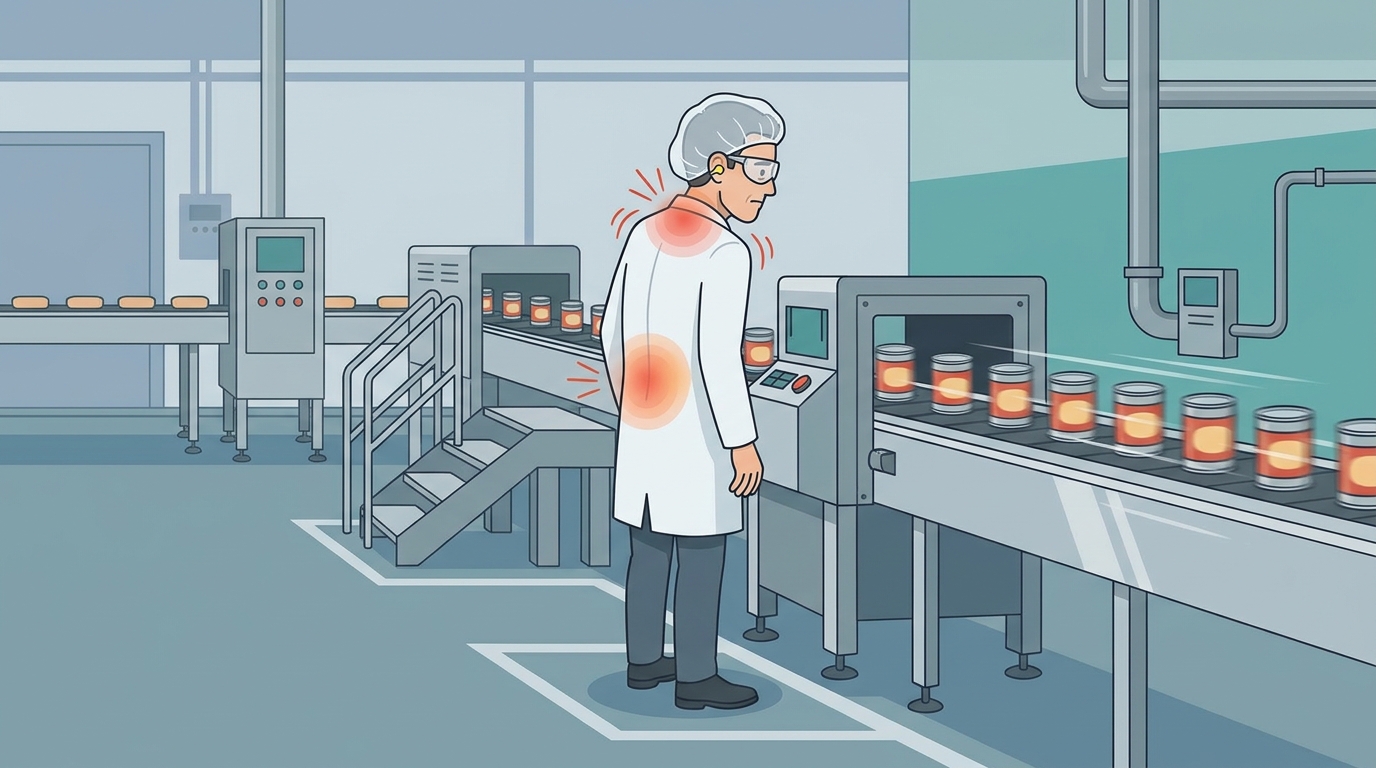
Standing for long periods with limited opportunities to sit or move can contribute to discomfort in the feet, legs, and lower back. The effects may vary depending on the task, working surface, footwear, and individual factors.
Workers who remain in a fixed position while monitoring machinery or inspecting products may experience muscular fatigue because the same body areas remain engaged for extended periods.
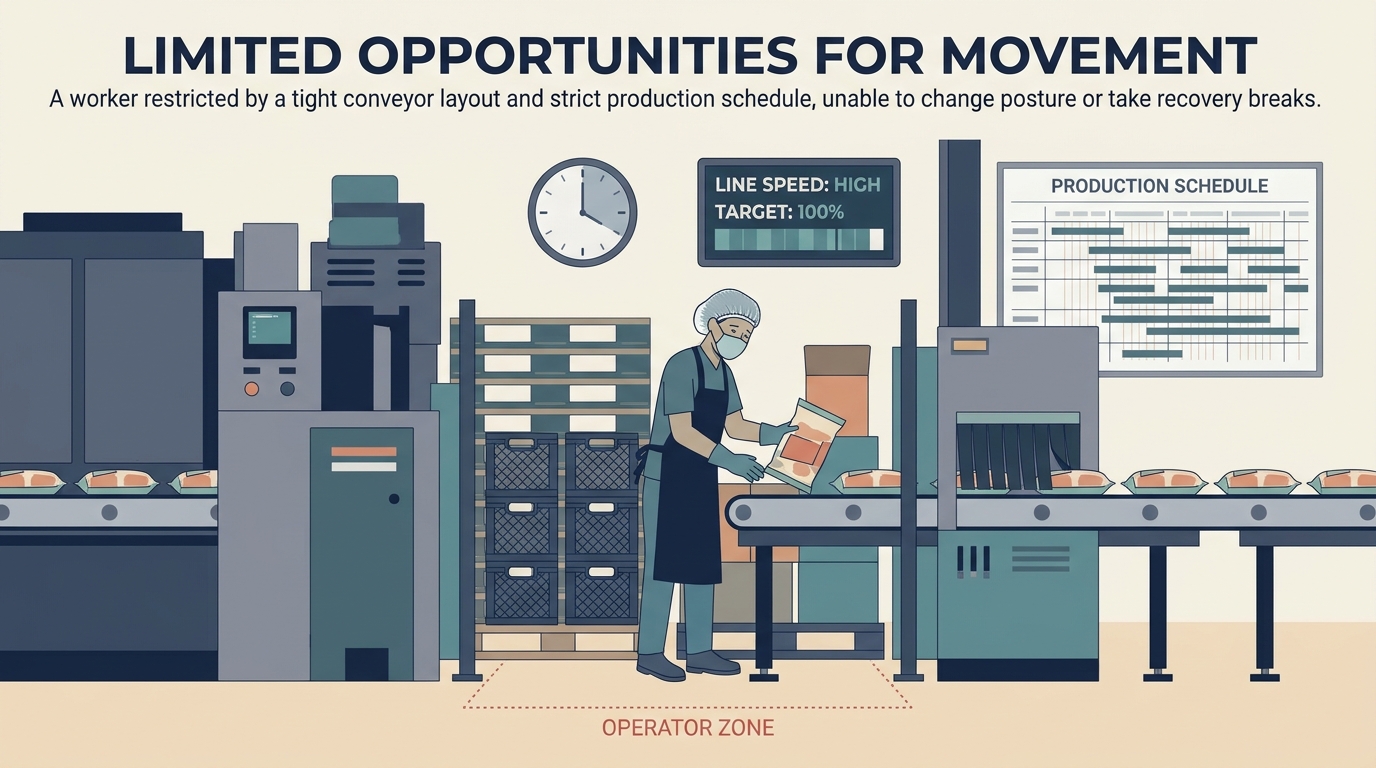
Production schedules and workstation layouts may restrict workers’ ability to change posture or take appropriate recovery breaks. These conditions can make fatigue more difficult to manage.
Reducing Fatigue in Food Production
An ergonomic risk assessment can help identify tasks involving prolonged standing, restricted movement, and sustained postures. The assessment should consider task duration, workstation layout, movement opportunities, and the physical demands of the work.
Possible improvements include providing suitable seating where operationally appropriate, using supportive anti-fatigue flooring where suitable, adjusting workstation heights, and organising tasks to allow changes in posture. Planned recovery opportunities and access to movement during work can also help manage physical fatigue.
Controls should be selected according to the task and should not interfere with machinery safety, hygiene, or production requirements.
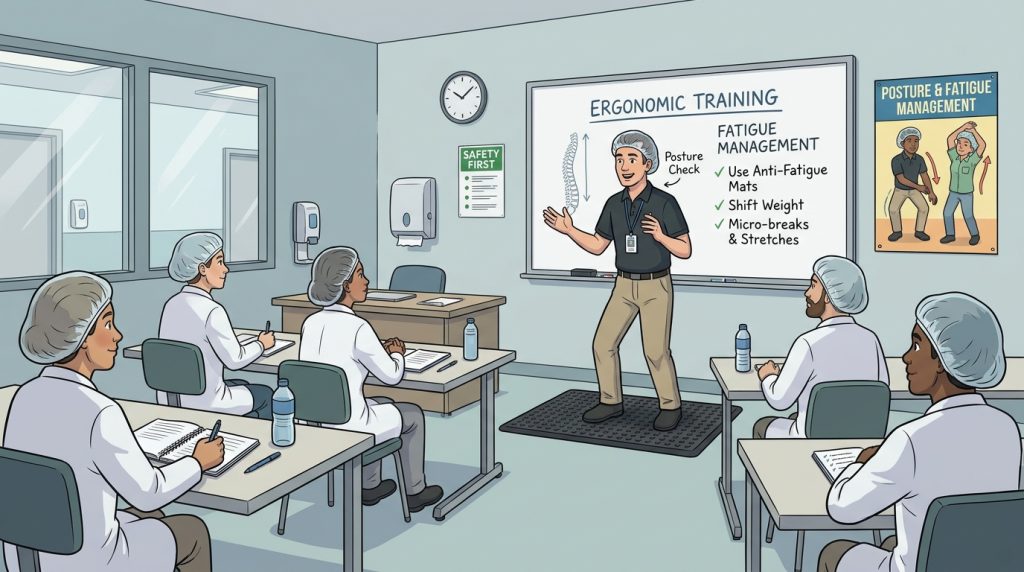
Supporting Workers Through Ergonomic Training
Ergonomic training helps workers recognise signs of fatigue, understand the importance of changing posture where possible, and report unsuitable working conditions. Supervisors should also understand how work organisation and workstation design can influence fatigue.
Training must be supported by practical workplace improvements. Workers should not be expected to manage fatigue solely through personal effort when the underlying work conditions remain unsuitable.
Conclusion
Prolonged standing and static work can contribute to fatigue and discomfort in food production. By conducting an appropriate ergonomic risk assessment, providing effective ergonomic training, and improving workstation design and work organisation, organisations can better manage physical demands and support worker well-being.