
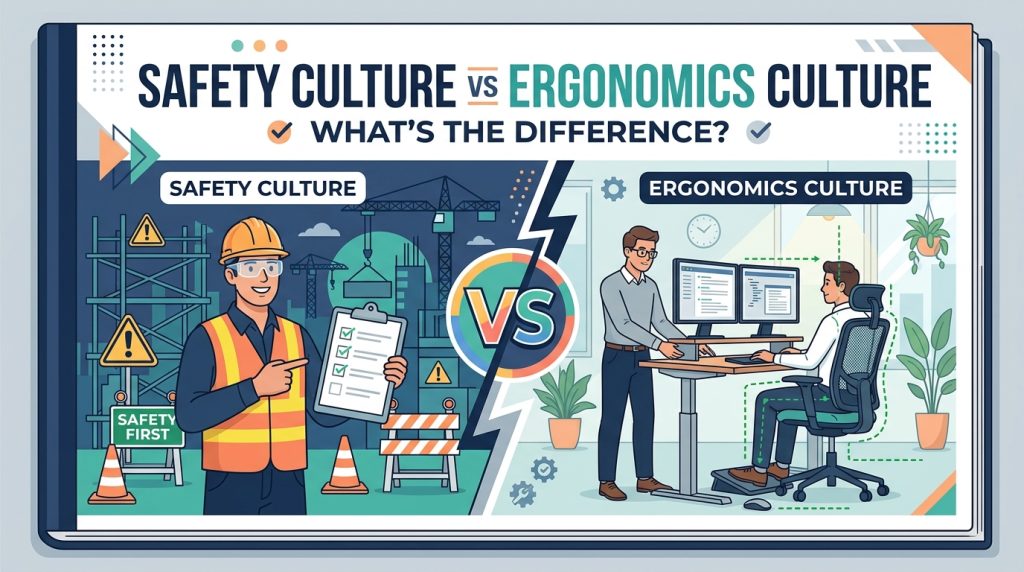
SAFETY CULTURE VS ERGONOMICS CULTURE : WHAT'S THE DIFFERENCES?
Introduction
Safety culture and ergonomics culture are closely connected, but they are not exactly the same. Both aim to protect employees, yet they focus on different aspects of workplace safety and health. Understanding the difference can help organisations build a more complete approach to workplace risk management.
What Is Safety Culture?
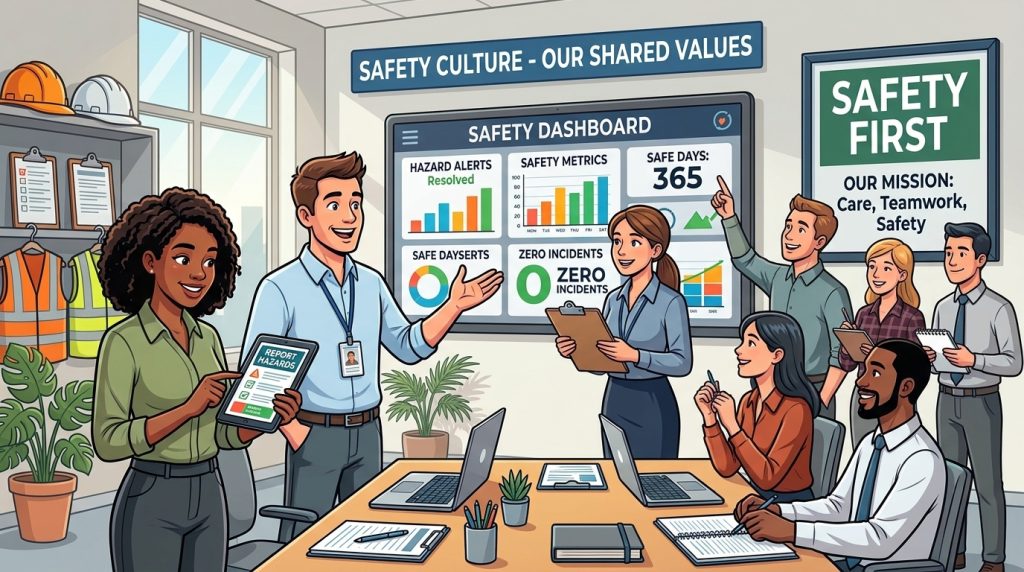
Safety culture refers to the shared attitudes, behaviours, and values that influence how an organisation manages workplace safety. It includes leadership commitment, employee involvement, hazard reporting, safe work practices, and the way safety is integrated into everyday operations.
What Is an Ergonomics Culture?
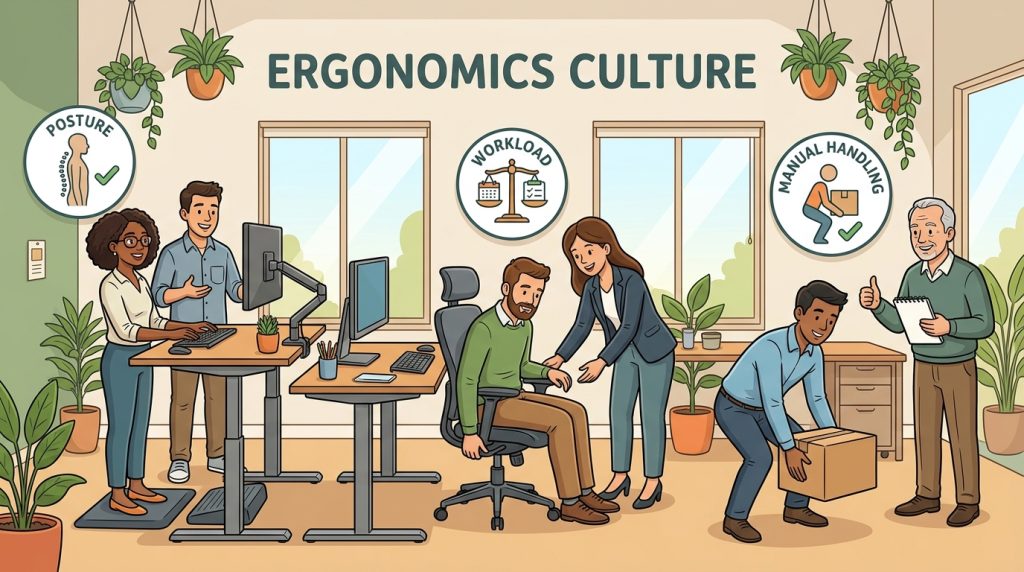
An ergonomics culture focuses specifically on designing work to fit the worker. It encourages employees and management to consider factors such as posture, force, repetition, manual handling, workstation design, fatigue, and workload when planning and performing work.
The Key Difference
Safety culture covers a broad range of workplace hazards, including physical, chemical, biological, and operational risks. Ergonomics culture focuses more specifically on how work, tools, equipment, and tasks interact with the capabilities and limitations of workers.
However, the two should not operate separately. A strong ergonomics culture can become an important part of an organisation’s overall safety culture.
Building an Ergonomics Culture
An ergonomics risk assessment Malaysia approach can help organisations identify and control ergonomic hazards systematically. Regular assessments, employee feedback, workplace observations, and corrective actions can make ergonomics part of everyday safety management rather than something addressed only after an injury occurs.
The Role of Training
Building awareness is equally important. Ergonomics training Malaysia programmes can help employees, supervisors, and management recognise ergonomic risks and understand how to apply practical controls. When workers are encouraged to participate and report problems early, ergonomics becomes part of the organisation’s daily safety behaviour.
Conclusion
Safety culture and ergonomics culture have different focuses, but they share the same goal: protecting people at work. By integrating ergonomics into the wider safety culture, organisations can move beyond simply preventing accidents and create workplaces that support long-term health, comfort, and productivity.
FAQ
Employees have direct experience with the tasks they perform and can identify practical problems that may not be immediately obvious during a workplace assessment. Their involvement can improve hazard reporting, encourage early corrective action, and strengthen ownership of ergonomic practices.
Combining both cultures provides a more comprehensive approach to workplace risk management. It addresses not only immediate safety hazards but also longer-term factors that can affect workers’ health, comfort, performance, and productivity.
Organisations can integrate ergonomics into routine risk assessments, training, workplace inspections, task design, incident investigations, and corrective actions. Consistent management support and employee participation are also essential to make ergonomics part of everyday work practices.