
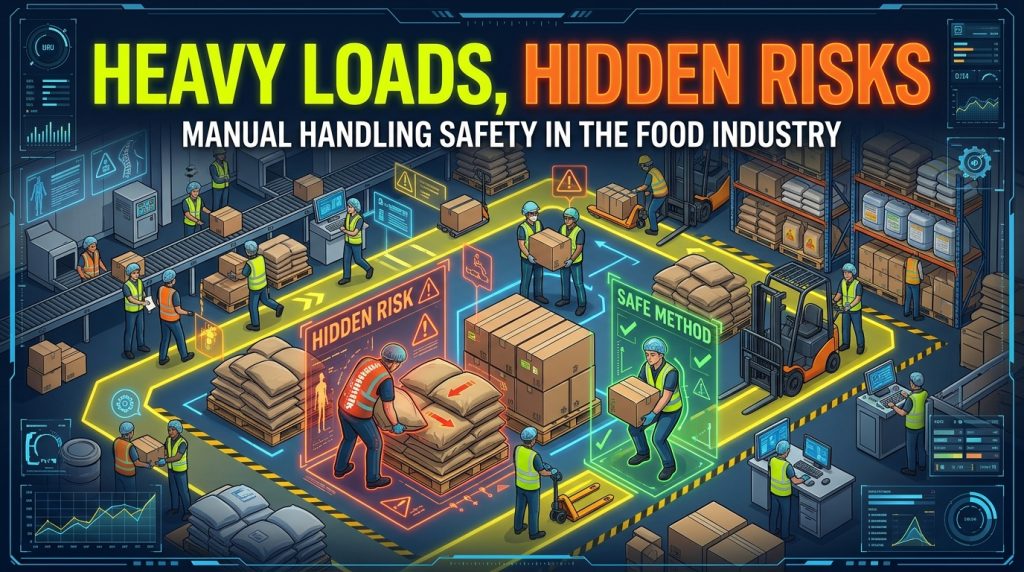
HEAVY LOADS, HIDDEN RISKS: MANUAL HANDLING SAFETY IN FOOD PRODUCTION
Introduction
Manual handling is an essential activity in food production, particularly when transporting raw materials, moving containers, and arranging finished products. Workers may regularly handle ingredient sacks, liquid containers, and product cartons throughout their shifts. When these activities involve excessive loads, frequent movement, or unsuitable handling arrangements, they can place unnecessary physical demands on workers.
Improving manual handling practices is important for reducing workplace risks and supporting safer production operations.
Common Manual Handling Challenges
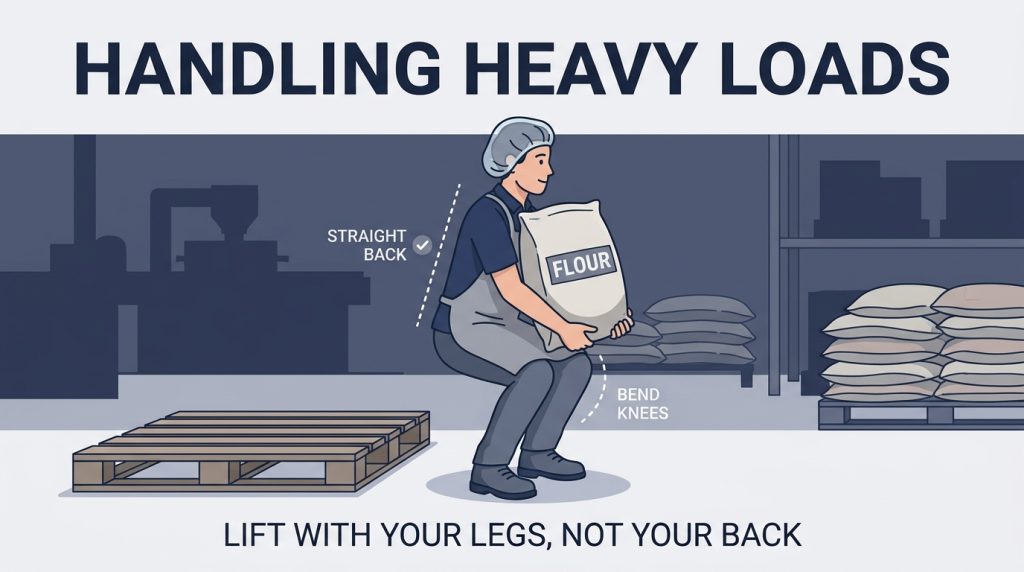
Lifting sacks of flour, sugar, and other ingredients can place considerable demands on the body, particularly when loads are heavy or handled repeatedly.
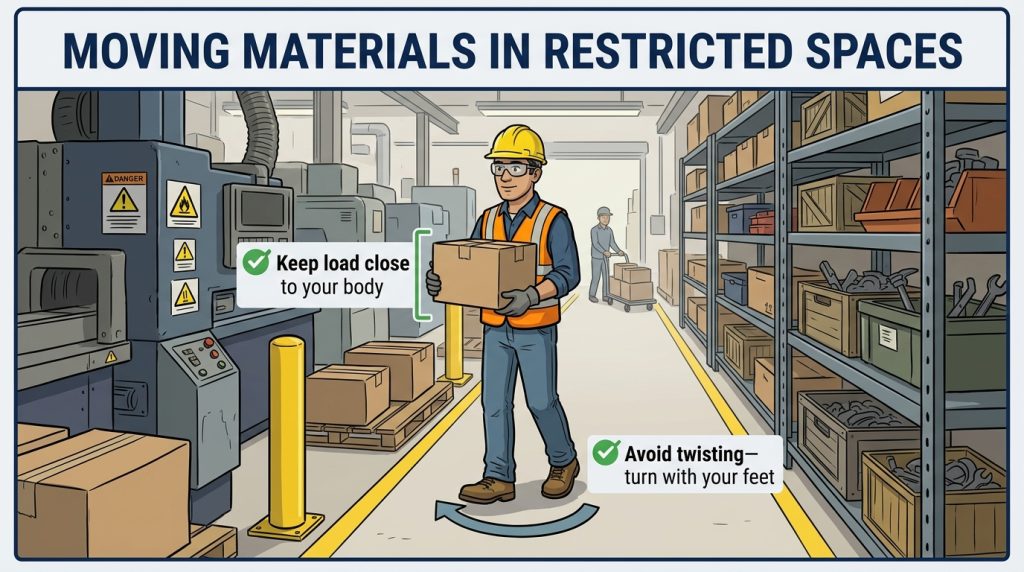
Limited storage space and crowded production areas may make it difficult to move materials safely. Workers may need to turn their bodies or carry loads through narrow walkways.
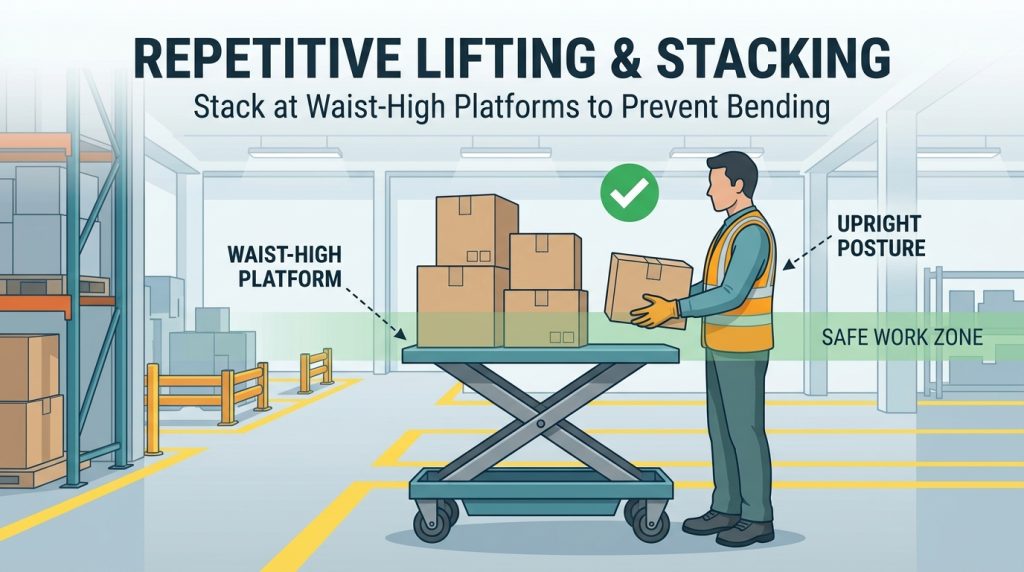
Repeatedly transferring containers or stacking cartons can increase physical demands, especially when materials are stored at floor level or above shoulder height.
Improving Manual Handling Safety
An ergonomic risk assessment can help identify tasks involving excessive lifting, carrying, pushing, and pulling. The assessment should consider load characteristics, handling frequency, travel distance, working height, and available space.
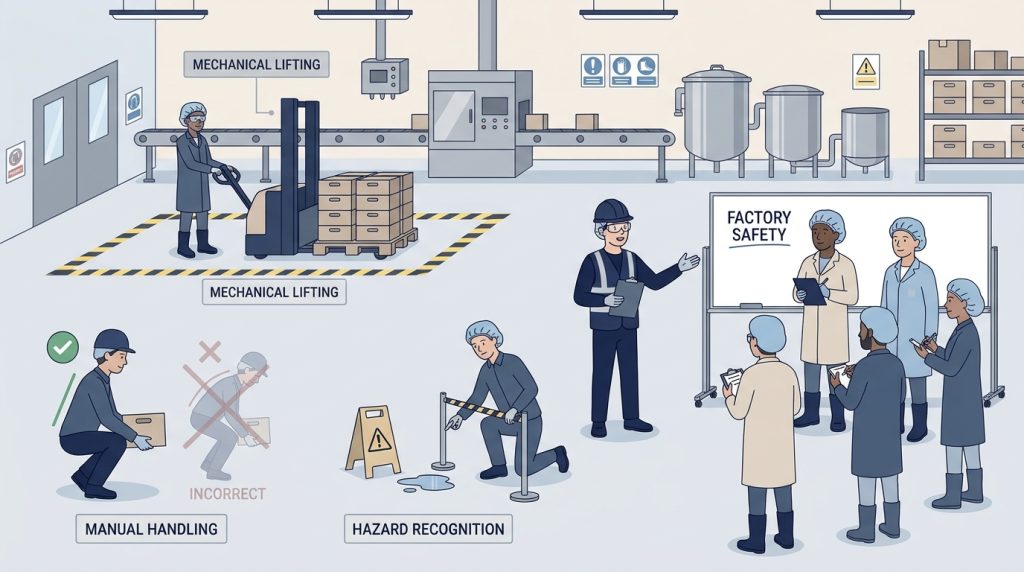
Practical improvements include using suitable trolleys, pallet trucks, lifting tables, and conveyors. Frequently handled materials should be stored at accessible heights, while storage layouts should allow sufficient room for safe movement.
Where manual handling remains necessary, organisations should evaluate whether loads can be reduced, divided into smaller units, or handled with assistance or mechanical equipment
Supporting Safe Practices Through Ergonomic Training
Ergonomic training helps workers recognise manual handling hazards, plan material movements, and use handling equipment correctly. Workers should understand when a load requires mechanical assistance or additional support.
However, training should not replace suitable equipment or effective workplace design. Organisations must address excessive load demands and unsuitable handling arrangements rather than relying on workers to compensate through individual effort.
Conclusion
Manual handling risks can arise throughout food production, from receiving raw materials to distributing finished products. Through appropriate ergonomic risk assessment, effective ergonomic training, and suitable material-handling equipment, organisations can reduce unnecessary physical demands and improve workplace safety.